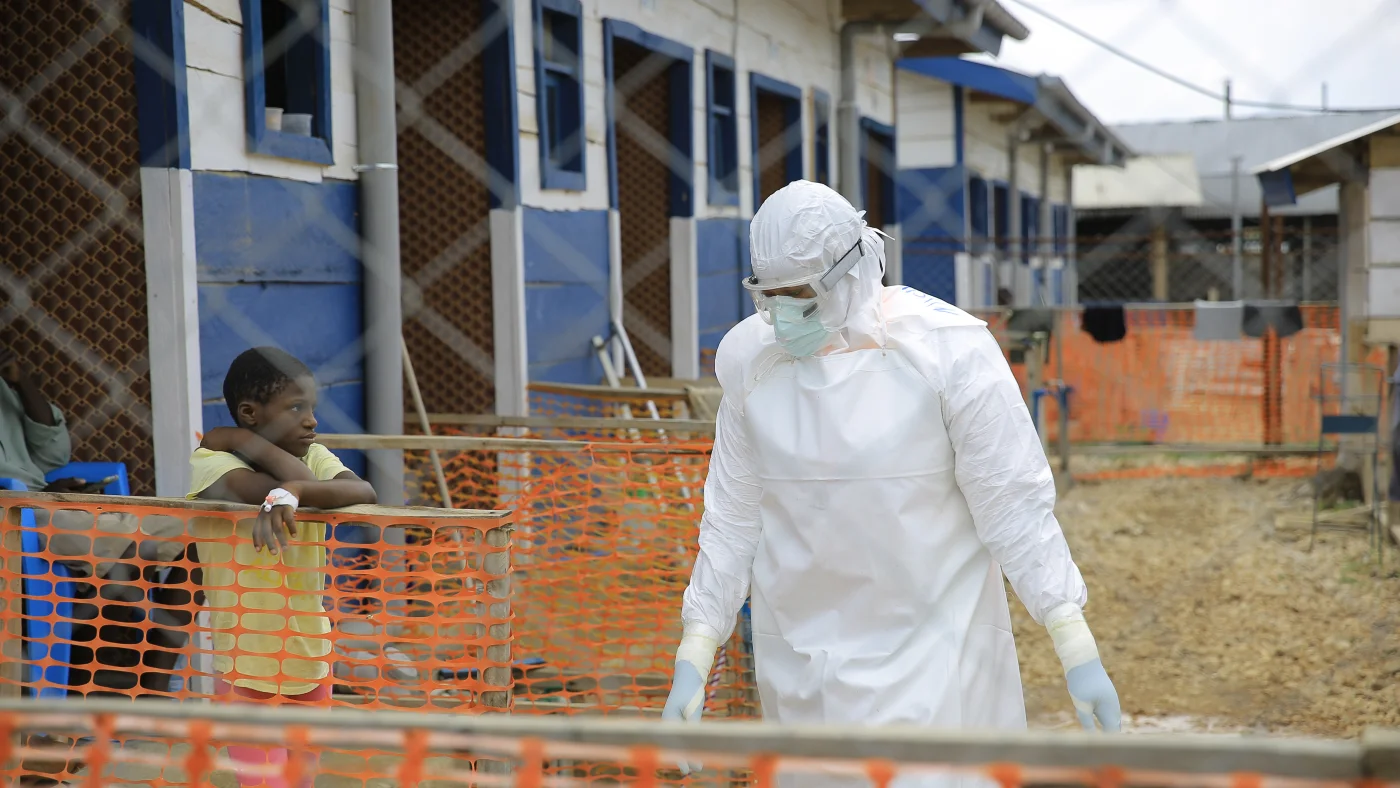
The Ebola outbreak in the Democratic Republic of the Congo has surpassed 11,000 confirmed cases, cementing its status as the deadliest in the country’s history.
According to government data released on Wednesday, the total number of infections has reached 11,042, with at least 5,387 deaths recorded since the outbreak began in mid-May. The crisis, driven by the rare Bundibugyo virus, is now the second-largest and second-deadliest Ebola epidemic on record, behind only the 2014–2016 West Africa epidemic.
While the virus has spread across eight of the country’s 26 provinces, the World Health Organization notes that sustained, high-level transmission continues overall in the Democratic Republic of the Congo, with active transmission continuing across dozens of health zones. The current epidemic has been described by the WHO and Congolese authorities as the largest Ebola outbreak in the Democratic Republic of the Congo, with thousands of confirmed cases and deaths reported.
Join us tomorrow, 12 November, for a briefing on the latest developments in the #Ebola outbreak in the DRC and ongoing response efforts. 🕙 10:00–11:00 GMT Watch live on WHO/AFRO’s social media channels. pic.twitter.com/5fiJh528KC
Outside of the Democratic Republic of the Congo, cases have been reported in four other countries since the outbreak was declared on May 15, 2026: France, Kenya, Nigeria, and Uganda.
In Kenya, screening continues at designated points of entry, and the country has maintained a high level of preparedness. Meanwhile, international travel precautions have tightened; all passengers on international flights to the United States must attest to not having been in Congo in the past 21 days.
Violence in eastern #DRC is costing lives and undermining the #Ebola response. -In Beni, @WHO is deeply concerned about the attack on an Ebola Treatment Centre on 6 November. Police prevented an attempt to set the facility on fire. -In Mabalako health zone, reported attacks by an… pic.twitter.com/ybKvZmYp11
Health authorities reported high death rates outside treatment centres, particularly among young children, due to difficulties identifying cases early and providing timely medical care. Recent totals show many deaths occurred within communities rather than in specialized facilities.
The humanitarian response lacks necessary funding as the disease spreads across borders. IOM’s Regional Ebola Coordinator, Andrew Mbala, stressed that medical checks cannot be limited to hospitals or official border posts, pointing out that individuals require prompt access to health services and information wherever they reside or travel, such as remote border settlements and displacement camps.

Sustaining these monitoring efforts is considered essential to detecting cases early and limiting further transmission. However, regional funding shortfalls threaten these containment efforts, with a regional funding gap of USD 59.8 million.
Financial backing from the World Bank, the European Union, the Government of Japan, the United States Government, the UK Foreign, Commonwealth and Development Office (FCDO), and the United Nations Central Emergency Response Fund (CERF) underpins the migration organization’s emergency operations.
Because the Bundibugyo strain is a rarer species than the Zaire ebolavirus responsible for most past outbreaks, it has no known vaccine or treatment developed specifically for it. Having an Ebola vaccine against one species is not the same as having a vaccine against every Ebola virus species. Development of countermeasures at scale began only after the outbreak was already underway.
The World Health Organization has recommended expanded trials for candidate vaccines, including Moderna’s mRNA-1469. The WHO and partners are actively supporting these trials with technical, scientific, and operational expertise, with results expected in early 2027. In addition, organizations like CEPI are funding studies to investigate whether existing Zaire Ebola vaccines provide meaningful protection against the Bundibugyo virus.
Health officials maintain that controlling the outbreak depends fundamentally on rapid recognition of cases, testing, early identification and isolation, optimized supportive care, contact tracing, safe burial practices, and community engagement. Readers should consult qualified medical professionals or public health authorities for clinical guidance and travel safety advice.
| Metric | Reported Figure |
|---|---|
| Total Confirmed Cases | 11,042 |
| Total Confirmed Deaths | 5,387 |
| Case Fatality Rate | 48.8 percent |
Earlier coverage: DRC Ebola Outbreak Surpasses 10,000 Cases Amid Spread