
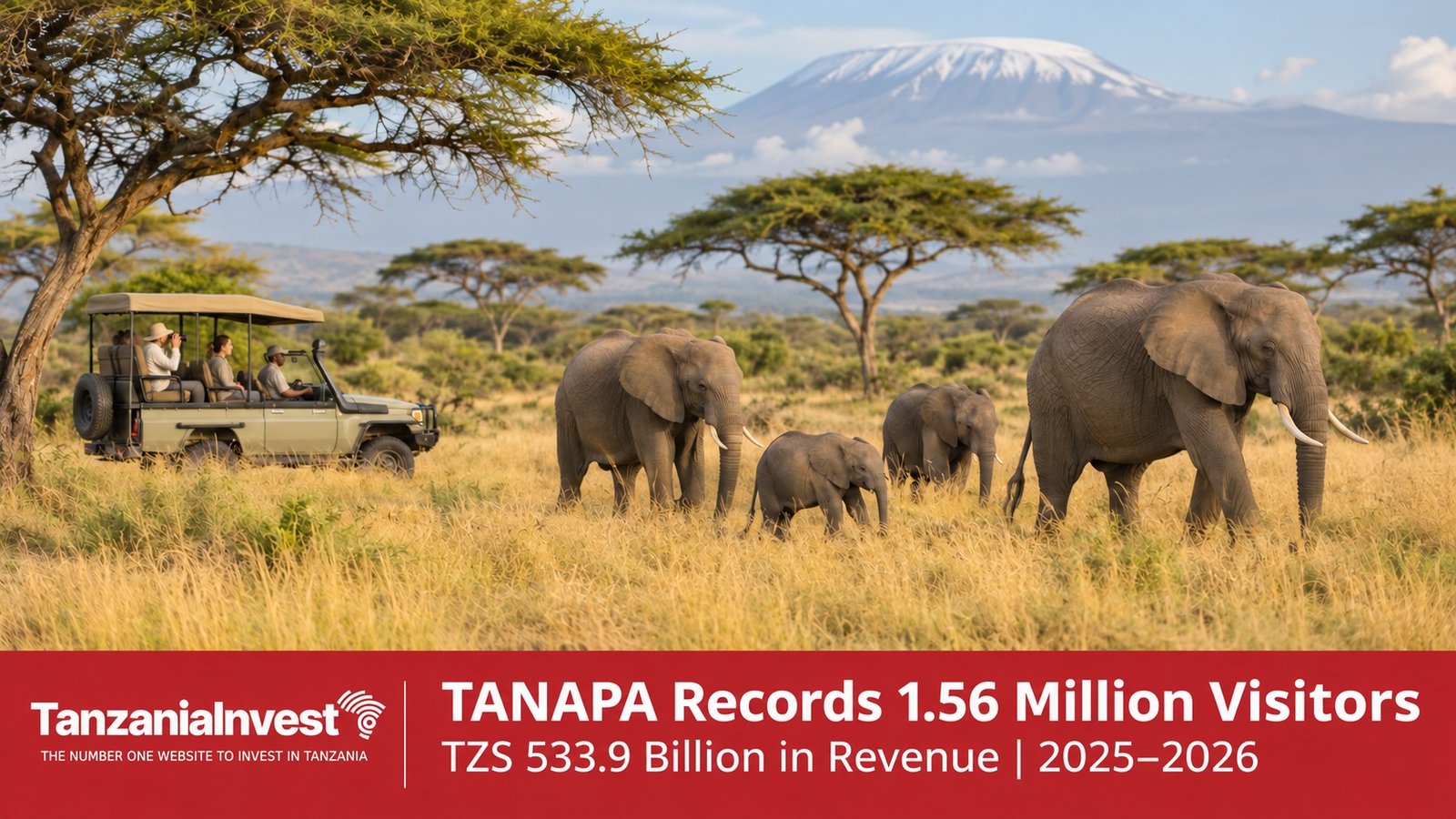
Tanzania recorded 1,559,441 visitors to its national parks as revenue reached TZS 533.9 billion, driven by an average annual tourism growth rate of about 24 per cent over five financial years.
Collections climbed from 174 billion shillings in the 2021/2022 financial year to 534 billion shillings in the 2025/2026 financial year, marking an average annual increase of roughly 40 per cent.
Tourism Arrivals and Revenues Rise Following the Pandemic
Visitor numbers climbed steadily alongside revenues as the sector recovered from the Covid-19 pandemic, which had reduced tourist arrivals and earnings in 2021. Tourist arrivals rose from 708,319 in 2021/2022 to 1,559,641 in 2025/2026.
Up to October, we have witnessed a very large increase in tourism. Statistics show growth from 708,319 tourists recorded and received in 2021/2022 to 1,559,641 in the 2025/2026 financial year, a very big increase, averaging 24 per cent every year.
Massana Mwishawa, Tanzania National Parks Conservation Commissioner
Mr Mwishawa also credited President Samia’s promotion of the country’s tourism attractions through the Royal Tour documentary, saying it helped raise Tanzania’s international profile and attract more visitors to national parks.
Domestic tourism recorded modest growth over the same window, with the number of local visitors increasing from 325,060 in 2023/2024 to 412,983 in 2024/2025 before declining to 381,341 in 2025/2026. He said that stronger promotion was needed to encourage more Tanzanians to visit national parks.
New Investment Sites Aim to Ease Park Congestion
To accommodate rising visitor counts and spread visitor numbers across more parks while easing congestion in the northern tourism circuit, the authority identified 160 new investment sites, comprising 30 lodge sites and 130 camping sites, particularly in the eastern, southern, and western tourism circuits. The strategy aims to attract investors capable of developing new destinations, with approvals subject to environmental assessments and other regulatory requirements.
To reach wider audiences, the organisation utilized digital platforms including the Tanzania app—which provides information on parks, attractions, services, access routes, and investment opportunities—and the KwaniKasi platform, which distributed promotional content through international networks and reached more than 120 million people worldwide in the 2021/22 financial year.
Accommodation capacity expanded, increasing bed capacity from 5,755 in 2021 to 12,094 in 2026 across lodges, permanent and seasonal camps, community camps, and hostels. The authority also strengthened sports tourism through the completion and launch of a golf course at Fort Ikoma in the Serengeti ecosystem, alongside packages combining golf and wildlife safaris.
Tanapa also planned to introduce water-based tourism. Private operators would provide vessels including luxury boats, while Tanapa would facilitate the required infrastructure and tourism arrangements to give visitors opportunities to experience local cultures and interact with communities.
Tanapa Addresses Wildlife Challenges Through Improved Monitoring
On conservation, Mr Mwishawa identified human-wildlife conflicts, livestock encroachment, invasive plant species, water shortages, and poaching as major challenges. In response, Tanapa planned to expand ranger posts, use drones to improve wildlife monitoring, and strengthen communication systems to enable faster responses when animals enter communities. The authority constructed three modern communication facilities and 10 radio towers in Serengeti, Lake Manyara, Tarangire, and Mkomazi national parks.
Regarding ecosystem restoration, the authority controlled invasive plant species across 9,440.22 hectares in 15 national parks and cleared 1,546 hectares of bush-affected land in Lake Manyara. Conservation interventions contributed to the recovery of endangered and rare species, with the rhino population increasing from 128 in 2021 to an estimated 170 in 2026, and habituated chimpanzees rising from 196 to 288 during the same period.
Law enforcement operations yielded large seizures. Officials confiscated 65,860 livestock found illegally inside national parks, seized 105 firearms, and removed 10,971 wire snares.
Relations with neighbouring communities also improved through support for social infrastructure, including six ranger posts, a village office, two traditional healer houses, three dispensaries, a teachers’ house, a girls’ dormitory, and two classrooms. Finally, Mr Mwishawa announced plans for a major conservation awards event on December 12 in Serengeti National Park, following Tanzania’s recent international recognition for conservation and tourism.
Efforts to restore the African wild dog population are also continuing, with 12 animals currently in a breeding area in Mkomazi National Park and 25 released into their natural habitats.
Massana Mwishawa, Tanzania National Parks Conservation Commissioner