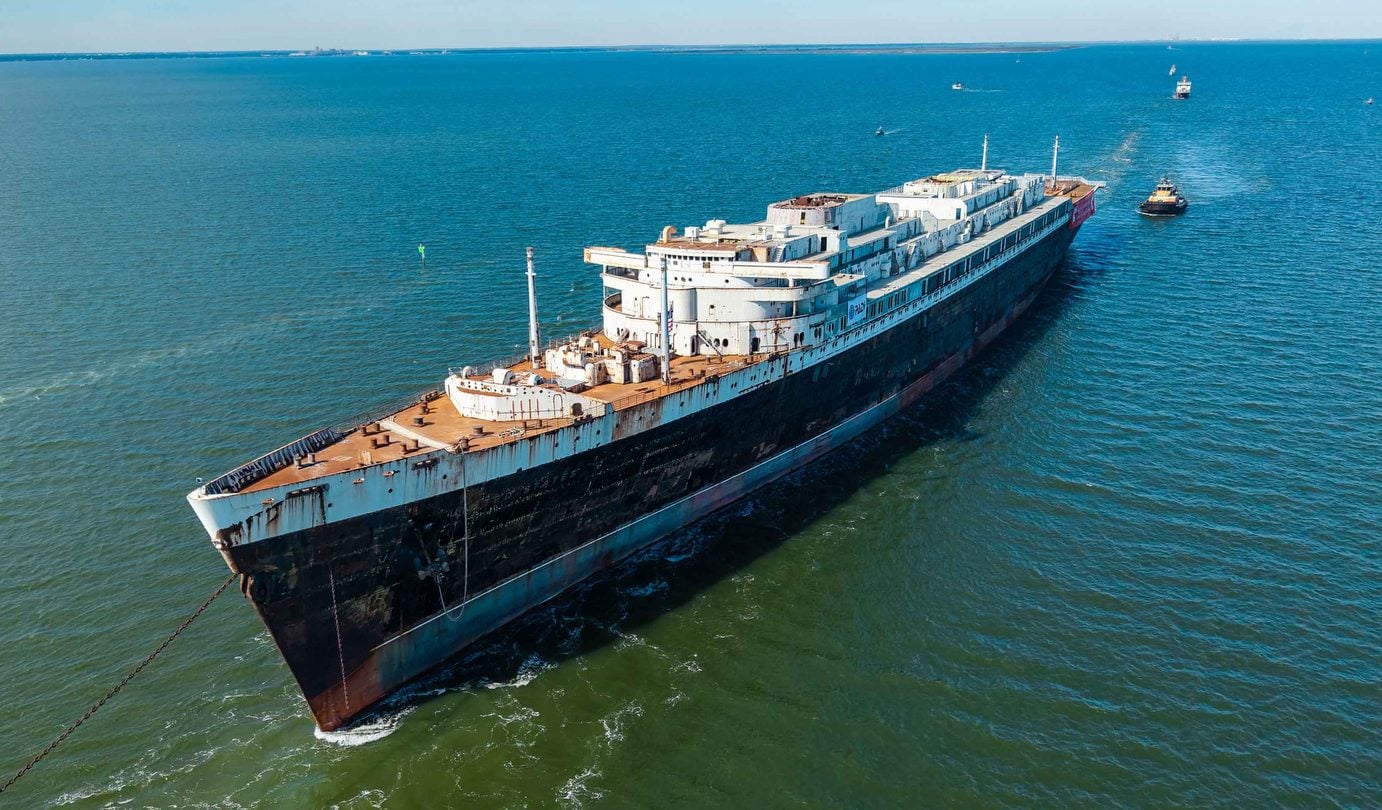
The SS United States ended its decades-long wait for a second act on Wednesday, slipping beneath the Gulf of Mexico to become the world’s largest artificial reef.
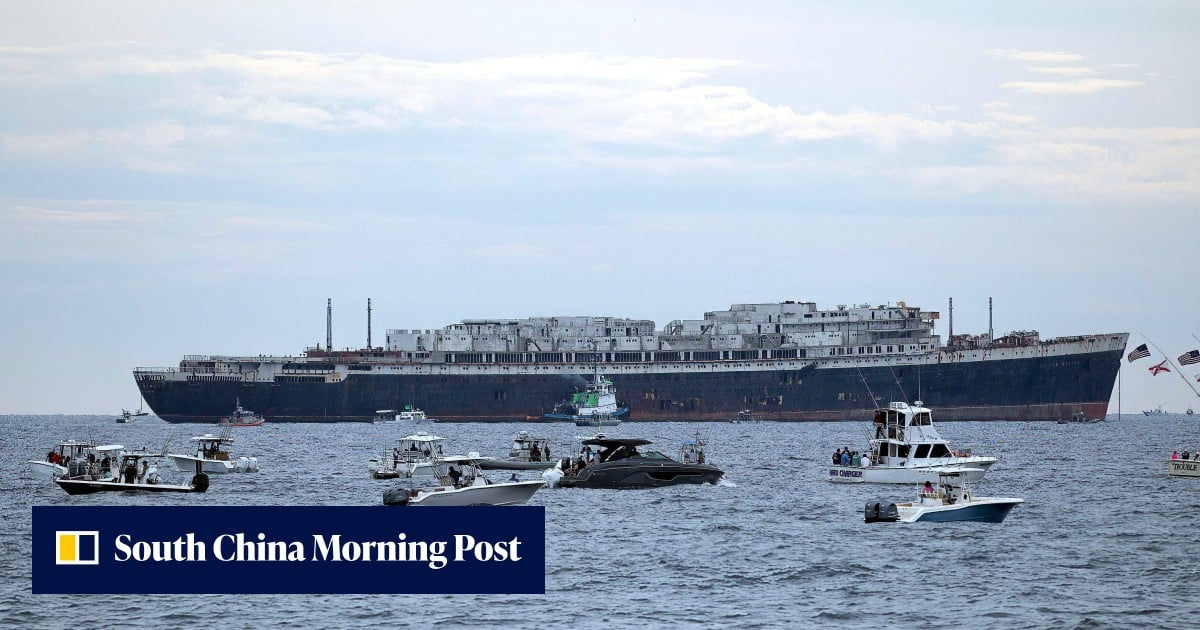
After sitting docked in Philadelphia for nearly 30 years, the iconic ocean liner made a slow, deliberate descent 22 nautical miles southwest of Destin, Florida, as hundreds of spectator boats and curious onlookers watched from the water.
Towing and Sinking the Record-Breaking Liner
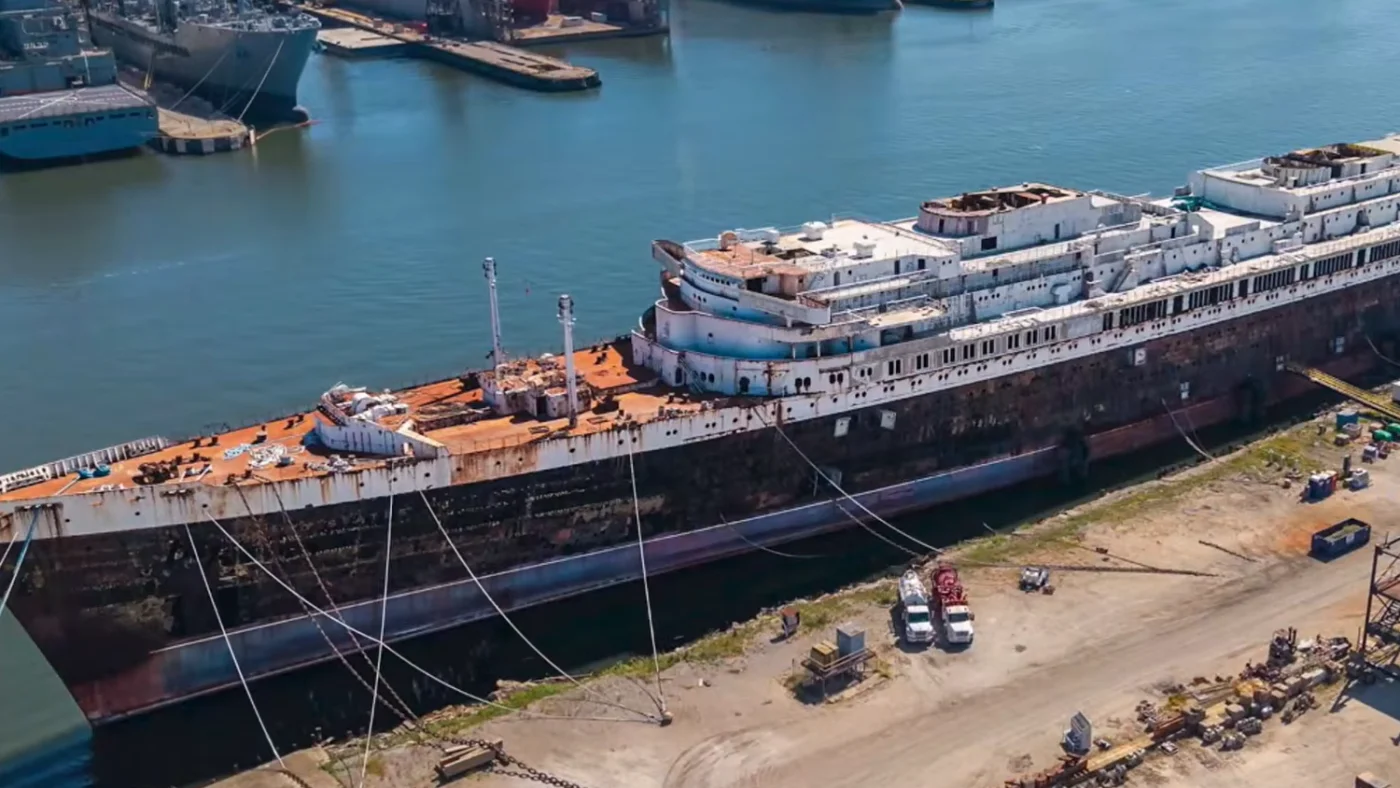
Built in Virginia, the vessel entered service in 1952 during the golden age of transatlantic travel. Designed by naval architect William Francis Gibbs to double as a high-speed troop transport during wartime, the 990-foot liner smashed speed records on her maiden voyage, averaging 35 knots and capturing a title she still holds today.
Commercial aviation eventually rendered the luxury liner uneconomical, leading to her retirement in 1969. Years of legal battles and failed proposals for hotels or museums followed before Okaloosa County acquired the vessel in October 2024 from the SS United States Conservancy.
More than 3,000 workers helped build the SS United States in Virginia in 1950 and 1951, and its construction yielded a hull made of 2-inch thick, battle-grade steel.
During its sailing lifetime, the ship ferried presidents including Harry Truman, Dwight Eisenhower, John F. Kennedy, and a young Bill Clinton, alongside international royalty, political figures like Haile Selassie, and Hollywood stars such as Marlon Brando, Cary Grant, Judy Garland, Walt Disney, Salvador Dali, Coco Chanel, and Duke Ellington. In 1952, the Mona Lisa crossed the Atlantic aboard the SS United States.
Crews spent months preparing the ship in Mobile, Alabama, removing environmental hazards, wiring, glass, and the distinctive funnels, which are slated for a land-based museum. Workers also cut strategic holes through the hull and interior decks to ensure the massive structure would flood and sink in a gradual, level manner.
Federal environmental regulations prohibited the use of explosives for the operation. Instead, tugboats positioned the dead ship over a targeted patch of the seabed, and workers removed internal plugs to let the water pour in.
Deployment operations began at 1 p.m. Central Time on Wednesday. Because of the ship’s massive scale and steel hull, the process proceeded far more slowly than anticipated, with much of the vessel remaining visible above the waterline as night fell before she finally submerged entirely.
She is an amazing lady who will not lay down without a fight.
Coleen O’Malley, president of Coleen Marine
Economic and Environmental Impact on the Florida Panhandle
The $13 million sinking project aims to transform the historic ship into a major tourism and ecological asset for the Florida panhandle. Okaloosa County already manages more than 500 artificial reefs.
“This saves the ship from being scrapped for metal or meeting some other demise,” Trey Goodwin, the chairman of the Okaloosa County Commission, told Northeastern Global News said.
The SS United States now rests on the Gulf floor at a depth of 180 feet. Because the ship’s upper decks sit 60 feet below the surface, recreational scuba divers with standard certifications can explore the upper levels, while technical divers can venture down to the deeper hull.
The shipwreck site sits near the 2006 scuttling of the aircraft carrier USS Oriskany, positioning the region to host the first and second largest artificial reefs globally.

Preservationists and Descendants Reflect on the Final Chapter
The path to the ocean floor faced eleventh-hour legal challenges. A small nonprofit, the SS United States Preservation Foundation, filed a federal lawsuit seeking to halt the tow and sinking, alleging that the U.S. Army Corps of Engineers failed to examine environmental risks or comply with historic preservation requirements.
Susan Gibbs, president of the SS United States Conservancy and granddaughter of the ship’s designer, expressed a complex mix of emotions as the vessel met its final destination. While activists had long fought to keep the ship afloat as a floating museum, her organization concluded that reefing was a more dignified fate than being sold for scrap metal.
“For those of us who love shipwrecks and love ships in general, it was way more tragic to see it sitting and rusting away at the dock,” wreck diver and maritime enthusiast Karen Flynn told NPR.
[The ship] has always been this unabashedly American symbol that brings so many people together.
Susan Gibbs, president of the SS United States Conservancy
Earlier coverage: SS United States Scuttling Begins to Become Artificial Reef