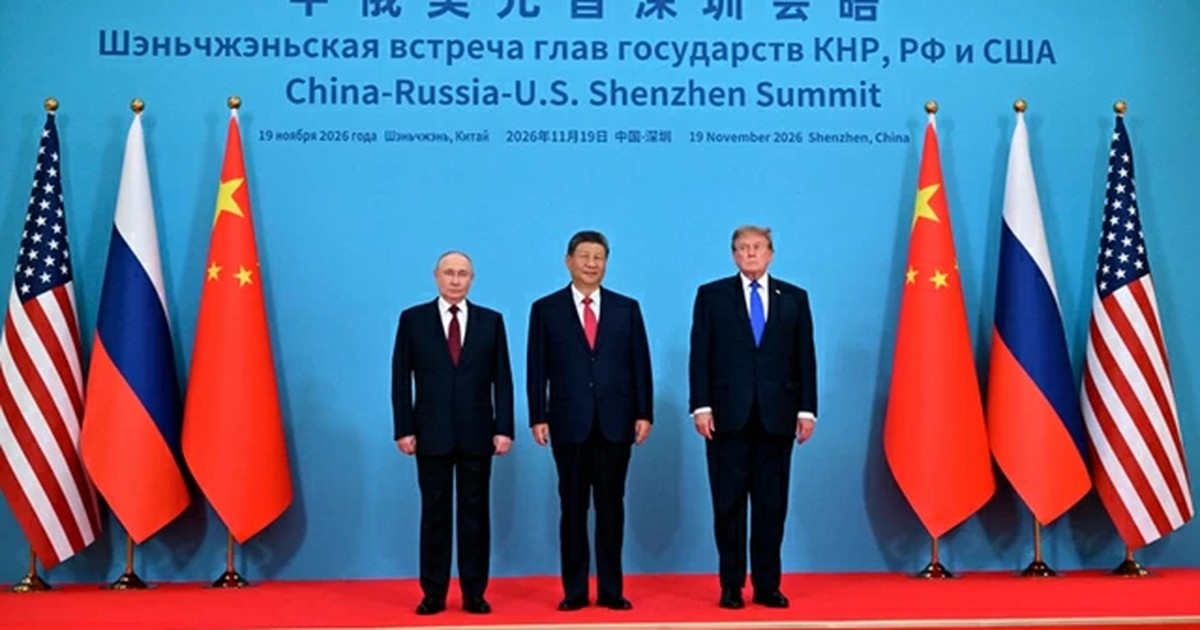
U.S. President Donald Trump, China’s Xi Jinping, and Russia’s Vladimir Putin met in Shenzhen, China, for the first-ever sit-down for the leaders of the three global powers.
The gathering took place on Thursday on the sidelines of the APEC summit. Discussions started with a shared responsibility for keeping peace as World War II victors. Post-meeting readouts from the three nations focused heavily on symbolism.
UN and Immunity
The joint statement issued after the talks omitted any reference to Russia’s war in Ukraine or the U.S.-led war in Iran. According to the AP report, the leaders agreed on the need for United Nations reforms, increasing oil supplies, and reducing nuclear risks.
International Business Times reporting indicates that Washington, Moscow, and Beijing committed to reforming the UN so that the organization can respond to global challenges and conform to its fundamental mission of international peace and security.
The three sides also reached a consensus that state officials should enjoy immunity from prosecution, taking aim at jurisdiction abuse by the International Criminal Court. Trump and Putin found common ground in their opposition to the ICC, which holds an arrest warrant for Putin over alleged war crimes in Ukraine and has faced U.S. opposition regarding former Israeli Prime Minister Benjamin Netanyahu.
Xi in Shenzhen
Chinese President Xi Jinping presided over the summit, enhancing China’s diplomatic stature by hosting the event in Shenzhen. Xi described the discussions as positive and fruitful, stating that the three nations shared aligned views on safeguarding world peace, as reported by China’s Xinhua official news agency.
Xi Jinping said that as long as dialogue does not stop, doors remain open and there is hope for peace, adding that the seeds planted at the trilateral meeting will surely take root, sprout, blossom and bear fruit.
According to Xinhua, the leaders agreed that major powers must take the legitimate security concerns of all countries seriously and resolve differences through negotiation and cooperation. China’s territorial claim over Taiwan was not addressed in the agreement, as Beijing views the issue as domestic.
Ruby Osman, a senior policy adviser at London’s Tony Blair Institute for Global Change, said that Beijing aimed to steer the meeting away from specifics and present itself as a different kind of superpower.
Trump and Iran
U.S. President Donald Trump heralded the gathering as making history and breaking from traditional engagement methods. The White House had initially set low expectations.
Donald Trump said a lot of wonderful things can come out of this, or at least start.
Trump said that Iran was on the agenda, noting that China and Russia carry enormous sway with Tehran. He reiterated that he and Xi agree Iran needs to fully reopen the Strait of Hormuz and cannot obtain a nuclear weapon, though there were no immediate signs of concrete agreements from Xi or Putin to resolve the Iran conflict.
Putin on Stage
For Russian President Vladimir Putin, the three-way talks provided a platform to show that he leads a superpower on par with the U.S. and China. Putin last attended an APEC summit in 2017.
Before the summit, Russia dispatched two nuclear-capable Tu-95 bombers to Vietnam. Russian television showed an officer carrying nuclear codes as Putin arrived in China. Putin addressed Xi as a dear friend during Wednesday talks and smiled alongside Trump, who called him “my friend” and boasted about their great relationship for many years.
Putin’s spokesman Dmitry Peskov confirmed that while the war in Ukraine was mentioned across Putin’s meetings, it was not the main topic of the three-way discussions.
Vladimir Putin said he did not think anyone even expected things to go so well.
Earlier coverage: Trump, Putin, Xi Hold Historic First Trilateral Summit