Medicaid prescriptions for weight-loss GLP-1 drugs fell 84 percent in four states that ended coverage on January 1, 2026.
California, New Hampshire, Pennsylvania, and South Carolina withdrew Medicaid coverage for glucagon-like peptide-1 medications prescribed for weight loss. Newsweek reported that this occurred due to high costs. A cross-sectional study published in JAMA analyzed Medicaid State Drug Utilization Data from January 2022 through March 2026.
The study tracked how policy changes altered patient utilization across fee-for-service and managed care programs. Funding for this study came from the National Institute on Drug Abuse (K23DA062822), the National Institute on Aging (K76AG074878), and the National Institute on Alcohol Abuse and Alcoholism (R01AA029819).
Authors of the study published in JAMA include Bryant Shuey, James Franklin Wharam, Jing Luo et al.
Medicaid Prescription Drops and Regional Disparities
In the four states that terminated coverage, quarterly prescriptions for weight-loss GLP-1s plunged from 2,914 down to 421 per 100,000 Medicaid beneficiaries between the final quarter of 2025 and the first quarter of 2026.
By contrast, prescription rates in 10 comparison states that maintained coverage declined much more modestly. They moved from 3,006 to 2,758 per 100,000 beneficiaries over the same period.
The scale of the reduction varied across the four jurisdictions.
Pennsylvania recorded the largest drop at 95.5 percent. New Hampshire followed at 88 percent.
California dropped at 75.2 percent. South Carolina fell at 60.8 percent, as EurekAlert! reported.
Researchers estimated that 175,500 to 526,600 fewer Medicaid beneficiaries filled prescriptions for these medications across the four states after coverage stopped. This was based on typical prescription-filling patterns.
The study’s researchers include Pitt’s Jing Luo, M.D., M.P.H. Duke University’s James Franklin Wharam, M.D., M.P.H. is also an author. Elizabeth Nguyen, B.S., represents the Geisinger Commonwealth School of Medicine.
Health Risks and Weight Regain After Stopping Treatment
“Most patients regain some weight they lost after discontinuing GLP-1s for the indication of obesity,” lead author Bryant Shuey, assistant professor of medicine at the University of Pittsburgh, told Newsweek.
When patients abruptly stop taking these medications, they are at risk of worsening cardiometabolic health related to weight regain.
Bryant Shuey, assistant professor of medicine at the University of Pittsburgh
Shuey pointed to clinical trials examining tirzepatide and semaglutide. Participants were followed for one year after stopping their assigned treatment.
In the Surmount-4 trial, 82 percent of participants regained some weight after stopping tirzepatide. They recovered about two-thirds of their initial weight loss on average.
Patients using GLP-1s for six to 12 months typically see weight gain within months of stopping. This comes alongside worsening cardiometabolic risk factors that correlate with the amount of weight regained.

Dr. Andi Toufexis told Newsweek that the policy shifts create a widening divide. She is a board-certified family medicine physician specializing in obesity care who was not involved in the research.
Patients with personal financial resources can continue paying out of pocket. Medicaid-dependent patients often cannot afford the monthly costs.
Andi Toufexis said that does not mean patients suddenly stopped needing treatment. It means their ability to access treatment changed.
“It means their ability to access treatment changed,” Dr. Andi Toufexis, a board-certified family medicine physician specializing in obesity care, told Newsweek.
Angela Fitch, MD, said that for decades obesity was treated primarily as an aesthetic or cosmetic concern rather than a medical condition. This led insurers to exclude it as an elective benefit before the AMA declared it a multifactorial disease in 2013.
Coverage Pressures Across Medicaid and Employer Plans
Nationwide, quarterly prescriptions for weight loss-approved GLP-1 medications surged 5,858 percent between early 2022 and early 2026. They grew fastest in states providing Medicaid coverage.
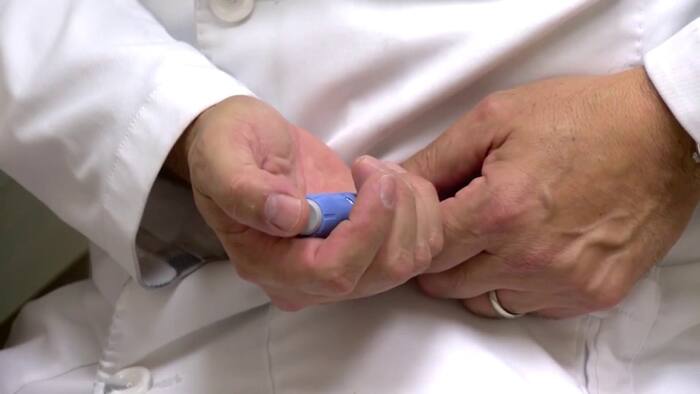
During that same timeframe, prescriptions for GLP-1 medications prescribed for diabetes grew by 150 percent. Researchers found no statistically significant shift toward diabetes-approved versions in the states that cut weight-loss coverage.
State Medicaid budgets remain under pressure. Fewer than 10 states are projected to cover these drugs for weight loss starting in 2027, often under strict prior authorization rules.
At the same time, employer-sponsored health plans are rolling back benefits as drug costs spike. A survey by the Business Group on Health showed that the share of large employers covering GLP-1s for weight loss dropped from 72 percent in 2025 to 60 percent.
JAMA, the journal publishing the Medicaid study, was established in 1883 by the American Medical Association and is now issued 48 times a year from Chicago. Its publisher describes it as the most widely circulated general medical journal in the world, reaching more than 101,000 print recipients and recording over 29 million annual website visits. The journal accepts roughly 10 percent of more than 11,500 yearly submissions and posted a 2025 impact factor of 65.4.
Fewer than 10 states are projected to cover these drugs for weight loss starting in 2027, often under strict prior authorization rules.