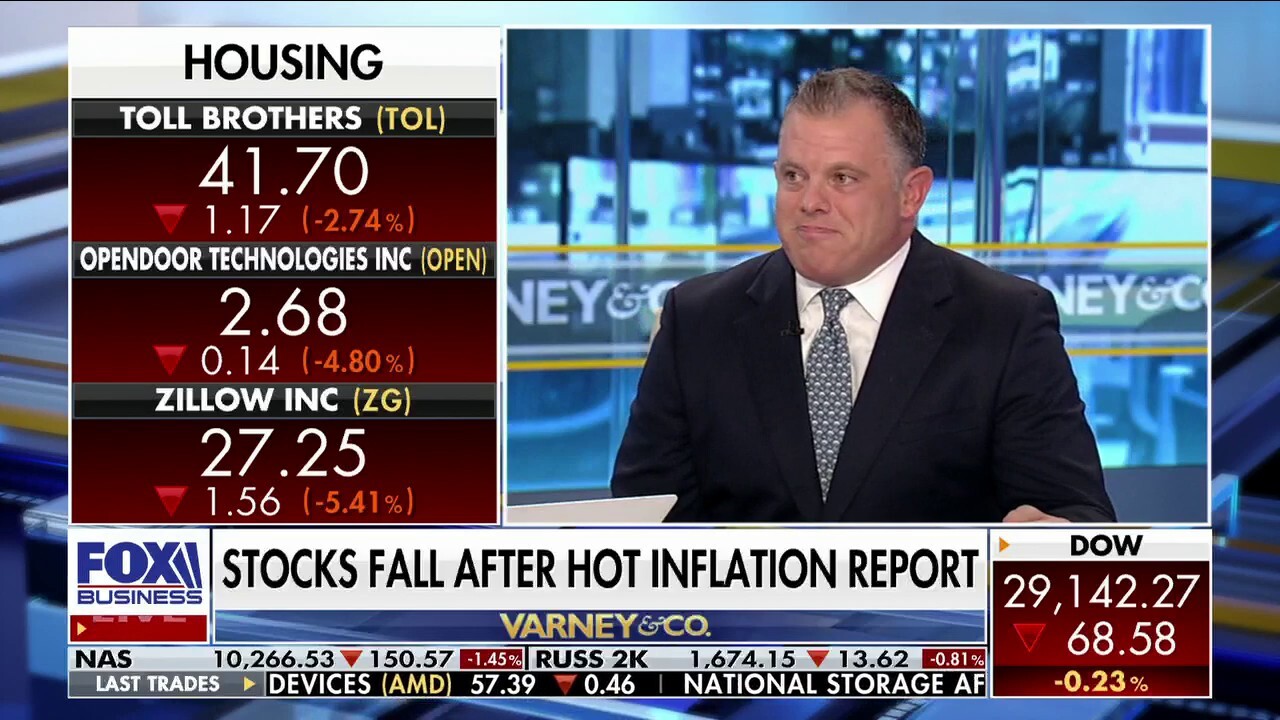
Global stock markets tumbled on Thursday as surging United States inflation data heightened expectations of Federal Reserve interest rate hikes. Asian chipmakers suffered steep losses, led by a severe slump in South Korean and Japanese technology shares following a sharp sell-off on Wall Street.
A wave of selling swept through international financial markets deepening a broader decline in technology shares and cutting into the gains accumulated by artificial intelligence-linked equities.
The MSCI Asia Pacific Index dropped 2.9%, heading toward its lowest closing level since July. Meanwhile, the MSCI Asia Pacific Index fell 1.7% in separate regional metrics, heading toward its lowest close since August. Australia’s S&P/ASX 200 index dropped 0.85%.
The inflation acceleration drove traders to reprice monetary policy bets, anticipating that the Federal Reserve will raise borrowing costs.
Jung In Yun, chief executive officer of Fibonacci Asset Management Global, noted that the surprise US consumer price index reading and core bond sell-off are forcing investors to re-evaluate funding risks across the artificial intelligence sector. Charu Chanana, investment strategist at Saxo Markets in Singapore, stated that the market action reflected a traditional risk-off move where equities face pressure and investors search once more for safety, alongside rising government bonds in Australia and New Zealand.
Asian Semiconductor Rout and Circuit Breakers in Seoul
Asian exchanges bore the brunt of the regional retreat. South Korea’s Kospi index plunged by more than 8%, triggering a twenty-minute trading suspension as panic selling gripped the market. The index dropped to 5,527.12 points, moving further away from the 9,000-point milestone it surpassed in June during the peak of the global artificial intelligence boom.

Memory chip giants experienced sharp reversals in Seoul. Other Korean technology firms suffered heavily as well, with LG Innotek falling 8.1%, Seoul Semiconductor losing 7.7%, and Samsung SDI declining 6.8%.
In Tokyo, the Nikkei 225 declined to 64,674.96 points, while the broader Topix index fell 1.9%. Technology-focused shares led the losses in Japan, with Advantest and Tokyo Electron falling 7.3% and 5.8% respectively, while tech investment giant SoftBank Group retreated by 7.9%.
US Semiconductor Stocks Lead Sharp Market Decline
The Asian correction followed a sharp sell-off across American exchanges.
Semiconductor stocks led the decline in the United States. The Philadelphia Semiconductor Index, known as SOX, declined 3.1% on Wednesday for its sixth session, losing roughly 10% over that stretch in its longest losing streak since May 2025. Major US chip designers also retreated, with Nvidia down, Broadcom falling, and Advanced Micro Devices dropping.
Additional components of the Philadelphia Semiconductor Index sustained steep losses during the rout. Arm Holdings dropped roughly 20%, Applied Materials fell approximately 15%, and Intel declined 11%, leaving GlobalFoundries as the sole positive exception among the index’s constituents.
Investors Shift Capital Toward Treasury Bonds and Gold
As equities fell, investors shifted capital toward safe-haven assets. US Treasury bonds rallied across the yield curve. The yield on the benchmark 10-year Treasury note declined by eight basis points to 5.10%, pulling back after reaching earlier in the month at its highest level since 2002. Two-year yields fell seven basis points to 4.72%.
Gold recovered from three days of losses to trade near $4,140 per ounce. Meanwhile, Brent crude fell 1.1% to $105.45 per barrel (and in alternative benchmarks, alongside US West Texas Intermediate falling) as supply disruption concerns in the Middle East eased slightly, though prices remained elevated compared to levels recorded prior to the outbreak of the conflict with Iran in late February.
Ulrike Hoffmann-Burchard of UBS Global Wealth Management’s chief investment office noted in a research note that the pullback represents a recalibration of expectations rather than a fundamental collapse of the artificial intelligence investment thesis. Meanwhile, billionaire Ray Dalio warned that artificial intelligence constitutes a traditional bubble nearing an inflection point driven by higher interest rates and liquidity demands.
The US Russell 2000 index for small-cap companies entered a correction phase during the market sell-off, while the US market’s longest period of calm since prior to the coronavirus pandemic officially came to an end.
Markets also monitored reports regarding Chinese competitor CXMT making advancements in memory chip designs capable of storing larger volumes of data within smaller spaces, introducing heightened competitive pressures to the memory market.

The International Monetary Fund cautioned in its Global Financial Stability Report that spillovers from any potential correction in the artificial intelligence sector could extend globally across markets.
Broader US futures indicated continued downward pressure, with S&P 500 futures dropping, Nasdaq 100 futures sliding, and Dow Jones Industrial Average futures gaining a marginal 22 points as traders awaited upcoming corporate earnings reports and economic data releases.
Markets continued to face ongoing macro pressures from high sovereign debt levels and energy shock risks stemming from the conflict with Iran.
Broader regional indices reflected similar risk aversion, with the S&P/ASX 200 in Australia declining 0.2% to 8,710.20 points and Japan’s Nikkei 225 sliding 5% to 64,334.68 points in separate session measures.
Market sentiment remains sensitive to incoming corporate earnings reports from major chipmakers, which are expected to test investor confidence in artificial intelligence-related valuations.

Analysts emphasize that elevated borrowing costs and high valuation multiples will continue to dictate whether capital expenditure into digital infrastructure can produce adequate returns.
As trading resumes across major global hubs, investors remain focused on interest rate trajectories and corporate disclosures for near-term direction.
Trading volumes in key technology stocks remain volatile as market participants process the implications of shifting monetary policy expectations.
Financial institutions continue to evaluate the balance between high artificial intelligence capital expenditure and sustainable revenue generation across international markets.