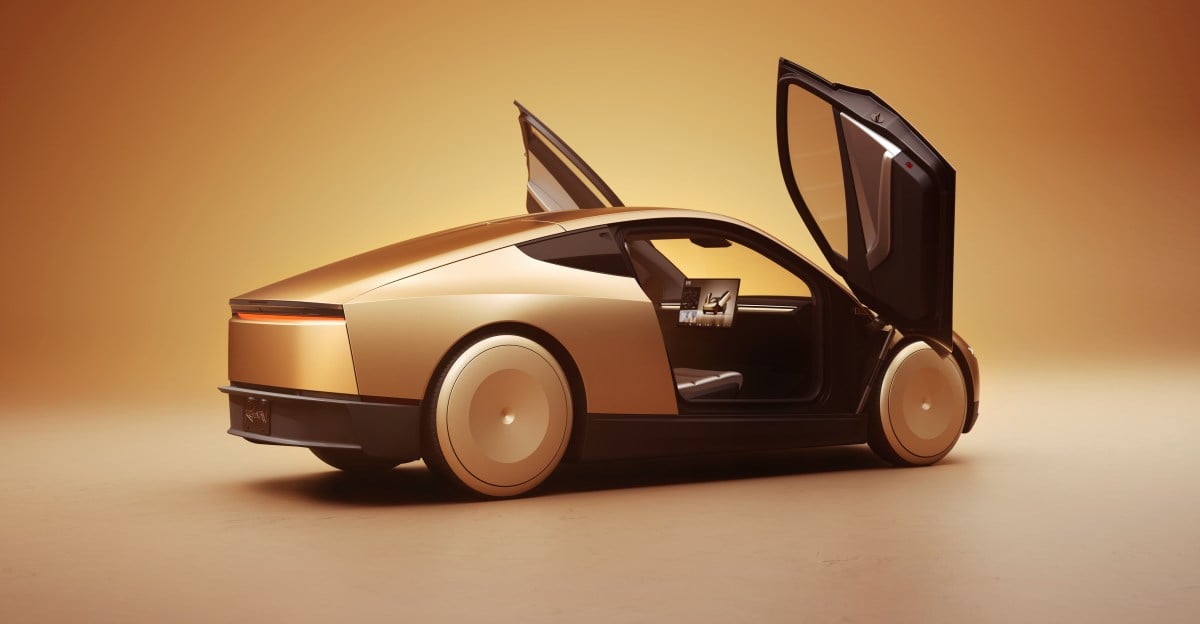
Tesla has opened orders for its autonomous Cybercab to private buyers in the United States, offering the steering-wheel-free two-seater at an estimated price of $29,990 before taxes.
The company announced the launch through its official Robotaxi account on X, stating that “select customers are now being invited to purchase Cybercab for personal use.” Production of the vehicle began at Gigafactory Texas in April 2026, and initial deliveries are slated to begin in Austin in December 2026 for buyers who put down a $1,000 non-refundable deposit.
Select customers are now being invited to purchase Cybercab for personal use pic.twitter.com/LDIkKuseAZ
The Mandatory Autonomy Subscription
While the $29,990 sticker price undercuts the Model 3 by $7,000, operating the vehicle requires a continuous financial commitment. Buyers must subscribe to Tesla’s autonomy software at a mandatory $299-a-month rate, with the first month included in the purchase.
According to the Autonomy Subscription Agreement cited in online tracking reports, the vehicle will not operate without an active paid subscription. Canceling the monthly fee leaves the car without manual controls for public roads, effectively rendering it unusable.
The memes are everywhere, so let’s go back over the bet: Cybercab publicly available for under $30k by the end of 2026 My hair is safe for several reasons 1: No deliveries yet. But they’re estimating starting in December so that’s neat 2: Invite only, not actually publicly… https://t.co/NCD2aFbe2c
The vehicle uses a front-mounted single motor with a maximum output of 163 kW, delivering 219 horsepower alongside a 47.6 kWh lithium iron phosphate battery. Weighing in at 1,412 kilograms, the car delivers an EPA-estimated range of roughly 673 kilometers and consumes 10.2 kWh per 100 kilometers.
When it was originally introduced by Elon Musk in 2024 during the “We, Robot” event, the vehicle was promised to cost under $30,000. That initial unveiling drew a sharp public response, including tech influencer Marques Brownlee promising to shave his head on camera if Tesla actually delivered the vehicle for under $30,000 before 2027.
It will be available nationwide, as we receive regulatory approval. But the monthly fee is too high. Should match the cost of Tesla FSD and connectivity for other models, which is more like ~$115/month.
The $299 monthly fee adds more than $10,700 to ownership costs over three years, and approaches $18,000 if stretch-owned to five years. In contrast, Musk acknowledged during public commentary that the current $299 monthly subscription is too expensive and should eventually drop to around $115 per month.
The vehicle’s architecture features a 21-inch center touchscreen, 20.1 cubic feet of cargo space, no side mirrors or rear window, and a purpose-built camera-only autonomy stack running unsupervised FSD version 15 on modified Hardware 4. Tesla insurance can be used to get the vehicle insured, though the monthly subscription explicitly excludes auto insurance.
It’ll work unsupervised inside all the same geo locations as @robotaxi, just serving the owners’ needs. https://t.co/0oFc5wKNkd
The subscription terms further dictate that operations outside the permitted operating area are strictly prohibited and may be technologically prevented. Included within the subscription are vehicle connectivity, remote support, roadside assistance, and covered services. Hauling services are provided up to a span of roughly 50 miles heading to or leaving a Tesla service center or the registrant’s home location when necessary.
Unplanned repairs sitting outside Appendix A are excluded from the subscription, though they may fall under the vehicle warranty. For scheduled appointments, the Cybercab travels autonomously and unoccupied to a Tesla service center—or is transported if required—and returns automatically once the work is completed.

Modifications such as wraps, tint, and wheel changes must go through Tesla or a Tesla-authorized provider to the extent allowed by law; non-compliance risks subscription suspension.
Accumulating three or more strikeouts for improper or unsafe use triggers a one-week suspension of autonomous driving features, during which the vehicle may not operate and the monthly payment is not prorated. Tesla explicitly reserves the right to remotely access, locate, restrict, control, or place any Cybercab into a safe state.
BREAKING: Tesla’s Cybercab Autonomy Subscription terms are now live. A paid monthly subscription is required. 1/12 Tesla: “Your Cybercab will not operate without an active Autonomy Subscription. 🧵 pic.twitter.com/umVk6DJE2x
Cybercabs Operate Within Specific Service Areas and Geofences
Privately owned Cybercabs face strict operational boundaries. The vehicle will only be available in supported service areas where Tesla currently operates its driverless ride-hailing fleet in Texas and Florida.
Tracking of the Robotaxi app indicates that active pickup and drop-off zones cover only a portion of the advertised geofences across cities like Austin and Miami, constrained by infrastructure such as railroad crossings.
Elon Musk clarified that the Cybercab will be available across the entire US as soon as Tesla receives regulatory approval. He also acknowledged that the $299 monthly autonomy subscription is currently too expensive and should eventually come down to around $115/month (cost of… https://t.co/kUBh08bycf pic.twitter.com/70KJjxySmx
NHTSA Audits Tesla Safety Certifications for Cybercab
The personal sales pilot arrives as the vehicle faces federal oversight. The National Highway Traffic Safety Administration launched a formal audit inquiry in September examining how Tesla self-certified the Cybercab against federal safety standards that typically mandate physical controls like steering wheels and pedals.
NHTSA Administrator Jonathan Morrison emphasized at the time of the probe’s announcement that the agency needs to ensure all laws are followed. Tesla previously self-certified up to 1,000 vehicles under new Texas rules, maintaining that the federal cap of 2,500 exempted vehicles per year does not apply, with 45 purpose-built units registered in Texas when the audit was announced.
Tesla will deliver a fully unsupervised self-driving vehicle for $29,990 (plus sub) with no steering wheel or pedals next month, yet some claim it’s not real because it’s “invite only” right now. Shoutout to the Tesla team for delivering on something many people said wouldn't… pic.twitter.com/z1lKtzHsKq
Tesla currently has 278 Cybercabs in operation, representing approximately 40 percent of its fleet, with public fleet estimates pointing to roughly 4,000 total robotaxis operating across its service footprint. The company emphasizes that the current consumer rollout remains a limited invitation-only pilot, with the vast majority of production capacity continuing to supply its own commercial fleet.
As independent tracking notes, a prior test ride in Austin was priced at $7.77 compared to $12.10 for the exact same trip executed inside a four-seat Model Y robotaxi. Musk has asserted that the Cybercab will eventually launch nationwide the moment federal and state regulators grant final approval, removing city-by-city geographic limitations entirely.
What do you think of Tesla's $299/month Cybercab Autonomy Subscription, which includes all of the following: • FSD Unsupervised within Tesla's Robotaxi geofences • Tire replacements & flat tire replacements, inspections & rotations • Premium Connectivity • Windshield…