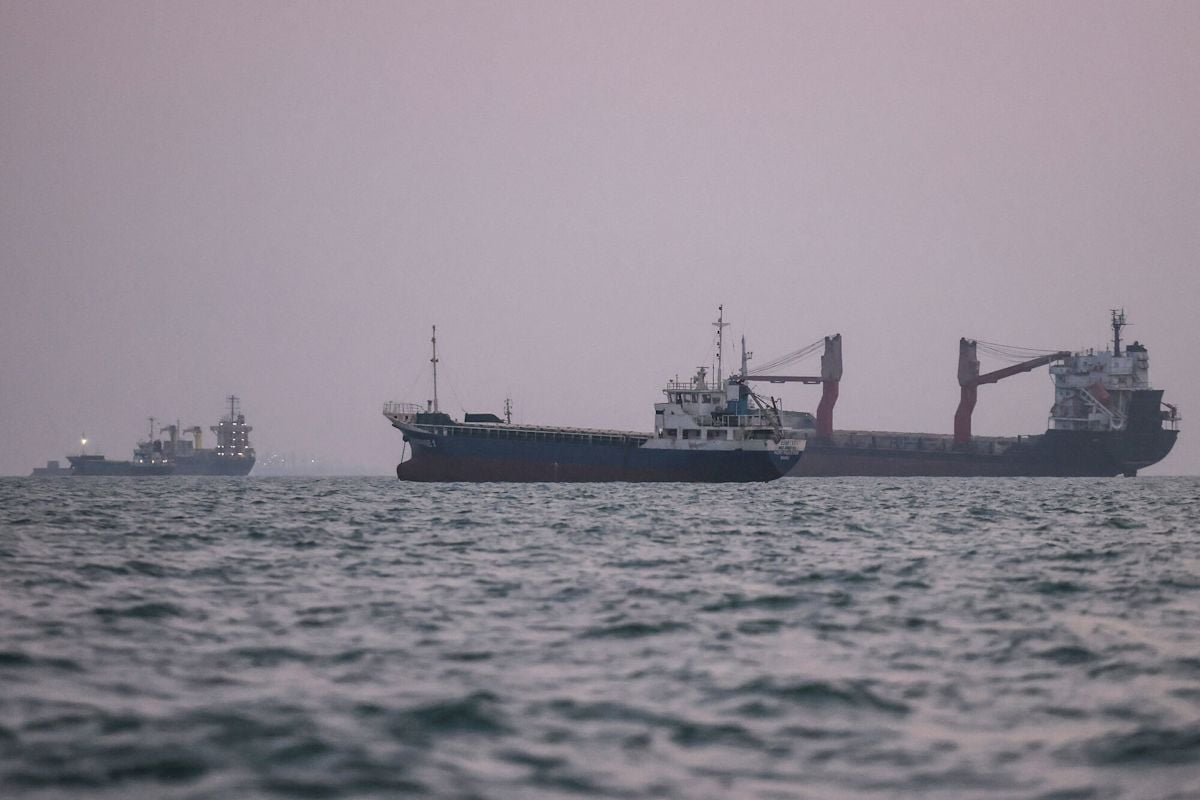
Three oil tankers struck naval mines and caught fire in the Strait of Hormuz after entering unauthorized shipping routes with their navigation and identification systems switched off, Iran’s, Islamic Revolutionary Guard Corps Navy reported.
The incidents occurred in the early hours of Tuesday, leaving the burning vessels abandoned near the southern shores of the waterway. The Revolutionary Guard said that vessels disregarding maritime regulations and cooperating with the U.S. military to cross restricted routes would face similar consequences, according to a statement carried by the Tasnim News Agency.
Iranian Military Authorities Report Shifting Tanker Explosion Figures
The reported explosions follow shifting figures from Iranian military authorities regarding damaged vessels in the strategic energy corridor. On Thursday, November 12, the Revolutionary Guards announced that two oil supertankers carrying more than 4 million barrels of crude had been left burning after explosions disabled them along unauthorized southern passages, according to Iran International.
That announcement followed an earlier IRGC claim in late October that three tankers had struck mines over a 24-hour period. Iranian state media subsequently reported that another tanker carrying liquefied gas struck a naval mine and suffered an explosion after traveling along an unauthorized route.
Independent confirmation of the attacks remains unavailable. The Associated Press reported that it could not confirm the initial three-tanker claim, while Britain’s United Kingdom Maritime Trade Operations Center stated it could not establish whether a separate vessel spotted on fire was connected to the incidents described by the Revolutionary Guard.
The UKMTO recorded multiple suspicious incidents in the region, including a tanker struck by an unidentified projectile northeast of Limah, Oman, and another fire prompting crew evacuation northwest of Khasab, Oman. The international shipping agency said that the condition of crews and the exact extent of damage on several affected vessels remained undetermined as investigations proceeded.
Vessel Attacks Reach Monthly Highs Despite Increased Shipping Traffic
The ongoing maritime security crisis persists despite a broader recovery in commercial shipping traffic through the Gulf. October recorded attacks involving 37 vessels—the highest monthly total since the conflict between Iran, the United States, and Israel began in February—alongside a wartime high of 31 liquefied natural gas tanker departures, according to a Reuters analysis cited by shipping monitors.
Lloyd’s List Intelligence reported that tankers have continued transporting energy supplies through the strait under U.S. military protection despite the surge in attacks.
Data from the International Maritime Organization showed 134 confirmed maritime incidents in the region with 25 seafarers killed as of November 11. IMO Secretary-General Arsenio Dominguez urged governments to ensure compliance with international rules protecting commercial crews.
International agencies have emphasized that critical desalination plants in the region depend on secure surrounding waters, while major producers including Saudi Arabia, Iraq, Kuwait, Qatar, and the United Arab Emirates rely heavily on the continued transit of crude oil and liquefied natural gas through the strait.
In the past weeks and months, the IRGC has repeatedly lied out of desperation, and today is no different.
Tim Hawkins, U.S. Central Command
The U.S. military rejected the IRGC’s statements, with Central Command figures dismissing Iranian claims regarding naval operations and disputed drone interceptions as archival posturing on social media. U.S. officials also denied separate Iranian assertions that an American drone had been captured near the waterway.