
TSMC filed a $22.6 billion incentive application for a 2-nanometer fab campus in Brazos County on Monday.
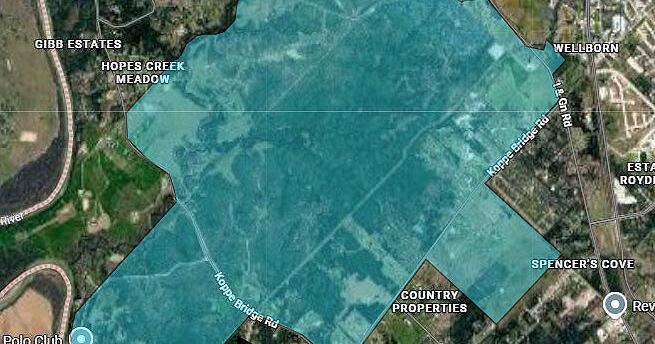
The filing, submitted by subsidiary TSMC Arizona to the Texas Comptroller under the state’s Jobs, Energy, Technology and Innovation program, proposes one or more advanced-logic fabs on more than 3,200 acres near College Station. The company said a school-district property-tax limitation is “decisive” to the investment decision and flagged Arizona — where it already operates a fab that opened in late 2024 — as a competing site with “certain operational and economic advantages”.
JETI Filing Details Campus Scope
The application package, published on the Texas Comptroller’s open-data portal, names the project the TSMC Texas Advanced Semiconductor Manufacturing Campus. It targets 2-nanometer or more advanced process nodes for artificial intelligence, high-performance computing and mobile chips.
The filing estimates at least 2,099 direct jobs with an average annual salary of $133,000 and a construction window of 2027 to 2031. County officials stressed the site is “under construction” only in the sense of contractual negotiations; land parcels are under contract but not yet purchased, and the agreements are not binding.
Brazos County Manager Trevor Lansdown called the proposal a “transformational opportunity” for residents. “The direct and indirect jobs this investment could create would open new doors for our residents, strengthen local businesses, and give our children and grandchildren more opportunities to build rewarding careers right here at home,” he said.
The county is coordinating with College Station, Bryan, College Station ISD, Texas A&M University and the Greater Brazos Partnership, and plans a public town hall and a dedicated project webpage.
Arizona Offers Established Alternative
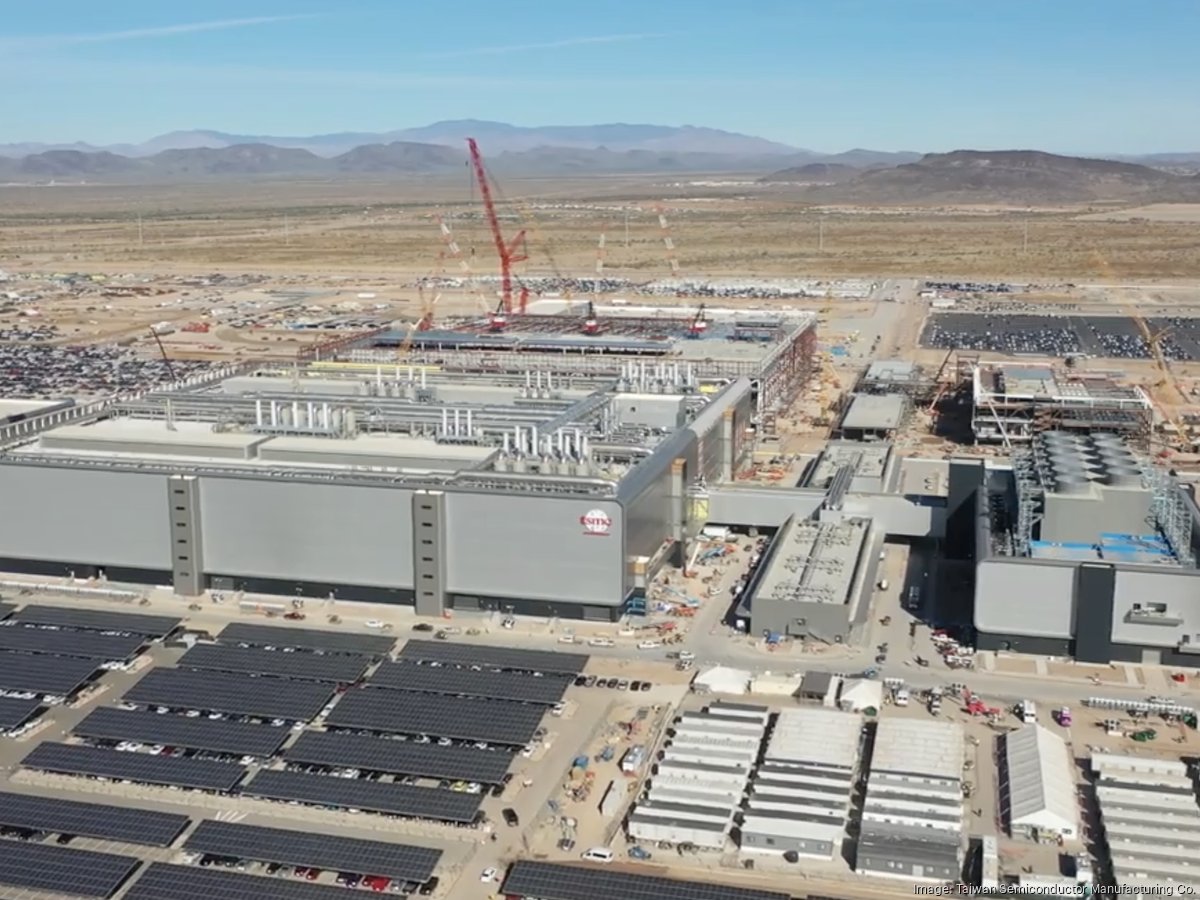
TSMC’s Arizona operation, announced in 2020, began production in late 2024; a second fab is scheduled to open in 2027 and two more are under construction.
The Texas filing explicitly notes that expanding in Arizona could offer “certain operational and economic advantages” because the subsidiary is headquartered there and has an established workforce, supply chain and local relationships. That framing turns the JETI application into a lever: the tax break is not icing but a condition precedent.
Approval Gauntlet Awaits
The JETI process requires review by the Texas Comptroller, approval by the governor, and a vote by the College Station ISD Board of Trustees — which replaces maintenance-and-operations tax revenue with state dollars. Any county-level incentive agreement would be considered separately by the Brazos County Commissioners Court, with public hearings and final votes in open session.
Tax Clock Drives Decision
Property taxes on a fab apply not only to land and buildings but to billions of dollars of machinery that sits on-site for decades. The filing puts total capital investment at $22.6 billion — roughly $8.6 billion in real property and $14.0 billion in equipment, according to an economic-benefit statement dated November 19.
At that scale, a 10-year school-district abatement can shift the project’s long-run payoff enough to tip the site decision. The company’s own language: the tax limitation will “dictate” whether it commits to Texas or expands in Arizona.
Land Deal Hinges on Tax Outcome
Brazos County records show the more than 3,200 acres remain unpurchased, and TSMC’s filing states the land agreements are not yet binding, KBTX reported. The parcels fall inside College Station’s extraterritorial jurisdiction and the College Station ISD boundary, which determines the school-district tax limitation math, KCENTV said county officials confirmed.
Brazos County officials said the proposal is for a semiconductor manufacturing plant, not a data center, and noted the proposed WNC USA manufacturing plant in El Paso as a separate project.
Arizona Operations Cited as Established Rival
TSMC’s own filing states the Arizona subsidiary is headquartered there and has operated a fab since late 2024, giving it an established foundation in workforce scheduling, supply chain and local relationships, Taiwan News and Finimize reported.
explainx.ai Blog said that for foundry slots in 2028–2029, Arizona is the nearer U.S. option because packaging partners such as Amkor still tie wafer geography to assembly geography. TrendForce, cited by the Dallas Business Journal, reported Texas state development documents outline a potential $45 billion investment by an unnamed semiconductor manufacturer for two fabs, 5,000 jobs over six years and production by late 2029.
University Pipeline Targets Mid-2028 Operations
Texas A&M System officials briefed the Brazos Valley Intergovernmental Committee on November 16 that the semiconductor institute building is about 20 percent complete, with substantial completion expected around the end of 2027, equipment installation to follow, and significant operations in mid-2028, KBTX reported. The system disclosed a $205.5 million budget for the institute, infrastructure and equipment in September.
Market Context Shows Demand Strength
TSMC’s Q3 2026 earnings showed 2-nanometer wafers already contributing 8% of revenue while high-performance computing neared 68% of sales. The bottleneck is geographic concentration in Taiwan and the pacing of Arizona’s ramp, not demand. GuruFocus noted TSMC shares traded at $363.60 on November 24, about 5.7% below its $385.75 GF Value estimate, with insiders net sellers of millions over the prior 12 months.
TSMC Arizona, the subsidiary headquartered in Phoenix, already operates a first fab that began 4‑nanometer production in early 2025 and serves Apple as its largest customer with tens of millions of chips delivered that year.
Its established supply chain includes ASML for EUV tools and Amkor for advanced packaging, plus on‑site gas agreements with Linde and Air Liquide, while workforce pipelines trained in Taiwan are now scaling toward a 30,000‑wafer monthly run‑rate.
Comptroller review, gubernatorial sign-off, and the College Station ISD board vote are the immediate gates. The county’s town hall date has not been set. If the incentives clear, construction could start in 2027 with first production targeted for 2031. If they don’t, TSMC has signaled it will put the capital into Arizona instead.