The U.S. economy expanded at a 4.3% annualized rate in the third quarter of 2026, a sharp upward revision from the 3.4% estimate initially reported in late October.
The Commerce Department’s Bureau of Economic Analysis released the updated figures on Wednesday, November 25, 2026, according to Yahoo Finance. The 0.9 percentage point increase, driven primarily by stronger business investment and consumer spending, marks the fastest pace of growth in three years. The private-sector domestic economy expanded at a 5.8% rate, the hottest such growth since 2003.
Investment Spending Drives Consumer Spending Rise
Business investment, particularly in software and artificial intelligence infrastructure, served as the single biggest driver. Nonresidential fixed investment rose 16.1%, with equipment spending increasing by 21.8% and intellectual property products growing by 13.6%.
Consumer spending, which accounts for more than two-thirds of the U.S. economy, was also revised upward. The BEA reported that household spending rose at an annualized rate of 4.2%, up from the previously reported 3.8%. The personal savings rate rose 0.5 percentage points to 4.1% in October, yet remains below the 4.9% rate seen a year earlier.
Heather Long, chief economist at Navy Federal Credit Union, said the cautious consumer is back, suggesting the upcoming holiday season may be characterized by bargain-hunting.

Pce Index Rises Above Central Bank Target
The Personal Consumption Expenditures price index, the Federal Reserve’s preferred inflation gauge, rose 3.8% annually in October, well above the central bank’s 2% target. Core PCE, which excludes volatile food and energy prices, climbed to 3.3% from 3.1% in September. Chris Zaccarelli, chief investment officer at Northlight Asset Management, said inflation is not accelerating but remains too high to convince the Federal Reserve to remain on hold.
The CME FedWatch tool shows a 92.4% probability of a 25-basis-point hike, which would push the federal funds rate to a target range of 4% to 4.25%. Jim Baird of Plante Moran Financial Advisors said the data reinforces a familiar tension, as the economy remains overheated with demand exceeding supply.
“In the simplest possible words, the economy is overheated, with demand exceeding supply. The consequence is a blowout of the trade deficit and inflation,” Carl B. Weinberg said
President Trump Calls Revision Fake
President Donald Trump criticized the revision in a post on Truth Social, calling the updated GDP figures “fake” and alleging the initial 3.4% estimate was a “massive, and purposeful, error” released before the midterm elections. He demanded an immediate investigation, claiming the “REAL Numbers on the Economy” were suppressed. The accusations follow heavy Republican Party losses in the November 3 elections.

Revisions to GDP estimates are standard practice as more comprehensive source data becomes available. BEA Director Vipin Arora and coauthor Rebecca Pocase previously found that, over the last 25 years, estimates released 90 days after the initial report typically differed by 0.52 percentage points.
The current 0.9 percentage point revision is tied for 16th among all such updates since 1990 and is the largest since the second quarter of 2020. The BEA did not immediately respond to a request for comment regarding the president’s accusations.
The same source confirmed the second quarter grew at a 2.2% annualized rate, meaning third-quarter growth nearly doubled the prior period’s pace.

“Why wasn't the correct number issued before the Election? I am asking for an immediate investigation of this situation. This is not a small error, this is a massive, and purposeful, error,” President Donald Trump said
Strategists Warn of Sudden Shifts
Fox Business reported that Taylor Riggs and Wall Street Journal chief economics correspondent Nick Timiraos analyzed the Federal Reserve’s inflation fight and the trajectory of interest rate hikes. Their discussion highlighted how stronger growth and persistent inflation are shaping expectations for tighter monetary policy ahead of the December meeting.
Markets React to Stronger Growth
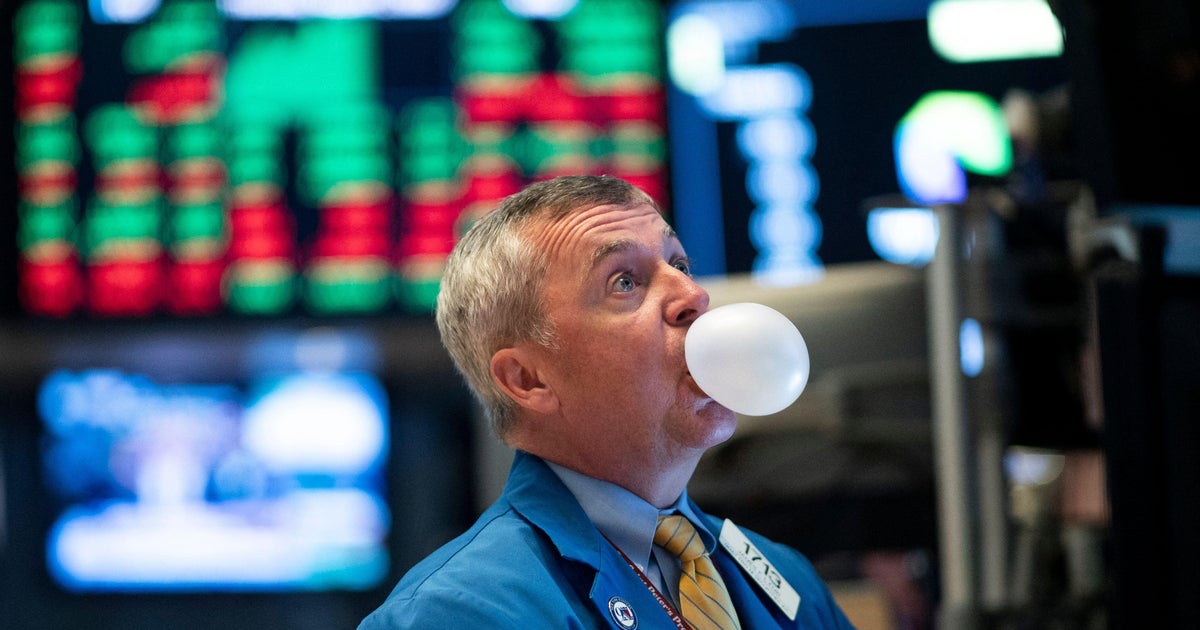
The benchmark S&P 500 Index fell approximately 2.9% in late morning trade, while the tech-heavy Nasdaq Composite dropped over 3% and the Dow Jones Industrial Average slid more than 1.2%. Currency markets also reflected the shifting landscape, with the U.S. Dollar showing a continued move into the Swiss Franc, though it bounced off the 50% midpoint at 0.8285.
Some analysts remain focused on the long-term outlook for 2027. The Bureau of Economic Analysis is scheduled to release its third and final estimate for third-quarter growth on December 23, 2026, at 8:30 a.m. ET.