
China reported third-quarter economic growth of 4.5%, accelerating past expectations as strong exports offset a severe domestic property slump and sluggish consumer spending, according to official data released on Monday.
The headline expansion brought growth for the first nine months of 2026 to 4.6%, placing the world’s second-largest economy within Beijing’s annual target range of 4.5% to 5%. The Q3 figure marked an acceleration from the 4.3% year-on-year growth recorded in the second quarter, which had represented a three-year low.
For the first nine months of the year, total goods imports and exports reached 39,939.9 billion yuan, representing an 18.8% increase compared to the same period in the previous year. In September alone, total imports and exports rose to 5,162.8 billion yuan, a 27.5% year-on-year increase that ran 7.7 percentage points faster than the prior month. Exports for September stood at 3,034.4 billion yuan, up 29.6%, while imports reached 2,128.4 billion yuan, up 24.6%.
Export Engines and High-Tech Manufacturing Drive the Numbers
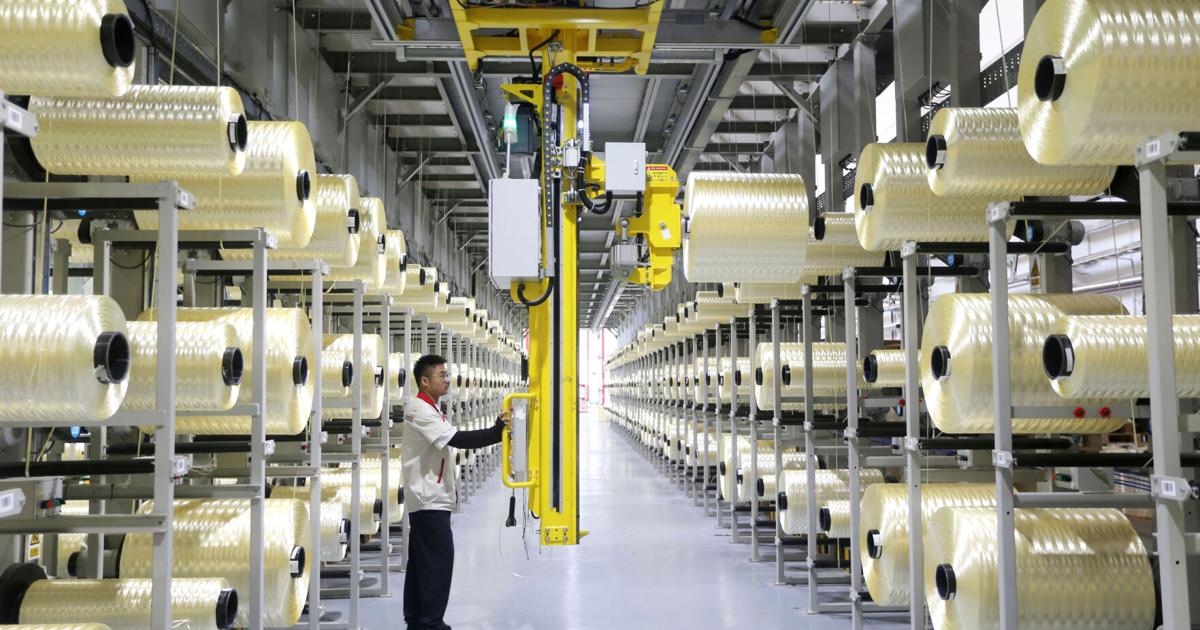
Manufacturing momentum and overseas shipments carried the quarter. Specific advanced products saw steep gains, with the production of 3D printing equipment jumping 62.5%, lithium-ion batteries rising 39.5%, and industrial robots gaining 29.1%.

Total goods imports and exports for the January–September period reached 39,939.9 billion yuan, an 18.8% increase from a year earlier. That trade strength keeps China on track to surpass last year’s record global trade surplus of $1.2 trillion, following a 36% jump in exports last month and a $938 billion surplus accumulated between January and September. Foreign trade volume at major ports reflected the momentum, with the load tonnage of cargo ships departing from and arriving at major Chinese ports rising by 43.1% and 0.3% year-on-year respectively in the third quarter.
Investment and Property Sales Plummet Across Urban Sectors
Fixed-asset investment in urban areas fell 7.2% in the first nine months compared with the same period a year earlier. Within investment sectors, infrastructure investment fell 4.2% year-on-year, manufacturing investment declined 2.1%, and real estate development dropped 20.6%.
Private investment fell 10.4% year-on-year, or 6.7% when excluding real estate development. Nationwide, the floor space of new commercial buildings sold dropped 13.2% to 564.83 million square meters, while the value of new commercial building sales fell 13.9% to 5,379.9 billion yuan. Conversely, the floor space of second-hand housing transactions registered online nationwide rose 10.7% year-on-year to reach 617.46 million square meters. Retail sales of consumer goods and services grew 2.6% over the first three quarters, with services retail sales up 5.0% and goods retail sales up 1.0%, while September retail sales registered a 1.1% increase. The urban unemployment rate stood at 5.2% in September.
Max Zenglein, Asia Pacific senior economist at The Conference Board, argued that official headline growth figures are becoming an increasingly poor indicator of how the broader economy is performing
. Adding to these structural pressures, Ecaterina Bigos, senior market strategist, noted that an export-reliant growth model driven heavily by technology has shown limited job creation and broad income gains while risks of artificial intelligence-driven labor displacements continue to grow.
Global Partners and the European Union Push Back on Trade
Chinese exports to the 27-nation bloc rose 16% in the first nine months. The European Union runs a trade deficit with China of more than $1.1 billion a day and has pushed to rebalance commercial ties, while elevated U.S. tariffs have also hit bilateral trade between the U.S. and China, forcing Beijing to redirect trade toward Southeast Asia, Latin America, and Europe.
It is untenable and unsustainable for the world’s second largest economy to rely on foreign demand to prop up its own growth.
Eswar Prasad, Professor of Economics and Trade Policy at Cornell University
Beijing Allocates Unused Debt Quota
In early October, the government allocated 550 billion yuan of unused debt quota to local governments.
The national consumer price index rose 0.9% year-on-year across the first three quarters. For industrial products, the national industrial producer purchase price rose 3.6% year-on-year during the first nine months.