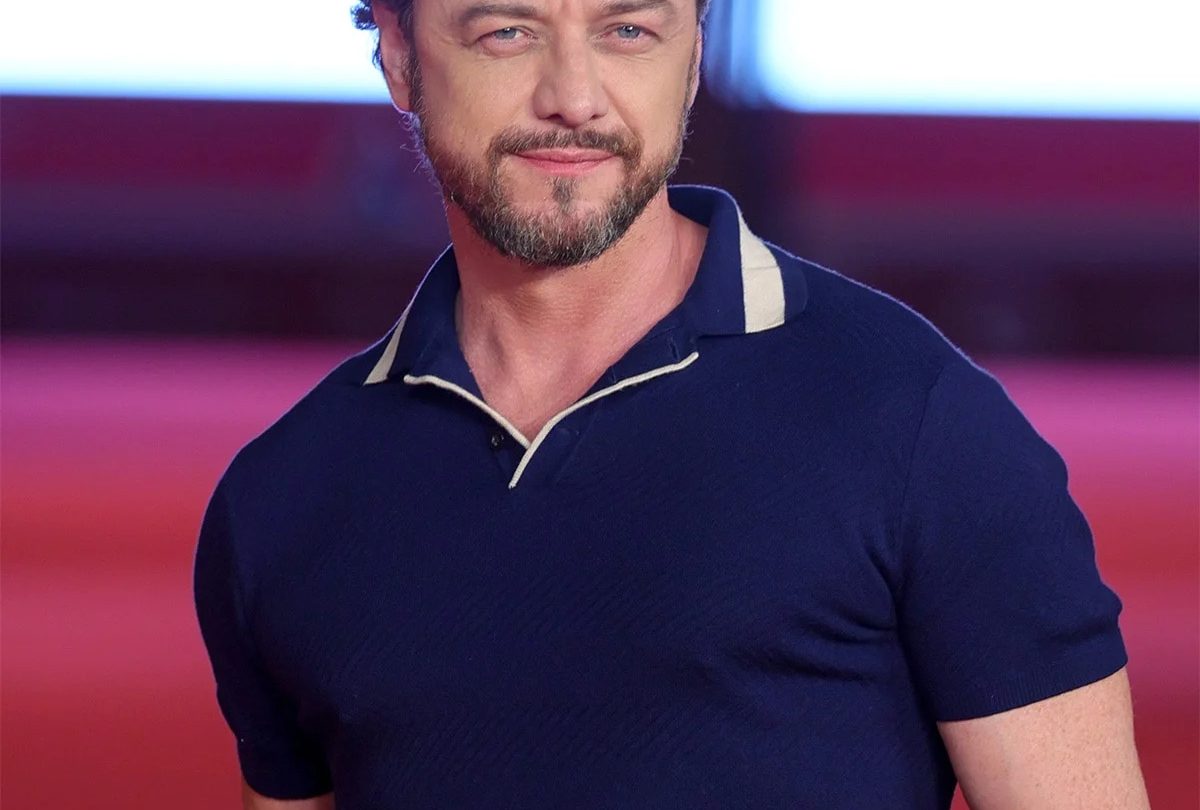
Actor James McAvoy revealed on an October 2026 podcast episode that director M. Night Shyamalan’s 2016 psychological thriller Split is the only film in his career that consistently generates residual checks, earning its first payout right after its opening weekend due to its modest budget.
While Hollywood stars often command massive upfront salaries for blockbuster franchises, the long-term payout of backend deals remains famously unpredictable. For James McAvoy, a career spanning comic book tentpoles, period dramas, and gritty thrillers has yielded plenty of box office success, but very little recurring revenue.
Speaking on an October 2026 episode of Josh Horowitz’s Happy Sad Confused podcast, the 47-year-old Scottish actor candidly addressed the reality of industry residuals during a press tour for his directorial debut, California Schemin’. While listeners might assume high-profile action films like 2008’s Wanted provide a steady stream of income, McAvoy set the record straight.
Why Split Rewrote the Residual Rulebook After Opening Weekend
McAvoy explained that actors’ contracts routinely include back-end provisions, but those clauses rarely translate into actual cash. Most residual statements bring negligible returns, leaving actors with pocket change.
You get the odd check for like, you know, a couple hundred quid here or sometimes you get checks for, like, 25 cents and you’re like, ‘It literally costs more to post this than it did for me to cash it.’
James McAvoy, actor
Split stands as the lone exception to that rule. McAvoy credited the film’s financial anomaly to its exceptionally lean financing and aggressive opening weekend returns on the Happy Sad Confused podcast.

Well, because we made it for — I think it was made for like six million or something like that. And let’s say they spent 30 advertising it. In our first weekend, we made 40. So, we were in profit. So, our first residual check came at the end of the first weekend. It was bonkers.
James McAvoy, actor
Produced on a $6 million budget, the Universal Pictures release distributed profits rapidly. Box office tracking confirms that the psychological thriller grossed $40.2 million in its domestic opening weekend alone, ultimately surging to a $278.45 million worldwide box office haul.
M. Night Shyamalan’s Production Discipline and the Absence of Awards Recognition
Beyond the financial payoff, McAvoy used the podcast appearance to praise director M. Night Shyamalan’s methodical approach to filmmaking. In Split, McAvoy delivered a physically demanding performance as Kevin Wendell Crumb, a man diagnosed with dissociative identity disorder encompassing 24 distinct personalities.
McAvoy reprised the role in the 2019 sequel Glass, which tied together characters from Shyamalan’s 2000 film Unbreakable. Reflecting on the production style behind both films, McAvoy highlighted the director’s strict preparation con the October 15 podcast episode.
James McAvoy Says ‘Split’ Is The Only Film That ‘Really Consistently Pays Me’ https://t.co/Usy0fCksT8
The thing that I took away from him is his preparedness,
McAvoy noted, explaining how Shyamalan maximized shooting days on modest budgets through precise communication with the crew.
Despite critical praise for managing 24 shifting personas, the performance did not secure major Academy Award nominations during awards season. Addressing the oversight, McAvoy joked that he crafted his own golden award, while offering a broader critique of how genre performances are traditionally treated by major Hollywood voting bodies.

The financial realities of supporting actors in major productions often contrast sharply with the colossal payouts enjoyed by leading artists in the industry. As the 47-year-old actor noted during his podcast appearance, tracking down residual checks can occasionally yield frustration rather than wealth, with some statements failing to cover the administrative cost of cashing them.
Reflecting on past projects, McAvoy specifically contrasted his earnings from Split with his work on the 2008 action thriller Wanted, in which he starred alongside Angelina Jolie. Despite the film’s commercial visibility, he noted that he does not receive significant recurring payments from that project.
McAvoy emphasized that while back-end deals and residual clauses are standard contractual elements across the entertainment business, the actual realization of ongoing income remains an exception rather than the rule for most working actors.