Researchers at Washington University School of Medicine have published a single-cell variant-to-enhancer-to-gene map for coronary artery disease in Nature on Wednesday creating a catalog that connects inherited genetic risks to specific cell types and genes.
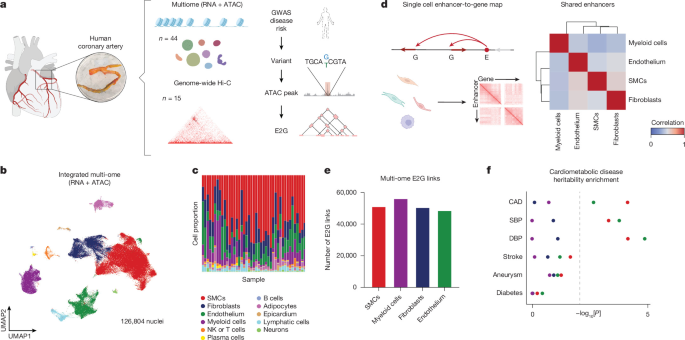
- Researchers analyzed 44 human coronary artery tissue specimens recovered from donors without heart failure and from patients with chronic heart failure during heart transplantation.
- The catalog links more than 350 inherited genetic changes discovered through genome-wide association studies to their enhancer elements and target genes.
- The study was led by senior author Nathan O. Stitziel alongside first author J. M. Amrute and an international consortium.
Mapping Vascular Wall Genetics in Human Artery Samples
Common chronic conditions like coronary artery disease develop through a complex interplay of genetics and environment. While large genome-wide association studies have identified more than 350 inherited genetic changes associated with higher risk, nearly all of these variants sit within noncoding regions of the genome. That genomic placement made it difficult for researchers to determine exactly how the variants function.
To unravel that puzzle, investigators from the Washington University School of Medicine analyzed cell nuclei derived from 44 human coronary arteries provided by individuals without heart failure and patients suffering from chronic heart failure. Approximately half of the tissue donors experienced heart failure from severe coronary artery obstruction and ischemic damage, while the remaining donors underwent transplantation for non-ischemic cardiomyopathies.
By using single-nucleus chromatin accessibility profiling and transcriptomic sequencing, the team mapped the regulatory features of four primary vascular cell populations within the arterial wall. After quality control, the researchers obtained data on 126,804 nuclei belonging to 11 cell types, including vascular smooth muscle cells, endothelial cells, fibroblasts, and myeloid cells.
Smooth Muscle Cell Phenotypic Switching and Artery Compliance
The investigation revealed that much of the heritable portion of coronary artery disease risk concentrates in noncoding variants acting on cells of the artery wall, particularly smooth muscle cells. Through targeted experimental analyses, noncoding variants caused smooth muscle cells to reduce expression of critical contractile machinery and shift toward a rigid, pro-inflammatory cellular state.
For instance, a specific noncoding genetic variant stimulated protein production that prompted smooth muscle cells to diminish their contractile efficiency, rendering them less pliable and more inflammatory. This phenotypic switching compromises the ability of coronary vessels to maintain physiological compliance and accelerates plaque vulnerability.
We now have a map that connects noncoding genetic variants associated with coronary artery disease to the protein-coding genes and cell types they impact, paving the way for possible new therapeutics.
Nathan O. Stitziel, professor of medicine and genetics at Washington University School of Medicine in St. Louis
Regulatory Regions Within Vascular Cell Nuclei
Scientists identified 143,743 regions of open chromatin specific to different cell types during their multi-omic profiling of coronary artery specimens. Such regions may contain regulatory DNA elements that affect gene activity within the arterial wall.
Writing in the journal, Junedh Amrute and co-researchers said that this structured strategy can be utilized broadly across various illnesses to establish an unbiased system for prioritizing disease-associated genes and cell types that drive common heritable human conditions.
Characterizing Genetic Variations Through Chromatin Profiles
Investigators also discovered that 26.7% of the lead macrophage caQTL variants were similarly the lead variant among 3,528 monocyte caQTLs identified previously in peripheral blood.

Advanced Multi-Omic Technologies and Therapeutic Discovery
The research team deployed a single-nucleus multi-ome sequencing technique with paired genotyping to characterize the transcriptome and epigenome at single-cell resolution. They linked extended areas of open chromatin peaks to genes using a supervised single-cell model called single-cell enhancer-to-gene, or scE2G.
A disease-relevant computational framework called single-cell variant-to-enhancer-to-gene then integrated cell-type-specific regulatory elements, GWAS variants, scE2G links, and chromatin accessibility quantitative trait loci. To examine long-range genomic interactions, the team also performed Hi-C analysis across 15 coronary arteries, verifying their findings with cell-type-specific Hi-ChIP sequencing, CRISPRi-mediated suppression, and Perturb-seq on coronary artery smooth muscle cells.
And because the gene mapping approach we employed could be applied to any complex disease, we think this study could be highly impactful for the field of human genetics broadly.
Nathan O. Stitziel, WashU Medicine cardiologist
Stitziel and his colleagues are studying several genes identified in this research to pursue new therapeutics for coronary artery disease. Research groups are also preparing to adapt this analytical approach for other chronic illnesses marked by substantial noncoding polygenic susceptibility, such as type 2 diabetes, chronic kidney disease, metabolic disorders, and pulmonary conditions.