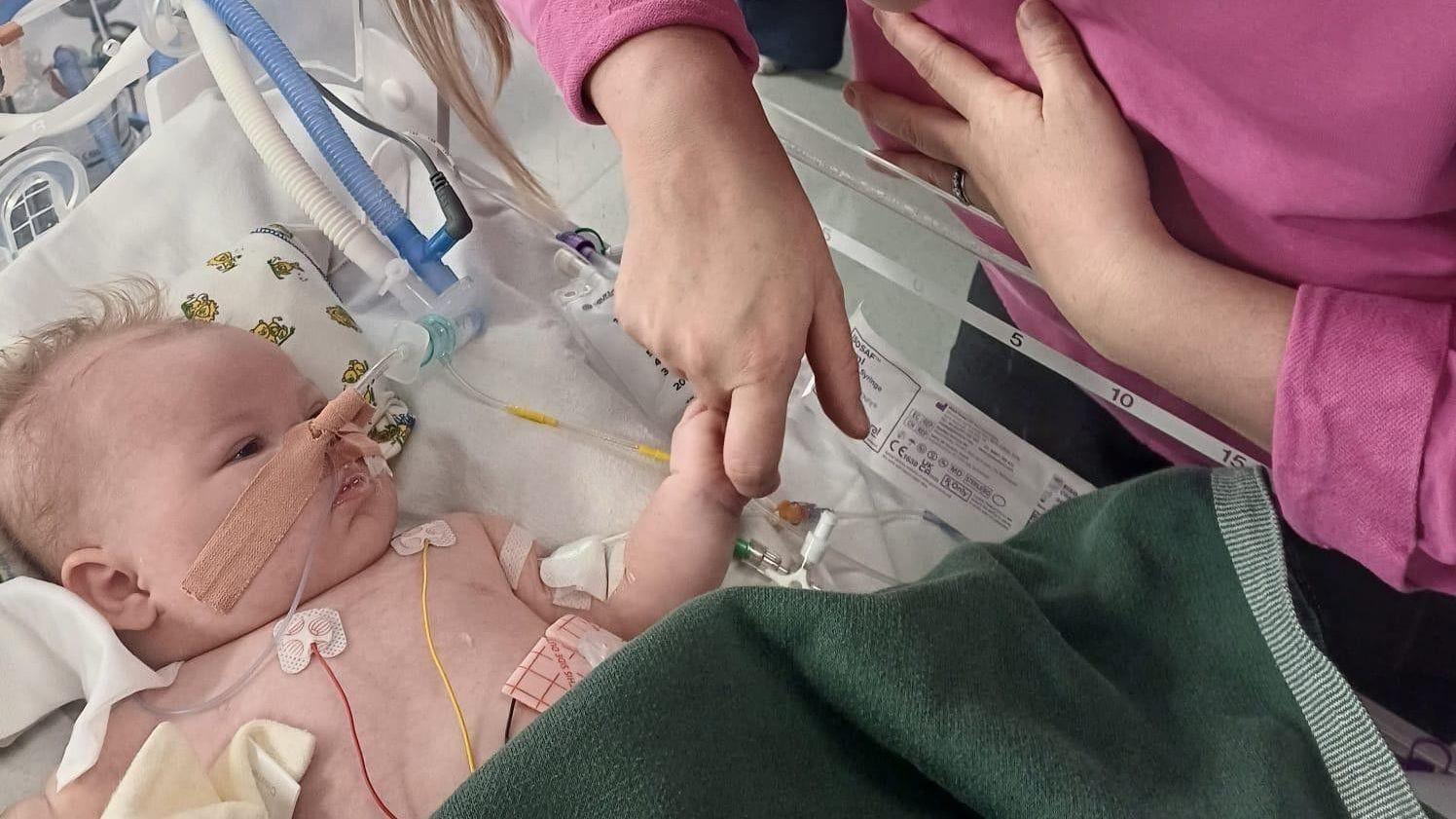
Following a 16-week intensive care stay for her son Bert at Birmingham Children’s Hospital, Emma has contributed upward of 90 pints of breast milk to the Human Milk Bank situated at Birmingham Women’s Hospital. She aims to reach 100 pints by November to support premature and sick babies across the region.
When Emma’s son Bert was born in November 2025 at the Princess Royal Hospital in Telford, he arrived with Down’s syndrome and oesophageal atresia, a birth defect that prevents food from reaching the stomach. At three weeks old, he contracted sepsis and spent 16 weeks in intensive care at Birmingham Children’s Hospital. Because Bert was nil by mouth during his hospital stay, Emma was unable to breastfeed him directly.
Emma Supplies Birmingham Women’s Hospital Milk Bank
She has since donated over 90 pints of breast milk to the Human Milk Bank at Birmingham Women’s Hospital. Faced with the reality of producing milk she could not use for her own hospitalized son, Emma decided to help other families. She reflected on her situation while sitting in the ward, thinking that she would have plenty of milk to give away after watching several mothers struggle to express it.
I sat there thinking I’m going to have a lot of milk to give away. I saw a number of mothers that really struggled to express milk. I thought, let’s donate mine to other neonatal babies.
Milk Bank Supplies 1,900 Pints Across the Midlands
Over the past year, it supplied 1,900 pints of milk to premature and sick babies across the region whose mothers cannot breastfeed. The Human Milk Bank at Birmingham Women’s Hospital is the only facility of its kind in the Midlands. The facility recently celebrated its 75th birthday and is actively urging mothers with babies under one year old to consider donating excess breast milk.
Milk bank manager and nurse Donna Hearnden stated that demand frequently outstrips supply, which forces the facility to appeal for new donors. She described the service as extremely vital and noted that many premature babies require breast milk, which the facility views as a medicine capable of helping save lives.
Blood Bikes Transport Donor Milk for Pasteurisation
Operating from her home near Oswestry in Shropshire, Emma uses a pump for half an hour at a time, up to four times daily. Mothers who sign up to donate must complete a lifestyle questionnaire and undergo a blood test to ensure the donated milk is suitable for recipients. She decants the milk into storage bags and freezes it before the Blood Bikes charity picks it up for transport to Birmingham.
Consultant neonatologist Dr Gemma Holder explained that many parents of premature or sick infants cannot express milk because they live far away, face other commitments, or are too ill themselves. Once at the milk bank, the milk is checked, pasteurised, and stored until needed.
By providing that donor milk, it takes the pressure off. It supplies infants with a valuable resource that benefits them, affording mothers the breathing room necessary for their own natural milk production to begin.
NHS Advises Breastfeeding as Emma Nears 100-Pint Milestone
Official guidance from NHS England advises feeding infants exclusively on breast milk throughout their initial six months of life, pointing out that this practice can lower the chances of infections, diarrhoea, vomiting, sudden infant death syndrome (SIDS), obesity, and adult cardiovascular disease. Dr Holder added that donor milk offers mothers the time and space required for their own natural supply to establish.
Working professionally as a senior lecturer specialising in dairy cow production, Emma hopes to reach her milestone of donating 100 pints before Bert turns one in November. She views the effort as a way to give back to the NHS, which she described as absolutely phenomenal, adding that helping other families in similar circumstances is a real privilege.
Will Emma reach her 100-pint target before November?


