
Drones Scatter Millions of Seeds as Abu Dhabi Pioneers High-Tech Mangrove Restoration
“Mangroves are beneficial in so many ways,” Dr. Amna Almansoori, a marine scientist at the Environment Agency Abu Dhabi, told CNN. “I really love mangroves!”
Behind that affection lies a rigorous, data-driven conservation push. Gangly, densely rooted, and waxy-leaved, mangrove trees grow in the intertidal zones of tropical and subtropical shorelines, surviving high salinity, low-oxygen mud, and constantly changing tides through unique adaptations in their roots and leaves. Today, as climate pressures mount worldwide, Abu Dhabi is using custom-built drone technology and scientific mapping to dramatically expand these tidal forests.
There are more than 50 true mangrove species globally, acting as vital habitats for at least 340 threatened species ranging from manatees to monkeys. As their leaves shed into the sediment, they break down into nutrient-rich organic matter that feeds local wildlife. Beyond biodiversity, these trees protect coastal communities by buffering storm swells and reducing wave heights before surges hit land. Their dense root systems stabilize soil sediment, building ground and actively counteracting coastal erosion.
Mangroves rank among the most effective carbon sinks on the planet, absorbing and storing more than four times as much carbon dioxide as the average terrestrial forest. According to the Mangrove Alliance, these ecosystems store 21 billion tons of carbon dioxide globally, something they can do for thousands of years. “From a climate perspective,” Almansoori told CNN, “I would say that mangroves are heroes.”
From Oil Boom Urbanization to a 92% Cover Increase
Mangrove conservation first became a priority in Abu Dhabi in the late 1960s, just before an oil boom triggered rapid urbanization across the emirate. Coastal development initially drove a loss of mangrove cover throughout the United Arab Emirates. In response, the late Sheikh Zayed bin Sultan Al Nahyan initiated parallel restoration and plantation programs, establishing Abu Dhabi as a pioneer of mangrove conservation.
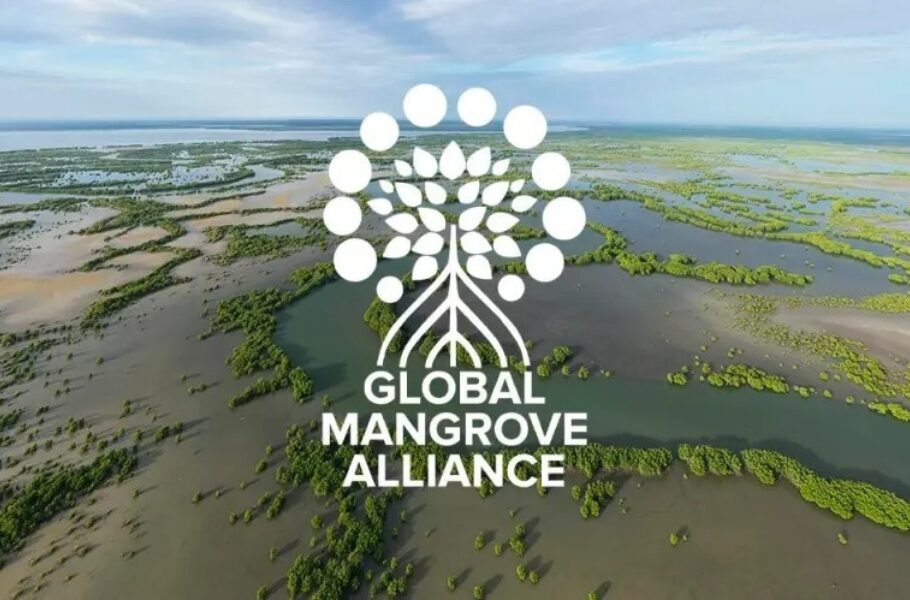
Global trends during the late 20th century pointed downward. The United Nations Environment Program estimated a 35% decline in global mangroves between 1980 and 2000, though the rate of loss fell by 44% from 2000 to 2020, per the Mangrove Alliance. Abu Dhabi moved against that global trend. Between 1987 and 2022, the emirate saw its mangrove cover increase by 92%.
“You see a thriving forest. From 3,000 hectares, now we have 17,600 hectares,” Almansoori said.
The Abu Dhabi Mangrove Initiative directs this ongoing expansion through science-based restoration, relying on data, scientific mapping, and targeted monitoring. The initiative supports the UAE’s broader national goal of planting 100 million mangrove trees by 2030.
Custom-Built Drones Replace Hand-Planting in Sensitive Mudflats
Traditional planting methods require dispatching large groups of workers into sensitive natural areas, carrying a high risk of ecosystem disruption. To bypass this vulnerability, the Abu Dhabi Mangrove Initiative deployed specially adapted drones.
These custom-built aerial vehicles can travel long distances to access remote areas that ADMI research deems is most opportune for planting. Each drone carries approximately 6,000 seeds, scattering them directly into the mud to germinate. In 2023 alone, the initiative distributed over 6 million mangrove seeds across Abu Dhabi using this aerial method.
Despite these gains, vulnerabilities persist. Global Mangrove Watch notes that while overall numbers have registered small gains over the past decade, countries such as Myanmar, Indonesia, and Nigeria continue to experience net declines, threatening local food supplies, coastal shelter, and the lives of those living near the shore.
Rising Sea Levels Threaten Endangered Tidal Forests
Even within Abu Dhabi’s expanding forests, mangroves remain classified as endangered due to the escalating threats of a warming world. Rising sea levels present a severe danger.
“A lot of water can suffocate them, but less water won’t help them grow,” Almansoori explained. If seas rise faster than the height of the sediment mangroves grow on, the plants may be submerged.
To combat this, the Abu Dhabi Mangrove Initiative launched a hydrological restoration project designed to study optimal water flows and determine the conditions required for the long-term recovery of degraded mangroves.
“We do want areas to increase in terms of coverage, but we would like to see them increase in a healthy manner,” Almansoori said. “So that we can see them thrive [not just] for biodiversity, but also for mankind and for climate change.”