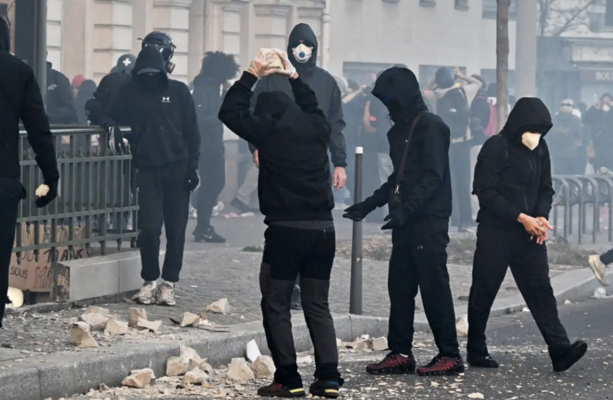
French prosecutors have launched an attempted murder investigation after rioters hurled petrol bombs at security forces during a weekend of demonstrations in Paris. The violence erupted on Saturday as hundreds of thousands of people staged a third consecutive weekend of protests against soaring living costs and education, leaving officers injured.
An Escalation of Street Violence
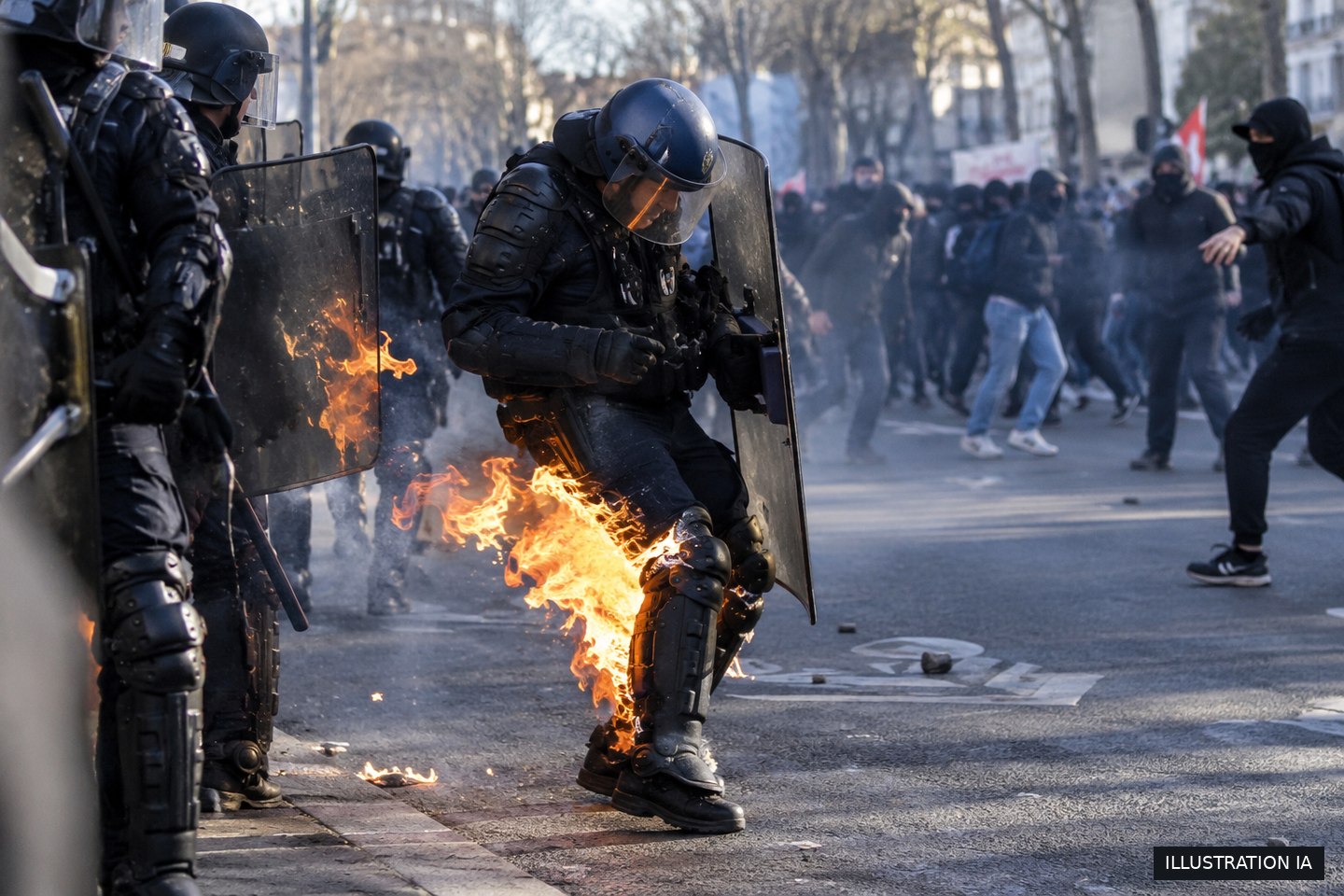
The Paris police prefecture reported that several hundred rioters targeted security forces with heavy projectiles, culminating in the deployment of a Molotov cocktail in eastern Paris. Dramatic footage captured a homemade incendiary device exploding directly at the feet of a security officer, instantly engulfing his lower body in flames. Interior Minister Laurent Nunez decried what he termed an “extraordinary” level of violence directed at law enforcement.
According to the prosecutor’s office, explosive devices were thrown at approximately 15 gendarmes and police officers. Gendarmes are military police officers who form part of the French armed forces. The resulting injuries include second-degree burns. One injured gendarme described a terrifying “rain” of projectiles and skin that stings from the chemical exposure during the attack.
Explosive devices were thrown at around 15 gendarmes as well as police officers.
— Paris Prosecutor’s Office
Despite the severity of the attacks, the prosecutor’s office confirmed that no suspects had been arrested in connection with the firebombing incident as of Sunday, though investigators are actively working to identify those responsible. Marine Le Pen took to the social media platform X to condemn the assault, describing the images of the officer in flames as unbearable and demanding that the perpetrators be punished with the utmost severity.
Ministry Reports Fewer Damaged Shops During Weekend Protests
The weekend demonstrations drew widespread participation across the country, with the interior ministry reporting more than 770 total arrests. However, the ministry noted that there were no major incidents late Saturday. Commerce officials noted a silver lining regarding property damage: the Chambers of Commerce and Industry (CCI) reported that the number of damaged shops was significantly lower than during previous weekends, with approximately 20 businesses affected.
Even with fewer shattered storefronts, CCI France expressed concern over the broader economic fallout. Retail activity ahead of the year-end holiday season—a peak period for businesses—remains threatened by the ongoing civil friction. Authorities had counted about 550,000 marchers on 17 October, when rioters looted hundreds of shops, compared to 410,000 marchers the following Saturday when protests were largely peaceful despite more than 1,300 arrests.
Paris Police Ban Central Marches to Prevent Looting
To prevent a recurrence of widespread looting, Paris police banned union and yellow vest marches through the city center on Friday, forcing demonstrations onto a single designated route along the capital’s outer boulevards from Porte de Bagnolet to Porte de Charenton. Unions and student groups challenged these restrictions in court, while President Emmanuel Macron maintained that upcoming marches would stay clear of city centers to protect shops.
While marches in Paris proceeded largely within declared frameworks, the interior ministry noted that radical elements in several regional cities, including Bordeaux, Toulouse, and Marseille, attempted to enter city centers to carry out vandalism and looting. Similar youth and economic grievances resonated beyond French borders. In Germany, a youth initiative called “Gen Z regelt” organized online sign-ups for protests across roughly 30 cities focusing on education, health, climate protection, and opposition to military conscription. Meanwhile, police forces in Spain, Italy, Belgium, the Netherlands, Austria, Switzerland, and Portugal remained on alert following mobilization calls circulated widely on TikTok.


