
Grey-Zone Coercion Tests Democratic Resolve at Sea
Authoritarian states are increasingly employing grey-zone tactics at sea, challenging the security of democratic nations while stretching the limits of aggression below the threshold of outright conflict, according to a report.
These maritime incursions target critical global infrastructure and test the limits of international law. Last year, the Russian ship Yantar twice entered British waters, lingering near sensitive undersea cables while its crew pointed lasers at Royal Air Force pilots. A year prior in 2024, fiber-optic cables in the Baltic Sea suffered heavy damage after a Chinese vessel sailed directly over them, trailing its anchor in a maneuver authorities suspect was designed to map or disrupt communication lines.
Such incidents illustrate a broader strategy by Moscow and Beijing, which share what both capitals term a “no-limits partnership.” By routinely conducting grey-zone operations, these nations gather vital data on infrastructure pressure points while steadily eroding the accepted status quo at sea.
Military Drills and Disrupted Airspace Across the Indo-Pacific
China’s disregard for established maritime rules extends far beyond covert intelligence gathering. On October 11, immediately following Taiwan’s National Day, Beijing announced sudden military exercises intended to deter what it termed Taiwanese independence and external interference. Live-fire drills materialized within 24 hours.
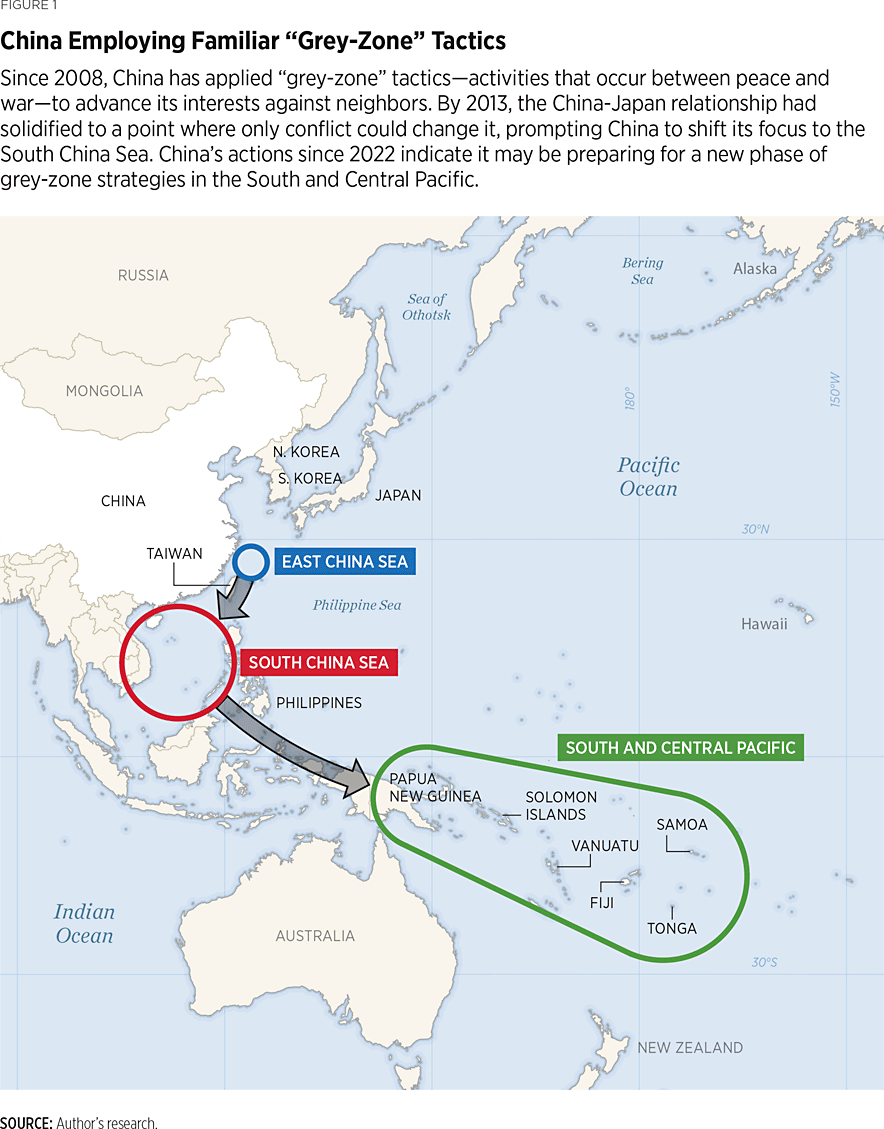
The sudden exercises violated international norms set forth by the International Maritime Organization and the Convention on International Civil Aviation, both of which require advance notice for live-fire operations to protect civilian ships. Similar disruptions occurred in 2025 when Chinese naval vessels conducted unannounced live-fire exercises in the Tasman Sea. Australian authorities remained entirely unaware of the drills until an airline pilot raised the alarm after encountering the active zone, putting commercial flights at risk.
Beyond surprise exercises, Beijing is actively reshaping the operational reality of the Indo-Pacific. In June of this year, Chinese vessels inspected hundreds of merchant ships in the waters east of Taiwan. The Chinese coastguard has also established a permanent “law enforcement” team in the area, normalizing a heavy operational presence that exerts intense pressure on Taiwan, Japan, and the Philippines.
Economic Stakes and the Threat of Global Supply Disruption
Foreign policy analysts view these coordinated maneuvers as part of a deliberate boa constrictor strategy designed to encircle Taiwan from the east. By tightening operational control ahead of any potential conflict, Beijing aims to make a future blockade or isolation of the democratic island significantly easier to execute.
The financial ramifications of such a conflict would be devastating for American consumers and the broader global economy. Bloomberg estimates that a war involving Taiwan would strip 10 percent from global GDP, dwarfing the economic damage caused by the COVID-19 pandemic and Russia’s invasion of Ukraine. An interruption would sever access to advanced semiconductors produced almost exclusively in Taiwan—indispensable components for electric vehicles, smartphones, and domestic technology infrastructure.
In response to these escalating risks, Vincent Chin-Hsiang Yao, ambassador to the Taipei Representative Office in the UK, has emphasized the urgent need for a strong international counter-strategy. Democracies must move past reactive diplomacy and actively bolster maritime information-sharing, protect the foundational principles of freedom of navigation, and prevent authoritarian powers from converting the world’s oceans into instruments of geopolitical coercion.


