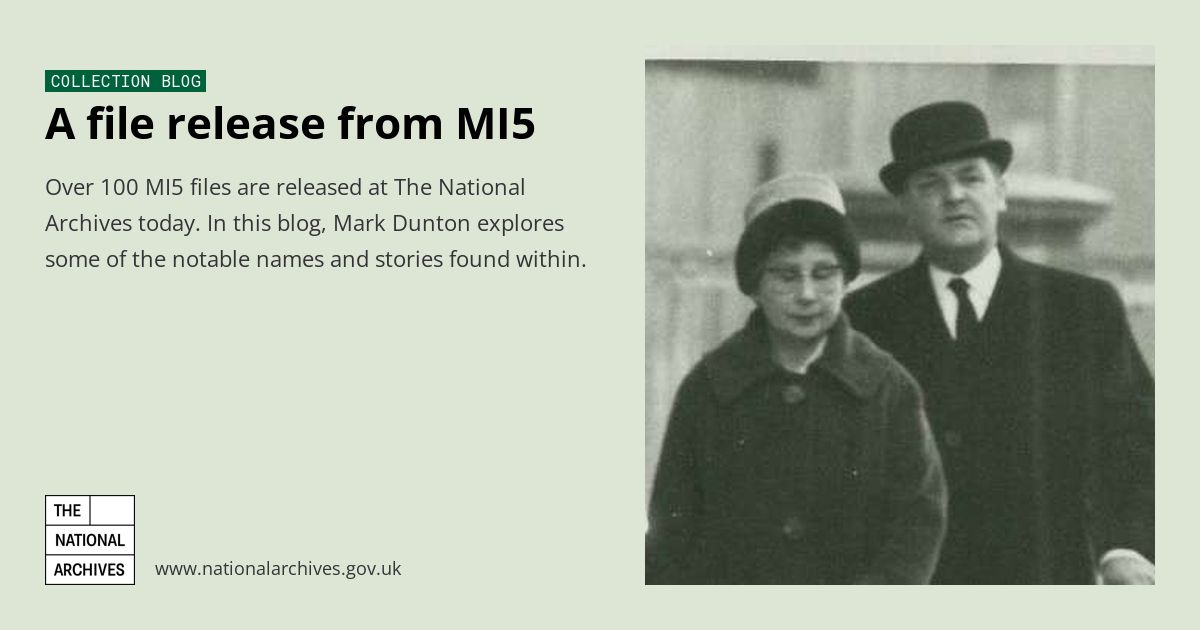
Newly released government archives reveal that British intelligence agency MI5 monitored Aneurin Nye
Bevan, the architect of the National Health Service, for over two decades due to his early left-wing politics and suspected Communist sympathies.
Files Opened in 1933
Security services first opened a personal file on Bevan in 1933 when he served as the backbench Labour MP for Ebbw Vale in South Wales. Intelligence officials tracked his political movements and public addresses throughout the 1930s. Early reports documented his speech at a Canadian anti-Nazi rally held in Montreal in 1934.
An MI5 intelligence report stated that Bevan has inherited the evangelical fervour of his Welsh forebears and knows how to use it in the Communist cause.
Born in 1897 in Tredegar, South Wales, into a mining family, Bevan carried on that tradition by becoming a coal miner when he left school at 13. He became a Marxist but was committed to parliamentary democracy, and he was elected Labour MP for Ebbw Vale in 1929, a seat he held for the rest of his life. MI5, through its network of Chief Constables, monitored Bevan’s activities and his pre-war associations with communists.
The only action taken was simply monitoring.
In 1933, he had been in close touch with Harry Pollitt, general secretary of the Communist Party of Great Britain, and others in the party who backed his plan to organise workers’ freedom groups to defend against the capitalists.
By 1936 they had patched up their differences sufficiently for Mr Bevan to support an application by the Communist Party to affiliate to the Labour Party.
MI5 Secretly Watched Bevan for Decades
During the war he was a strong critic of the Churchill coalition. Declassified secret documents from MI5 made public by the National Archives reveal that Bevan’s activities in parliament, and his movements and meetings outside, were closely watched by MI5 from 1933 until his death in 1960. It is noted that, post-war, Bevan had been very careful to have no association with the Communist Party.
MI5 had suspected that Bevan, a committed socialist and one of the most prominent parliamentary critics of Winston Churchill and his wartime coalition, was a communist sympathiser. The agency’s investigations seem to have determined that there was nothing to worry about.
🔴 MI5 monitored NHS founder Bevan for 20+ years; file deemed 'remarkably tame'Aneurin Bevan, the Welsh Labour MP who spearheaded creation of the National Health Service, was under MI5 surveillance from the 1930s through 1975 over suspected communist links, newly released… pic.twitter.com/i3O2dzPT1P
Some wondered why they were bothering with him at all, although there is nothing in the files to indicate that MI5 ever tapped his phone or intercepted his mail. One officer wrote in 1943 that Bevan’s activities were not a matter in which the security service should be involved.
In fact he makes exactly the same remarks in the Houses of Parliament pretty frequently, as any copy of Hansard will show, and it would not therefore be possible to do anything positive. Reporting continued after the war when Mr Bevan was appointed minister of health in Mr Attlee’s new government, albeit less frequently.
In 1949, MI5 was becoming increasingly concerned about Mr Bevan’s friendship with Wilfred Macartney, an unsavoury, unscrupulous character who had been convicted of spying for Russia in 1928.

Bevan became health minister after the war and is credited with founding the state-funded NHS in 1948 in the teeth of bitter opposition from doctors. Monitoring continued after Bevan, from Tredegar, Blaenau Gwent, became a minister in the post-war Labour government when he drove through the creation of the NHS.
Dossier Closed in 1975
Monitoring of Bevan grew less frequent as he moved back into opposition during the 1950s. A 1955 note stated that what information they had on Bevan’s relations with the Communist Party since 1943 showed that from time to time both the Communist Party and the Trotskyists had made attempts to get him to work with them without success.
Nye addressing a Labour party conference in 1959 was part of a public career.
Some in the service questioned why they were taking an interest in his activities, given that everything he did was out in the open on the floor of the House of Commons.
Bevan died in 1960 at the age of 63, but security officials kept his dossier active for another 15 years before finally closing the file in 1975.
Two years after his death, a review of his MI5 case file stated that considering what a controversial character Nye Bevan was, the file is remarkably tame. An intelligence officer reflected on the modest yield of decades of observation after reviewing the accumulated paperwork.
An MI5 reviewing officer stated that considering what a controversial character Nye Bevan was, the file is remarkably tame.
The latest MI5 release covers the period from the 1930s to the 1970s. These items, that were once considered secret or top secret, cover the world of politics, entertainment, and Soviet double agents.
Two files, catalogued under reference numbers KV 2/4807 and KV 2/4808, relate specifically to Bevan. The newly released material also included MI5 files about Wolfgang zu Putlitz, a German diplomat who leaked information about Hitler’s plans to Britain. The newly released material also included MI5 files about Soviet agents and suspected operatives such as Frank Bossard, who was jailed for 21 years for passing defence material to Russian spies.


