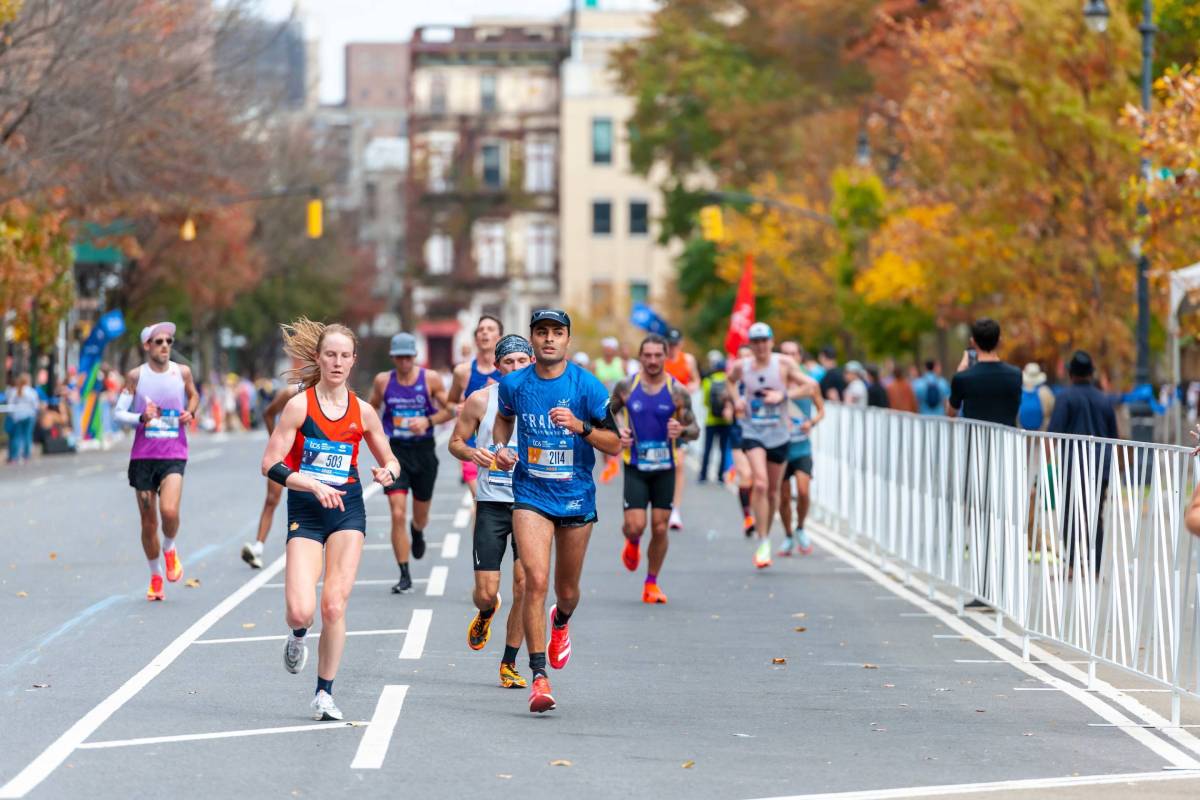
The 2026 TCS New York City Marathon will trigger sweeping road closures and transit shifts across all five boroughs on Sunday, November 1, as over 60,000 runners traverse the 26.2-mile course from Staten Island to Central Park. The most significant disruption centers on the Verrazzano-Narrows Bridge, which will be closed to all non-emergency traffic from 7 a.m. to 4 p.m. Sunday, according to abc7NY.
This isn’t just another race day. This year marks the 50th anniversary of the five-borough course and introduces the first route change in 15 years, secretnyc.co reports. With a projected participant count exceeding last year’s record of 59,226 runners, the scale of the logistical lockdown is immense. For the average New Yorker, this means a Sunday where the city’s arterial roads effectively become a pedestrian corridor.
The Verrazzano-Narrows Bridge Lockdown
If you’re planning to move between Brooklyn and Staten Island, your window of opportunity is narrow. The bridge’s upper level will shut down in both directions starting at 11 p.m. Saturday, October 31, to allow for race preparations. By Sunday morning, the lower level will also close from 6:30 a.m. to 3 p.m., as noted by secretnyc.co.
The ripple effect extends deep into Staten Island’s local grid. The Bay Street and Lily Pond Avenue exits will close at 3 a.m. Sunday and aren’t expected to reopen until 4 p.m. Other critical stretches, including School Road and Richmond Terrace, will see closures starting as early as 1:30 a.m. or 5 a.m. depending on the specific block. The sheer volume of restrictions makes the bridge a complete dead zone for private vehicles for the better part of the day.
MTA Increases Rail Service to Manage Race Crowds
The MTA is attempting to absorb the surge of spectators and athletes by augmenting rail service and tightening station access. Additional Metro-North trains will run on the Hudson, Harlem, and New Haven lines to move the crowds. For the runners themselves, the MTA has coordinated subway service to connect with the Staten Island Ferry, where shuttle buses will then ferry participants to the starting area.
Inside the stations, the experience will be strictly managed. To prevent the kind of dangerous overcrowding that can paralyze a platform, the MTA will designate certain stairways as entrance-only or exit-only. Extra personnel will be stationed near the finish line and other high-traffic viewing spots to keep the flow of passengers moving.
“Hundreds of blocker vehicles and more than 10,000 metal barricades will be positioned along the route to protect runners and spectators,” said NYPD Commissioner Jessica Tisch. NYPD Commissioner Jessica Tisch
The Logistics of a Five-Borough Shutdown
While the bridge gets the most attention, the impact spreads across the city’s core. In Manhattan, the Central Park transverse roads at 65th, 79th, and 96th streets will be closed for most of the day. Buses are prohibited from crossing Fifth Avenue during the race, splitting the east and west sides of the avenue for transit riders.
Brooklyn bears the brunt of the mileage, and the closures there are extensive. The Brooklyn-Queens Expressway between the Verrazzano-Narrows Bridge and 79th Street will be closed from 7 a.m. to 6:30 p.m. Local streets in Bay Ridge, including portions of Seventh and Fourth Avenues, will see similar restrictions throughout the day. For a full list of specific street closures, the city maintains official community notices.
The timing of the reopening is the most volatile part of the weekend. While most streets begin to open around 1:15 p.m. as the course clears, secretnyc.co points out that some stretches of First Avenue may remain closed until 10:30 p.m. The “golden rule” for the day is that reopening times are determined by the NYPD; a road only opens once the final runner and the cleanup crews have passed.
Economic Benefits Clash with Resident Transit Paralysis
There is an inherent tension in an event of this magnitude. On one hand, the marathon is a global showcase and a massive economic driver for the city’s hospitality and tourism sectors. On the other, it creates a temporary but absolute paralysis for thousands of residents and small business owners who rely on vehicle access. When the BQE and the Verrazzano are severed, the “commute” for a local resident can transform from a ten-minute trip into an hour-long detour.
As the 2026 race approaches, the question remains whether the city’s transit infrastructure can truly handle 60,000 runners and hundreds of thousands of spectators without a total systemic collapse on Sunday morning.



