Navy’s 5th Fleet, according to regional reporting.
Manama and Kuwait Target of Regional Strikes
Kuwait’s military reported repelling an aerial attack directed at the Ali Al Salem Air Base, marking the first such incident in more than two months, as Kuwait and Bahrain repelled Iranian air attacks amid a broader escalation in the nine-month regional conflict.
The Iranian army said that its drones targeted Patriot air defense systems and launch platforms at the Kuwaiti base. Kuwaiti authorities did not report any casualties or damage from the strike, though the Foreign Ministry condemned the action as a flagrant violation of sovereignty and a breach of international law.
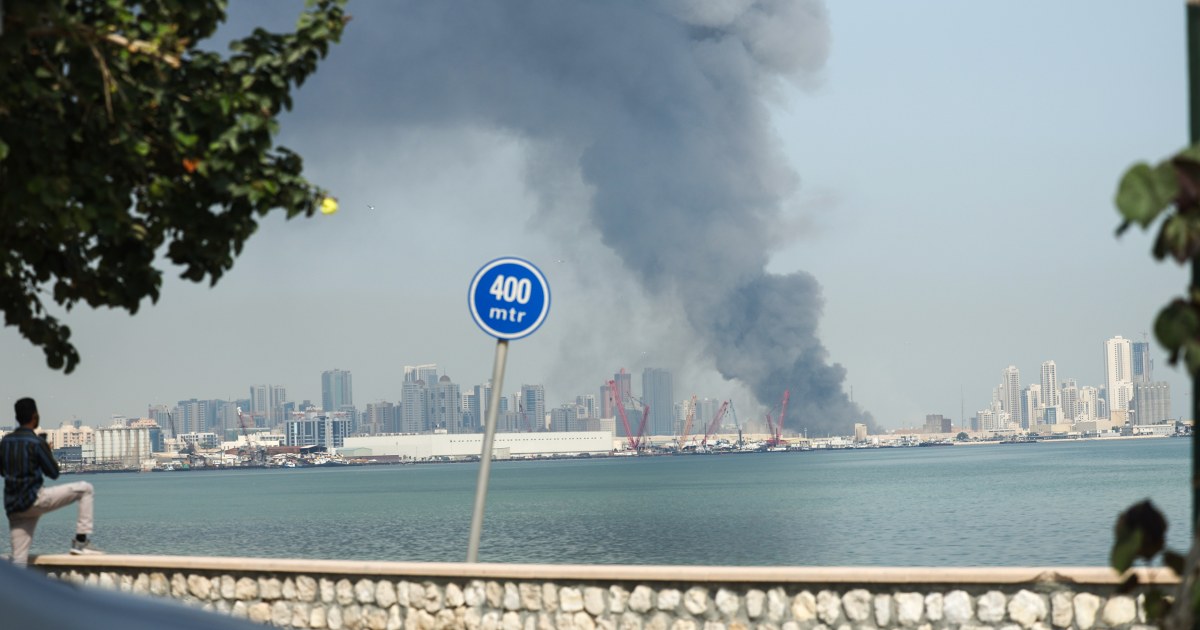
Across the Gulf, Iran resumed strikes on Arab neighbors after a two-month lull, firing drones at a U.S. radar facility in Bahrain. The Bahrain Defense Force reported intercepting and destroying several incoming aerial attacks over the island. The Bahraini Interior Ministry issued two alerts early Wednesday, urging residents to seek shelter before declaring an “all clear.”
Residents described the return of active hostilities after weeks of quiet. “The explosions seemed to be coming from far away, but hearing them again after a period of calm was both surprising and worrying,” said Hani Mohammed, an Egyptian resident of Kuwait, speaking to international news agencies.
U.S. Strikes Iranian Missile Site
The renewed exchanges followed U.S. airstrikes on Iranian infrastructure. U.S. warplanes struck an Iranian missile launch site on Qeshm Island using precision munitions. The military action was taken in response to ongoing Iranian attacks targeting American personnel and commercial shipping lanes.
U.S. Central Command (CENTCOM) confirmed that fighter aircraft conducted the strikes on November 17 in self-defense. On November 2, the U.S. carried out strikes along Iran's southern coast in Hormozgan Province and near Sirik.
The Islamic Revolutionary Guard Corps (IRGC) justified its retaliatory operations as a direct response to airspace violations and U.S. military strikes on radar installations, including a targeted site on Hengam Island on November 20. Iranian officials maintained that regional bases facilitating American operations remain legitimate targets.
As I have warned repeatedly, the current situation in the Strait of Hormuz is inherently unstable and cannot be sustained indefinitely. As long as the United States maintains its naval blockade and attempts to push tankers in the southern shipping lane, Tehran will continue to… https://t.co/LLrREcbvZD
Gholamhossein Darzi, Iran’s ambassador and chargé d’affaires to the UN, formally rejected Bahrain’s allegations in a letter to the UN Secretary General and the Security Council president, arguing that Iran was exercising its inherent right to defend itself against ongoing U.S. military aggression that he claimed began on February 28, 2026.
Economic Strain and Shipping Disruptions in the Gulf
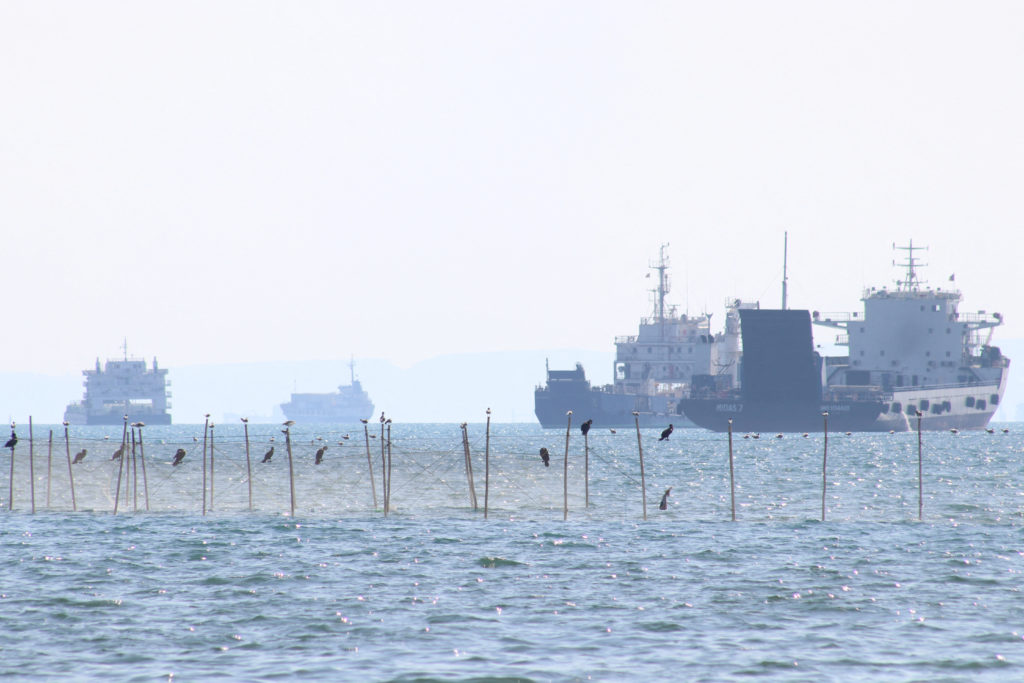
The nine-month conflict has severely disrupted maritime commerce through the Strait of Hormuz, a vital chokepoint carrying approximately one-fifth of global oil and gas. Shipping data shows that at least 25 tankers have been hit in and around the waterway. The UK Maritime Trade Operations centre reported that one tanker was struck by an unknown projectile 13 nautical miles north of Khasab, causing a fire that was later extinguished.
Despite the persistent naval confrontation and mine claims raised by the Revolutionary Guards, international oil markets have absorbed the tension. Brent crude settled at $92.57 a barrel, recording its third consecutive weekly loss as traders priced in the continued operation of alternative export pipelines and U.S. naval escorts.

Admiral Brad Cooper, the CENTCOM commander, stated in October that U.S. forces had escorted over 1.5 billion barrels of crude through the strait since the security operation began. However, the conflict has created a “no war, no peace” atmosphere, with Iranian officials signaling readiness to escalate if sanctions remain in place.
Security Risks and Official Advisories
The U.S. Embassy in Saudi Arabia continues to urge American citizens to monitor travel advisories and enroll in the Smart Traveler Enrollment Program (STEP) due to the regional instability. The Saudi Ministry of Interior has further cautioned that filming, publishing, or sharing information regarding the impact sites of counter-missiles and drones is strictly prohibited and carries legal liability.
In the event of an aerial attack, residents are advised to maintain distance from glass windows and doors, while local emergency services and hospital systems remain on standby for potential medical crises.
In Bahrain, the government faces increasing economic pressure alongside its security challenges. Analysts suggest that Iran is deliberately attempting to broaden the conflict’s reach to impact global economies through rising shipping costs and supply chain disruptions.
Deputy Minister for Public Diplomacy at @KSAMOFA, Amb. Dr. @Rayedkrimly, categorically denies the claims published by The Wall Street Journal regarding alleged demands made by the Houthi militia, reaffirming the Kingdom’s support for Yemen’s internationally recognized government.… https://t.co/j3DGzOzMZq
Escalation Risks and Diplomatic Posturing
International observers warn that the frequent military incidents across multiple fronts have created a dangerous environment prone to miscalculation. “Even if neither side intends to enter a broader confrontation, the accumulation of military incidents across multiple fronts increases the risk of miscalculation and escalation beyond what either side originally intended,” Hamidreza Azizi, senior Iran analyst at the International Crisis Group think tank, said.
Tehran has frequently framed its actions as a necessary defense of its sovereignty, explicitly warning Gulf neighbors against facilitating U.S. operations, a move that harkens back to the regional tensions of the 1980s.
On the diplomatic front, the situation remains a binary choice for Washington, according to Hassan Ahmadian of the University of Tehran. He suggests that if the U.S. allows tankers to pass, the current blockade could conclude without a formal agreement or further fighting.

Meanwhile, the U.S. military maintains that its regional assets are secure, with CENTCOM consistently denying Iranian claims of damaging U.S. fighter jets or personnel. The ongoing standoff continues to test the endurance of both regional allies and the U.S. campaign of economic sanctions.
Diplomatic and Regional Implications
The security landscape in Bahrain is complicated by its deep-rooted ties to the United States. Following the signing of a Defense Cooperation Agreement in 1991, Bahrain was designated a major non-NATO ally in 2002. In 2023, the two nations signed a Comprehensive Security Integration and Prosperity Agreement.
Analysts suggest these alliances have made the island kingdom particularly vulnerable to Iranian pressure. Sascha Bruchmann, a Bahrain-based defense analyst, said that the attacks on U.S. facilities are a sign that Tehran is growing impatient as its economic difficulties mount.
Ali Al Salem Air Base, located approximately 37 km from the Iraqi border, serves as a critical hub for the 386th Air Expeditionary Wing of the United States Air Force.
Historically significant as the final Kuwaiti air base to be overrun during the 1990 Iraqi invasion, it has long facilitated international military operations, including hosting the Royal Air Force during Operation Telic. Its strategic value stems from this deep-seated role in supporting American and coalition air power in the region.
Tehran’s recent targeting of the base specifically seeks to neutralize the Patriot air defense systems and launch platforms maintained by the USAF.
Meanwhile, internal Iranian political dynamics remain strained. Recent reports indicate a power struggle within the Iranian establishment regarding the definition of national interests. Hard-line factions have conducted text-message campaigns against proposed legislative changes to the Intelligence Ministry, reflecting broader domestic uncertainty.
Furthermore, despite the high-stakes military posture, Iranian officials have publicly warned Gulf states against “reopening old wounds” related to their historical support for Iraq during the 1980s conflict. As of late November, Iranian parliament speaker Mohammad Bagher Ghalibaf said that Tehran would not engage in further talks until Washington implements seven conditions for reopening the Strait of Hormuz.