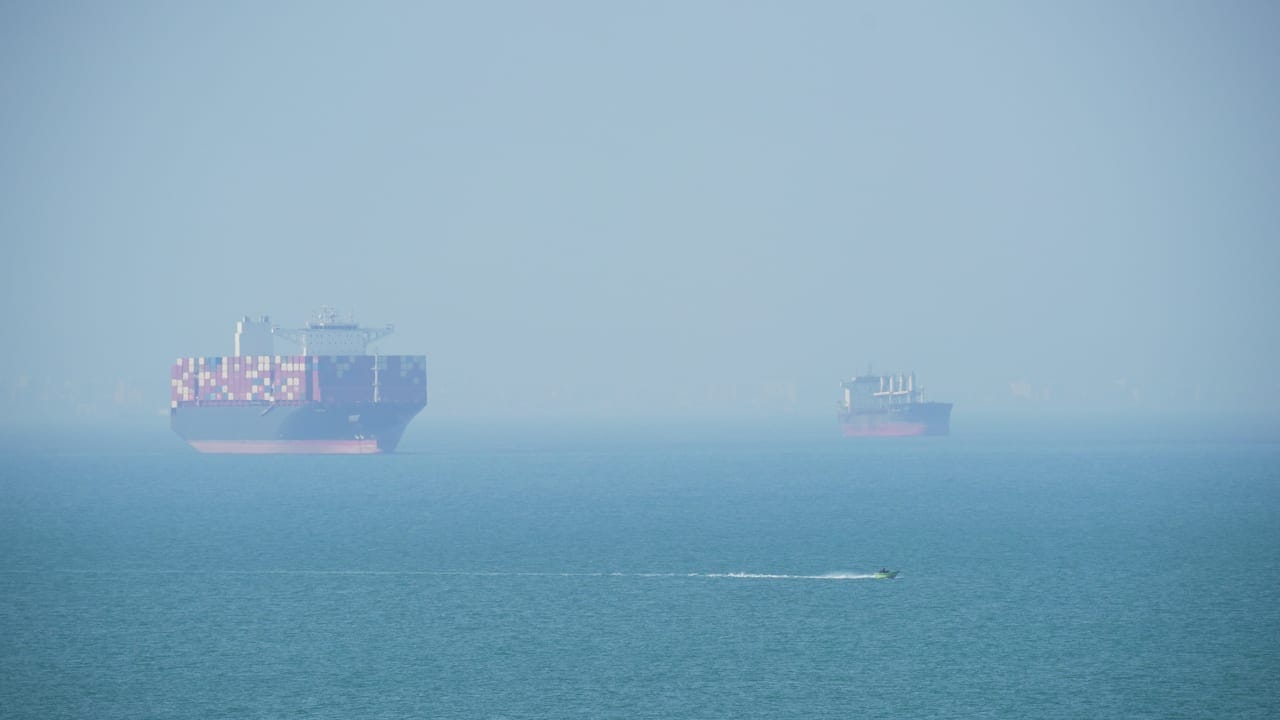
More than 14 oil tankers are anchored near Kharg Island with their transponders turned off, as Iranian authorities signal preparations to push a convoy through the U.S. naval blockade.
Tankers Assemble Near Kharg Island for Crude Transfers
The vessels are assembling around Kharg Island, which serves as the departure point for approximately 85% to 90% of Iran’s crude oil exports. Iranian media outlets affiliated with the Islamic Revolutionary Guard Corps have advanced proposals for a declared convoy to run the American cordon, with crews assigned and Iranian flags raised according to satellite imagery and ship-tracking data.
Ship-tracking services and industry analysts report that the assembly coincides with active ship-to-ship crude transfers. Approximately 200,000 barrels of Iranian crude oil were transferred between the tankers Olim and Hao Fan near Kharg Island while both vessels operated with their tracking systems switched off, as noted in tanker monitoring reports.
Samir Madani, a co-founder of tracking firm TankerTrackers, said that any successful departure would mark the first seaborne export of Iranian crude since mid-July.

The terminal features waters deep enough to berth supertankers and possesses storage capacity for roughly 30 million barrels of crude. Alternative Iranian ports such as Jask lack the necessary infrastructure to substitute for the primary export facility. Commercial loadings fell entirely to zero in September, marking the first full calendar month without any recorded loadings since the 1979 revolution.
Analysts from Kpler and Vortexa said that Iran had previously loaded about 2 million barrels of crude and condensate daily in March before restrictions tightened. With export revenues dropping rapidly, financial projections indicate that Iran stands to lose between $3 billion and $6 billion every month, driving officials to calculate that the economic situation has become unsustainable under the current naval cordon.
U.S. Blockade Redirects 150 Ships, Trump Threatens Convoy
The United States reinstated the naval blockade on July 14, following the collapse of talks in Islamabad. Central Command figures show that enforcement actions have redirected 150 ships and disabled five vessels since the cordon was reimposed, while facilitating the transit of more than 1.7 billion barrels of crude under naval protection.
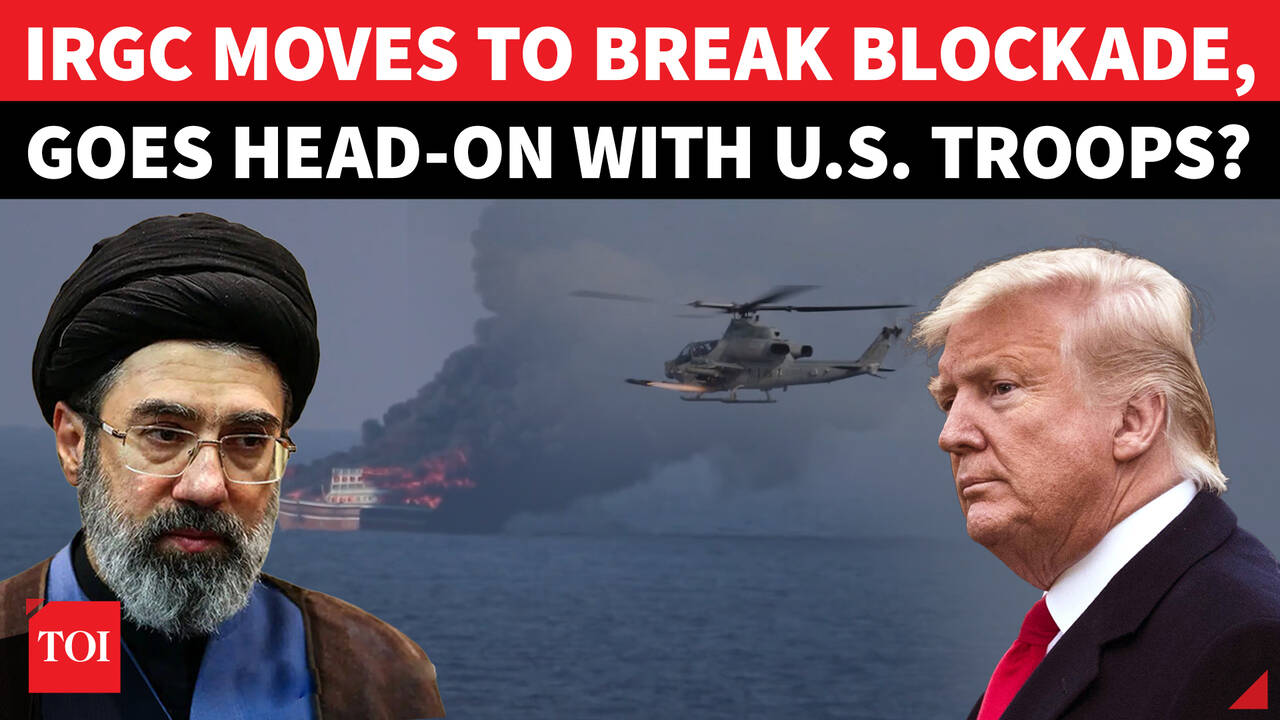
In response to reports about the impending convoy, U.S. President Donald Trump issued a direct challenge during an interview. “I hope they do, they’ll all be at the bottom of the sea like the rest of the navy,” President Donald Trump told Fox News chief foreign correspondent Trey Yingst when asked about potential breach attempts.
The American leader added that he was inclined to order further military action after the new year if diplomatic efforts fail to resolve the crisis.
To tighten enforcement further, Central Command issued an updated directive establishing that any neutral vessel accepting cargo via ship-to-ship transfers from vessels targeted by the blockade would likewise be treated as a blockade runner. Maritime security experts note that the enforcement zone stretches across the wider Indian Ocean and Arabian Sea, giving American naval forces broad operational reach against illicit shipments.

The Pentagon reported the overall cost of military operations related to Iran at $48.3 billion as of November 13 according to Pentagon figures cited by RFE/RL. Independent estimates cited by Senator Elizabeth Warren place direct daily enforcement costs at about $32.5 million as confirmed by Acting Navy Secretary Hung Cao.
Tehran Weighs Military Escalation Against Cordon
Supreme National Security Council adviser Mostafa Najafi said that Supreme Leader Mojtaba Khamenei ordered an end to the prolonged state of neither war nor peace, showing that military options are back on the official agenda according to Iran International. Foreign Minister Abbas Araghchi told the ILNA news agency that the blockade must be broken and that officials would make every effort to export oil while continuing negotiations.
Deputy Foreign Minister Kazem Gharibabadi told reporters that the restrictions are unacceptable and that Tehran considers the measures an act of war, adding that the country has fulfilled its obligations under the Nuclear Non-Proliferation Treaty and faced extensive inspections by the International Atomic Energy Agency.
President Trump told Fox News he's inclined to resume strikes against Iran after the new year. The President responded to reports of Iran planning to test the U. S. naval blockade. "I hope they do, they'll all be at the bottom of the sea like the rest of the navy." pic.twitter.com/wziCX97eRL
He added that the country has fulfilled its obligations under the Nuclear Non-Proliferation Treaty and faced extensive inspections by the International Atomic Energy Agency. Brigadier General Mostafa Izadi, deputy commander-in-chief of the Revolutionary Guards, warned via Al-Masirah television that Iran would answer any threat immediately and without geographic limits.
Washington Deploys Forces as Analysts Debate Intent
U.S. Central Command officials told Fox News Digital that forces maintain the ships, aircraft, and procedures required to intercept multiple vessels simultaneously in the open waters of the Indian Ocean. TankerTrackers.com posted a social media message stating that Iran appears to be preparing to ship out oil again, though a follow-up message dismissed the impending 14-vessel convoy as wishful thinking and propaganda.
Kpler analyst Homayoun Falakshahi told Radio Farda that it remains too early to determine whether serious actions to breach the naval cordon are underway.
International Crisis Group senior analyst Hamidreza Azizi told CNN that financial markets increasingly assume full-scale war is unlikely and that energy supplies will gradually recover. Meanwhile, ynetnews reported that the ongoing preparations may serve to pressure Washington into talks by demonstrating a willingness to risk military confrontation.
Iran Invokes UN Article 51 to Justify Resistance
Iranian officials have framed the U.S. economic blockade as an act of military aggression, routing official pushback through legal and diplomatic channels. Foreign Ministry spokesman Esmaeil Baqaei invoked Article 51 of the United Nations Charter during a briefing to justify using all available means against the naval restrictions.
Iran readies tanker convoy at Kharg Island to test US oil blockade ➡️ https://t.co/6arNHvZqT1 pic.twitter.com/jgiUCLq6zx
Deputy Foreign Minister for Legal and International Affairs Kazem Gharibabadi echoed that stance, stating that the economic restrictions are entirely unacceptable while confirming that diplomatic contacts with mediators like Qatar remain active.
Meanwhile, hardline commentary published by the Fars News Agency warned that any military interference with an Iranian tanker convoy would trigger immediate strikes against regional energy infrastructure in the United Arab Emirates, Saudi Arabia, Qatar, Kuwait, Oman, and Bahrain.
Mohsen Rezaei, the head of Iran’s Supreme National Security Council, asserted that Tehran aims to impose costs on Washington that render offensive operations too expensive to maintain. Additional statements from Supreme National Security Council adviser Mostafa Najafi indicated that Supreme Leader Mojtaba Khamenei issued directives to move past the protracted period of neither peace nor war, placing military options firmly back on the agenda.
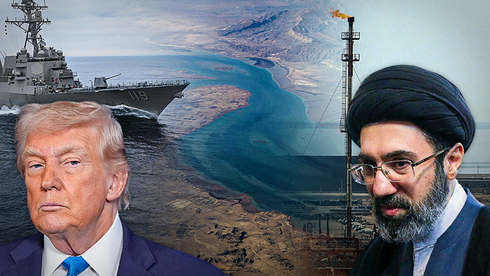
The island is surrounded by deep waters capable of berthing supertankers, a feature that distinguishes it from alternative locations like Jask, which lack the necessary infrastructure to support such large-scale operations.
Furthermore, the terminal provides storage capacity for up to 30 million barrels of crude, facilitating a consistent supply chain for the nation’s energy sector. Connected by underwater pipelines to nearby offshore oil fields such as the Faridun, Darius, Cyrus, and Ardašir fields, Kharg Island remains an irreplaceable hub for Iran’s oil industry that other regional ports cannot currently replicate.
Parliamentary leaders have reinforced the official defiance, with Ebrahim Azizi, chairman of the national security and foreign policy committee, declaring publicly that the nation refuses to be blockaded.
Concurrently, regional religious figures such as Ardabil prayer leader Hassan Ameli urged proactive domestic initiatives to shatter the blockade without waiting for foreign permission, even as analysts debate whether the announced flotilla represents a genuine tactical maneuver or a psychological deterrence effort designed to pressure Washington back into negotiations.