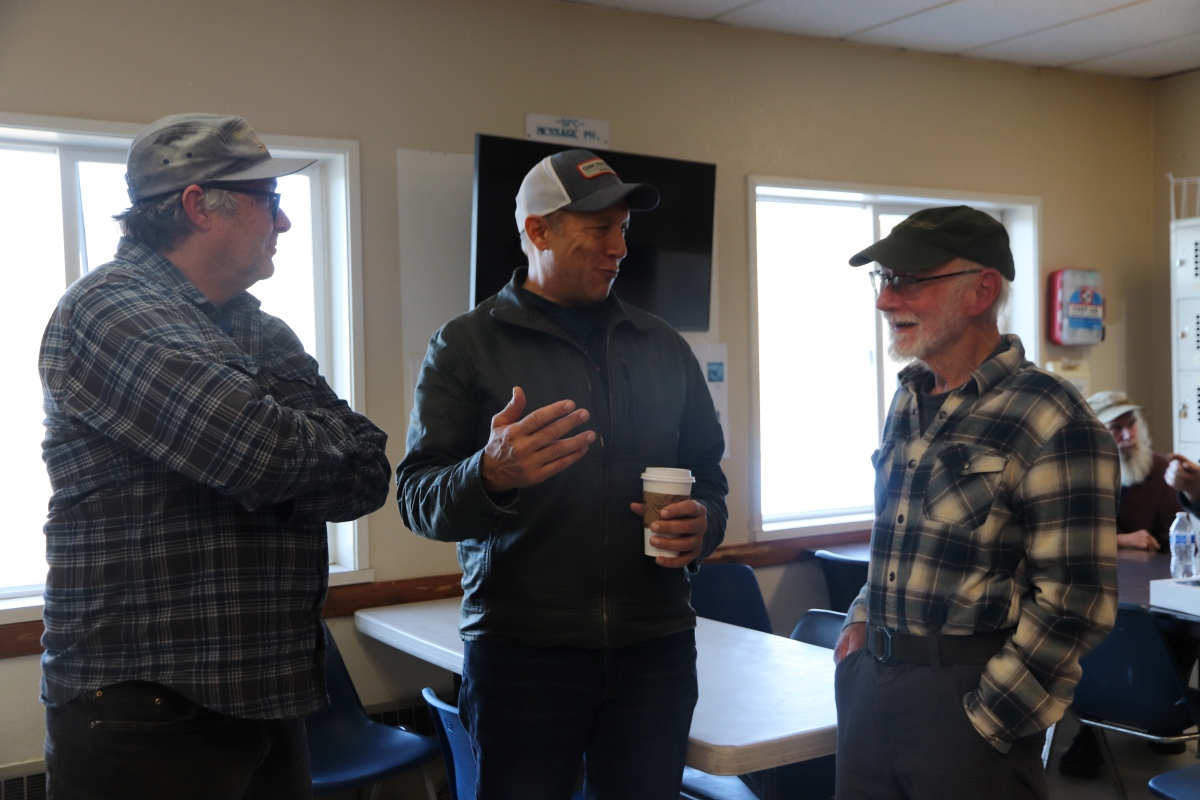
Independent congressional candidate Bill Hill met with Sitka fishermen on October 28, 2026, to discuss the economic and environmental pressures facing Southeast Alaska’s fishing industry. Hill, who is challenging incumbent Republican Nick Begich for Alaska’s only seat in the U.S. House of Representatives, held the meeting at the Seafood Producers Cooperative to gather direct input on regional concerns.
The conversation centered on rising operational overhead and the physical erosion of the industry’s infrastructure. Fishermen highlighted surging fuel costs and the loss of working waterfronts to the tourism industry. They also pointed to the destruction of habitats and natural resources as primary threats. For these workers, without protected access to the shore and healthy spawning grounds, the commercial fishing way of life is threatened.
The Battle Over the Roadless Rule
A significant portion of the dialogue focused on the Tongass National Forest and the critical nature of the Roadless Rule. This policy is viewed by many in the fishing industry as a shield for their livelihood.
Linda Behnken, director of the Alaska Longline Fishermen’s Association, emphasized that the health of the fisheries is linked to the land. Any policy shift that allows for increased road building or cutting trees down in the Tongass risks contaminating the streams where fish spawn.
Anything that compromises stream health — cutting trees down, building roads — is a direct threat to the health of our fisheries in Southeast.
Behnken stated.
A Candidate’s Commercial Roots
Hill noted that he has been commercial fishing since the age of eight. He argued that this experience provides him with an understanding of harvesting natural resources sustainably.
Hill suggested that the concerns voiced in a Sitka cooperative are often not heard in other rooms in the state.
There are important issues across our state, and I believe as a representative in Congress, you need to be out talking to all people across Alaska because there are very specific concerns in this room that are not heard in other rooms in our state.
The Economic Friction of Tourism
The meeting in Sitka revealed the friction tourism creates with the industrial sector. The “loss of working waterfronts” mentioned by fishermen is a matter of space. When waterfront property is converted for tourism, the physical space required for the industry shrinks.
As fuel costs rise, the margins for commercial fishermen tighten. When the physical space to operate becomes unavailable, it threatens the trade.
Following his discussions with the fishing community, Hill met with Sitka teachers before departing for Juneau on October 29.



