The Martinsville Incident and the Question of Accountability
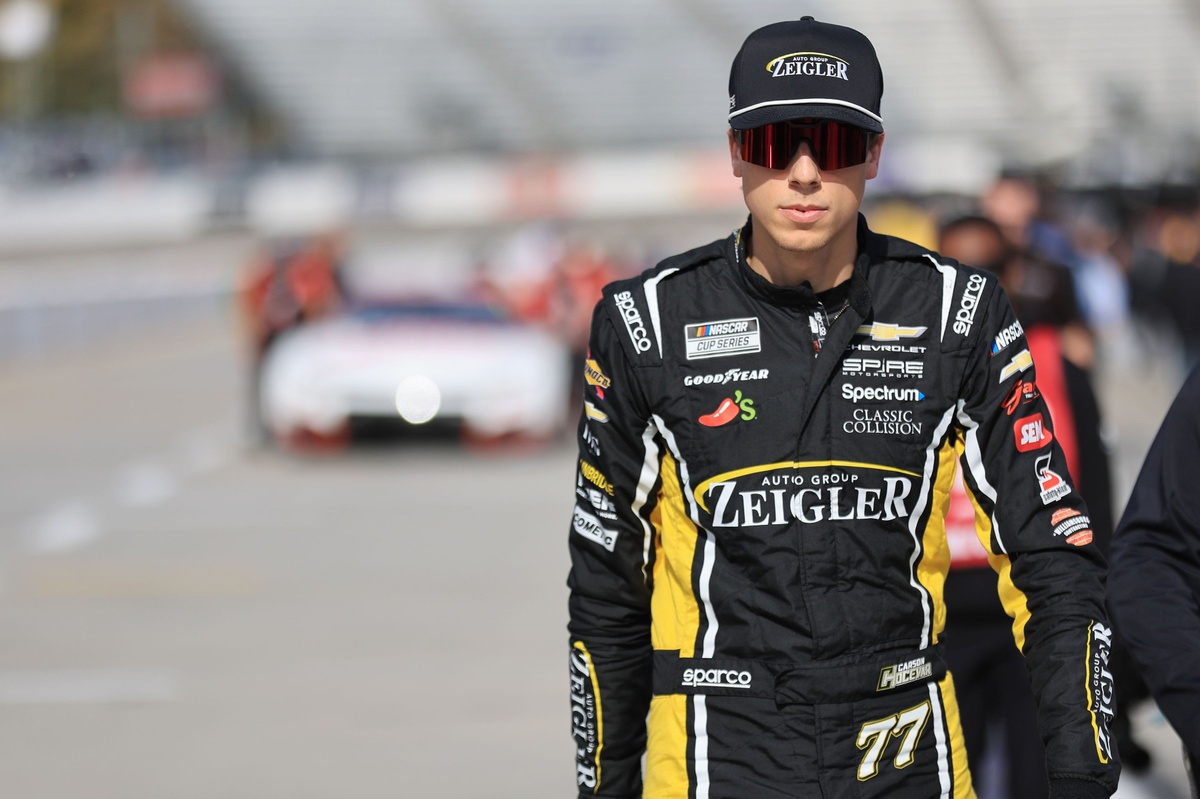
The tension simmering between Carson Hocevar and the rest of the NASCAR Cup Series field reached a boiling point at Martinsville Speedway this past Sunday. During the Xfinity 500, Hocevar, driving for Spire Motorsports, repeatedly brake-checked Austin Cindric’s No. 2 Ford. The maneuvers resulted in significant damage to Cindric’s front bumper, forcing the Team Penske driver to retire from the race and finish 36th.
The incident, which occurred roughly 200 laps into the event, has reignited a fierce debate over driver conduct and NASCAR’s current enforcement of on-track aggression. While Hocevar maintained that the maneuvers were merely part of the high-stakes, close-quarters environment of short-track racing, the visual evidence—captured clearly from Cindric’s point of view—showed multiple instances of brake-checking on the front stretch and exiting Turn 2.
.@AustinCindric has been checked and released from the infield care center. He has declined to come into the media center to comment on the incident with @CarsonHocevar. Hocevar brake-checked Cindric on lap 214, destroying the nose on his @Team_Penske Ford. The damaged eliminated…
A Pattern of Aggression
For those following Hocevar’s career, the Martinsville incident is the latest in a long string of controversial run-ins. His reputation for aggressive contact has been building for years, spanning multiple series. In 2023, he was handed a two-lap penalty at Martinsville after attempting to right-hook Taylor Gray, a competitor in the Truck Series. In 2024 at Nashville, NASCAR fined him $50,000 and docked 25 points for spinning Harrison Burton under caution. During the 2025 event at the Charlotte Roval, he engaged his brakes prematurely and collided with Cindric, effectively neutralizing Cindric’s playoff aspirations. On September 19 at Bristol Motor Speedway, contact from Hocevar sent Ryan Blaney into the Turn 1 wall, leading to a physical confrontation on pit road. Despite the optics of these events, NASCAR leadership has often opted for a hands-off approach, with NASCAR CEO Steve O’Donnell previously stating on the Happy Hour podcast that the organization intends to “encourage passion.”
The Technical Shift in Short-Track Racing
The severity of the damage to Cindric’s car this weekend was amplified by recent changes to the NASCAR vehicle specifications. NASCAR implemented significant modifications to the short-track package. These adjustments involved the elimination of both Y-brackets that previously bolstered the front bumper frame, alongside the removal of high-density foam that occupied the 3-inch space between the body and the frame in the front bumper area.
Cindric's view of the incidents with Hocevar. pic.twitter.com/wByqF9DclY
“NASCAR, what are we doing? Like, we’re just weaponizing cars here. I stack on entry with the guy and he has a mental breakdown,” Cindric said over the team radio as his crew attempted to assess the damage.
By stripping away these reinforcements, NASCAR intended to make the cars more sensitive to contact, theoretically discouraging aggressive bumper-tagging. Instead, the move appears to have made the vehicles more fragile, turning routine short-track contact into race-ending damage. The irony is not lost on observers; the very rules designed to clean up the racing may have made the consequences of retaliation much more severe.
Hocevar Denies Intentionality Behind Race Contact
Speaking to the media after the race, Hocevar denied any intentionality behind the brake-checks. He characterized the incident as a product of the environment. “I just felt like it was normal Martinsville racing,” Hocevar told reporters. “Everybody’s trying to move people… I had fun.” When pressed on whether the actions were retaliatory, he remained dismissive, noting that he had been on the receiving end of similar contact throughout the day.
Cindric, meanwhile, declined to speak with the media after being evaluated at the in-field care center. The silence from the Team Penske garage stands in stark contrast to the vocal frustration expressed by those watching the incident unfold online. With the championship event looming, the focus now shifts to whether NASCAR officials will view this as a standard racing incident or a violation of behavioral expectations.
The economic and competitive stakes are high. For a team like Penske, an early exit due to what many perceive as a deliberate “temper tantrum” carries heavy implications for the remainder of the season. As the league prepares for its final stretch, the question remains whether the current disciplinary framework—which has often favored an “encourage passion” mantra—is sufficient to manage drivers who appear increasingly willing to use their vehicles as weapons.
Two Penske cars on the wrong end of brake checks today that destroyed their noses:Hocevar brake-checks CindricBerry brake-checks Blaney
More on Carson Hocevar
Carson Hocevar comments: pic.twitter.com/xQMi8AQIEq
Cindric: "NASCAR, what are we doing? Like, we're just weaponizing cars here. I stack on entry with the guy and he has a mental breakdown."
Carson Hocevar got peppered with questions about brake checking Austin Cindric mid-race, which eventually caved Cindric's nose in and ended his race. He attributed it to typical Martinsville and little else. "Sometimes you're getting hit, sometimes you're causing it and vice… pic.twitter.com/XaSLpPEdkC”
Austin Cindric is not pleased with Carson Hocevar. Hocevar chopped him hard on the restart and might have just brake checked him down the backstretch. The hood of the No. 2 car is caved in.#NASCAR
Austin Cindric was forced to the garage after picking up nose damage following a brake check from Carson Hocevar https://t.co/gTqPKGNcua
Austin Cindric just got a bunch of nose damage. Looks like he got into the rear bumper of Carson Hocevar pic.twitter.com/W8X8ixccl3