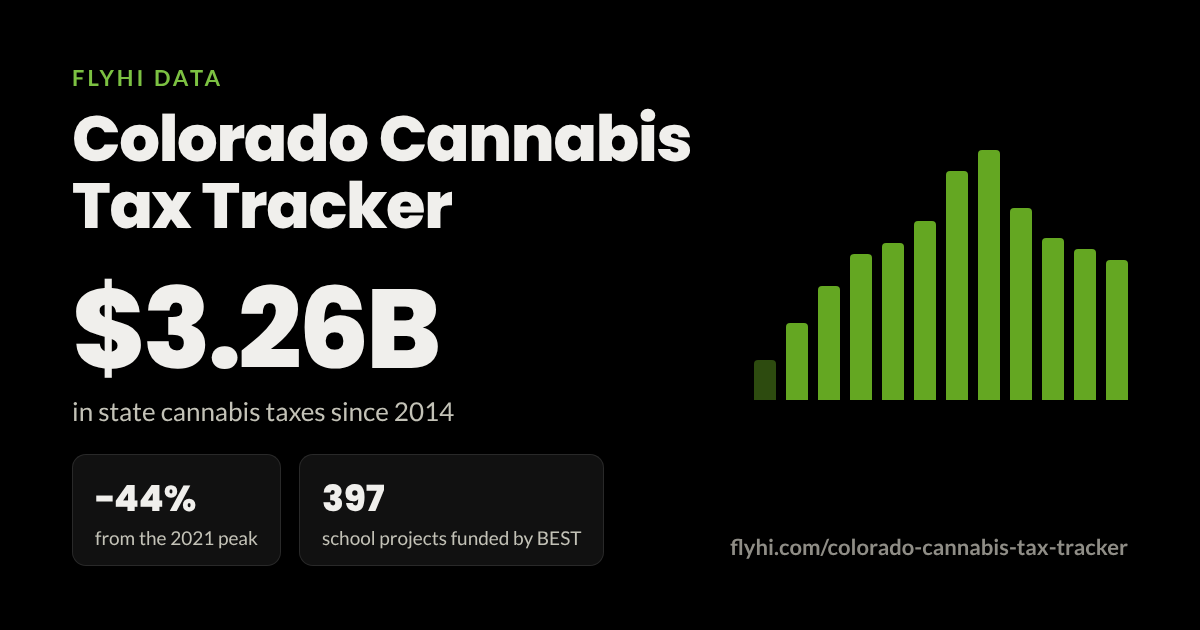
Colorado Cannabis Tax Collections
Colorado has pulled in state cannabis taxes and fees since legal sales began in 2014, according to tracking data from Colorado’s open data portal published by Flyhi. But that cumulative milestone hides a persistent reality: the annual tax haul has been shrinking year after year.
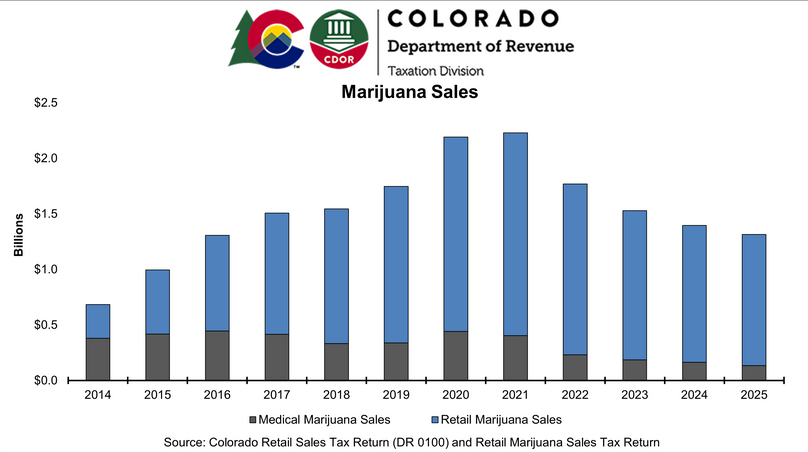
The state’s cannabis revenue climbed every year from 2014 until peaking at a record-setting annual total. Since then, falling retail prices and the steady legalization of cannabis in more states have driven collections down annually. State records published via Flyhi show how the boom years gave way to a sustained slide across retail sales tax, excise tax, state sales tax, and licensing fees.
Where the State Spends the Money
Colorado splits its cannabis tax revenue into several dedicated state funds. The largest portion flows directly into the Marijuana Tax Cash Fund, which state lawmakers allocate annually to behavioral health programs, public education regarding cannabis use, regulatory oversight, and law enforcement. Public schools claim the next-largest share through specific excise mechanisms.
For years, cities and counties received a 10% cut of the state’s 15% retail cannabis sales tax. Lawmakers reduced that local share to 3.5% starting in 2025. By 2026, a budget bill designated as HB26-1409 proposed eliminating local government distributions entirely. Municipalities and counties retain the authority to levy their own local cannabis taxes on top of state rates, though those revenues are tracked separately from the state figures.
Building Schools Across the Plains and Mountains
The state’s 15% cannabis excise tax is channeled straight into the Building Excellent Schools Today program, known as BEST, which functions as Colorado’s school construction grant initiative. Since 2014, the excise tax has contributed to the BEST fund, helping finance new or replacement schools alongside roof repairs and safety upgrades across rural plains and mountain districts.

Cannabis revenue does not foot the bill for these projects entirely. The BEST fund also receives income from State Land Board revenue, the Colorado Lottery, and interest earnings, while local school districts chip in matching funds for their specific capital projects. Guidance on these fund rules and allocations comes directly from the Colorado Legislative Council Staff’s January 2026 memo on marijuana in the state budget.
Sales figures tracked through sales by county data and adjusted using population estimates from the State Demography Office highlight rural border towns where sales volume per resident aged 21 and older is prominent.