The 24th Senate District Battleground
“People are tired of Big Tech and really just big industry coming into our communities, steamrolling folks, and then when they leave town, we’re the ones that are left to pick up the pieces.”
That frustration is driving millions of dollars in advertising across Pennsylvania’s 24th state Senate District, where incumbent Republican Tracy Pennycuick and Democratic challenger Chris Thomas are locked in a fierce battle to prove who is more firmly opposed to local data center developments, Spotlight PA reported.
Spanning parts of Berks and Montgomery Counties, the district represents one of the most competitive upper chamber races this cycle. Republicans hold a six-point voter registration edge and won the last Senate race here by four points. Yet, Democrats view the district as a prime opportunity to help flip the state Senate for the first time in decades and secure a political trifecta in Harrisburg.
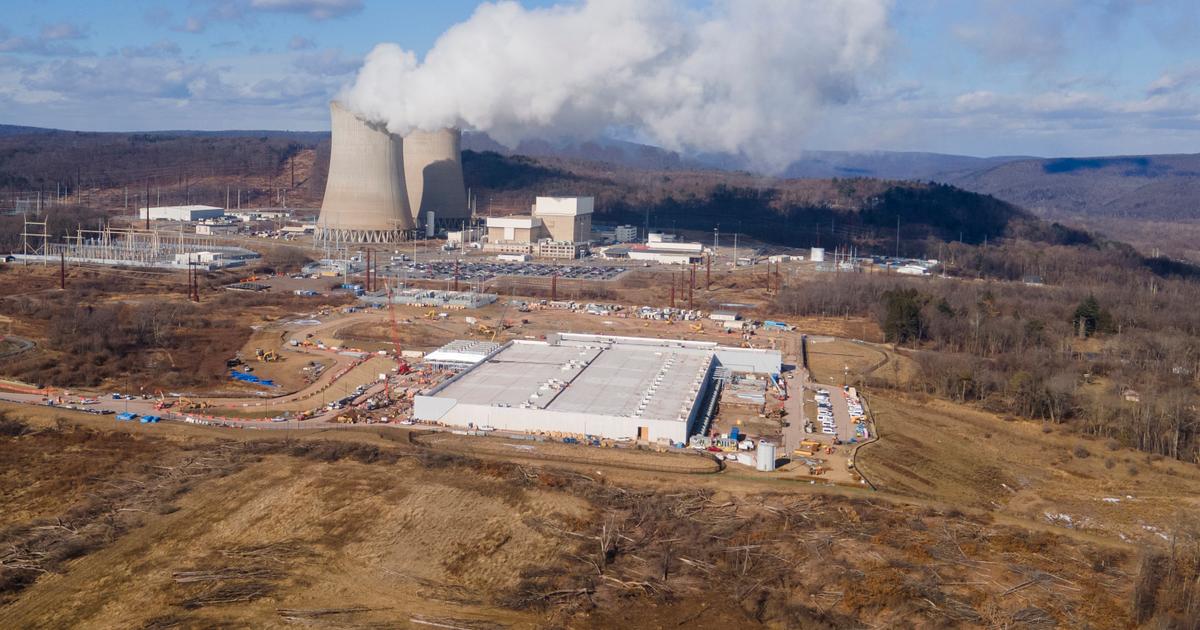
Local pushback has fueled the issue. Three distinct data center proposals have emerged within the district, drawing sharp resistance from residents and local officials. One project in Upper Hanover Township was recently scuttled after facing heavy community opposition.
Messaging Wars and Accusations of Big Tech Ties
Between September 15 and October 19, the campaigns and their respective Senate party committees plowed roughly $9 million into television, digital, and mail ads. The vast majority of that spending focused squarely on the data center controversy.
Thomas, a volunteer firefighter and former middle school math and science teacher, has run ads labeling Pennycuick as “Big Tech’s best buddy in Harrisburg.” His campaign pledges to stop facilities from driving up utility bills and to ensure developers pay their fair share.
Meanwhile, Pennycuick is accusing Thomas of answering to “radical California donors and data center developers,” while another pro-Pennycuick ad from the Senate Republican Campaign Committee says Thomas’ “real bosses are data center developers, not us.” Thomas’ campaign stated that his work involved temporary marketing and municipal-level advising after that project concluded.
“It’s gotten personal as a campaign. You can see the attacks on character and ethics, but those are even being channeled through these issues: ‘Paid off by data center developer,’” said Chris Borick, a political science professor at Lehigh University and director of the school’s Opinion Observatory.
Pennycuick’s anti-data-center stance has faced scrutiny because her legislative record shifted. An ad praising her work notes she removed fast-track language from a pro-data-center bill and stopped it in committee. However, that ad omits that Pennycuick originally co-sponsored the measure in July 2025 to accelerate AI-related projects and prevent municipalities from imposing harsher zoning rules on data centers than on other industrial sites. In February of this year, she amended the bill to strip those provisions. It has remained stalled and is functionally dead.
Pennycuick told WHYY her perspective evolved as she learned more about the local impacts. “People are all over the map about data centers, from ‘absolutely want them,’ to ‘absolutely not,’ and everything in between,” she said. “For some locations, it’s never going to work.”
Sam Chen, a Lehigh Valley-based Republican political strategist, noted that shifting positions has become common as public backlash intensified. “It’s an election season. Everyone wants to claim the mantle of, ‘We’re against AI.’ They actually weren’t until they saw the huge blowback from the public,” Chen said, adding that it may be difficult for incumbents who previously backed such projects to successfully backtrack.
Candidates Propose Energy Rules for Data Centers
Despite the sharp rhetoric, the actual policy positions of both major-party candidates lean toward regulatory guardrails rather than an outright moratorium. Following her withdrawn fast-track bill, Pennycuick introduced legislation requiring data centers to supply their own energy and banning public officials from signing secretive nondisclosure agreements with developers.
Thomas has released a parallel plan requiring facilities to bring their own power sources to the state and mandating financial contributions toward local schools and infrastructure upgrades.
For residents caught in the middle of the ad blitz, the messaging has bred confusion. Maureen Garrett, a 68-year-old retired physical therapist and registered Democrat living near Limerick Township—where two data centers have been proposed—said her primary concern is mitigating environmental damage.
“I saw so many attacks on both sides that it was very hard to know what’s right and what’s wrong. I don’t know what’s true,” Garrett told Spotlight PA. Though she made a choice based primarily on party platforms rather than individual candidate claims, the saturation of targeted campaign ads left many voters sorting through conflicting narratives.
Polling for the legislative-focused nonprofit State Watch in September showed Thomas holding a two-point lead, which falls within the poll’s four-point margin of error. A Green Party candidate, Michael Schonewolf Jr., is also on the ballot and was polling at 2% to 3%, a potential factor in a tight contest.
As the campaign reaches its final stretch, Borick emphasized the stakes for control of the chamber. “It’s hard to imagine a path for Democratic control of the Senate if they can’t flip seats in this region,” he said.