
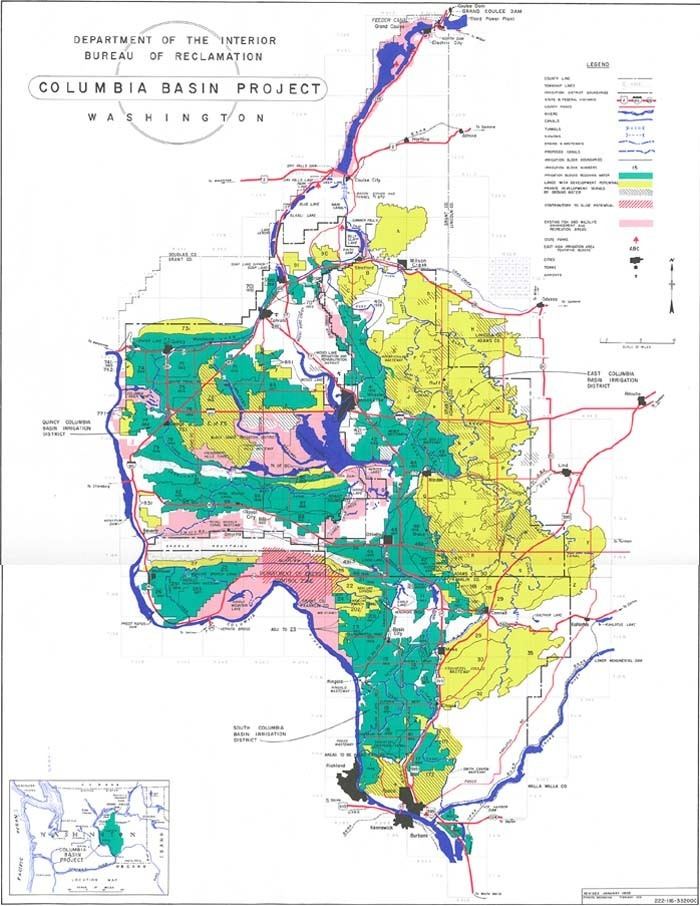
When Congress authorized the Columbia Basin Project in 1943, the blueprint was ambitious: deliver water to 1.03 million acres of farmland. Eighty-three years later, only about 671,000 acres—roughly 65% of the original goal—have actually received that water. Now, the push to close that gap has moved from a perceived “pipe dream” to a concrete agenda item for the Columbia Basin Development League’s annual conference, scheduled for Nov. 11-13 in Kennewick, Wash., Capital Press reported.
This isn’t just a matter of completing a historical checklist. The shift toward surface water is driven by a critical need to address declining deep-well irrigation in the Odessa Aquifer. By transferring up to 87,700 acres to the project’s surface water system, the region aims to stabilize its agricultural foundation before groundwater depletion becomes an irreversible crisis.
The Odessa Groundwater Replacement Program
The momentum is already visible on the ground. The East Columbia Basin Irrigation District is currently managing several construction projects under the Odessa Groundwater Replacement Program, moving at what Jon Erickson, the district’s development coordinator, describes as “breakneck speed.” This acceleration is largely fueled by the availability of state and federal funding.
The scale of the current work is substantial, focusing on several key areas:
- EL 22.1: More than 17,300 acres (the largest system in the program).
- EL 11.8: Approximately 7,600 acres.
- EL 84.7: Approximately 7,100 acres.
- EL 80.6: Approximately 5,800 acres.
Billions of Dollars Are Required for Completion
Despite the current progress, the financial mountain remaining is steep. Completing the second half of the project in its entirety would require billions of dollars.
“The billions of dollars it’s going to take to construct (the second half) in its entirety is probably a big spill to swallow, but if you approach it in a phased or continued development aspect, people can palate that,” Erickson told Capital Press.
By breaking the project into manageable, high-priority segments—like the Odessa replacement—the districts can secure funding and show results without triggering the sticker shock that often kills massive federal infrastructure projects.
A New Direction for the League
The upcoming conference in Kennewick marks more than just a policy discussion; it represents a cultural shift for the Columbia Basin Development League. After years of hosting the event in Moses Lake, Erickson, who ends his two-year term as league chairman on Dec. 31, wanted to give the gathering a new look and location.
Working with the board and consulting firm Red Barn Communications, the goal was to pivot toward networking and vendor opportunities. According to tricitiesbusinessnews.com, the 60th Annual Meeting—which has been supported by sponsors like the Washington State Potato Commission, Lamb Weston, and McCain Foods—will center on the theme “The Power of the Columbia: A Confluence of Multiple Interests, Multiple Benefits.”
While the “fun” aspect of the conference is a priority for Erickson to get people out of their offices, the core agenda remains heavy. Stakeholders will receive updates from the U.S. Bureau of Reclamation and the various irrigation districts, while analyzing the federal policy implications that will determine whether the remaining 360,000 acres of the original 1943 plan ever see a drop of project water.
Focus Remains on Odessa Aquifer Lands Transition
The push for completion does not exist in a vacuum.
For now, the focus remains on the immediate transition of the Odessa Aquifer lands.



