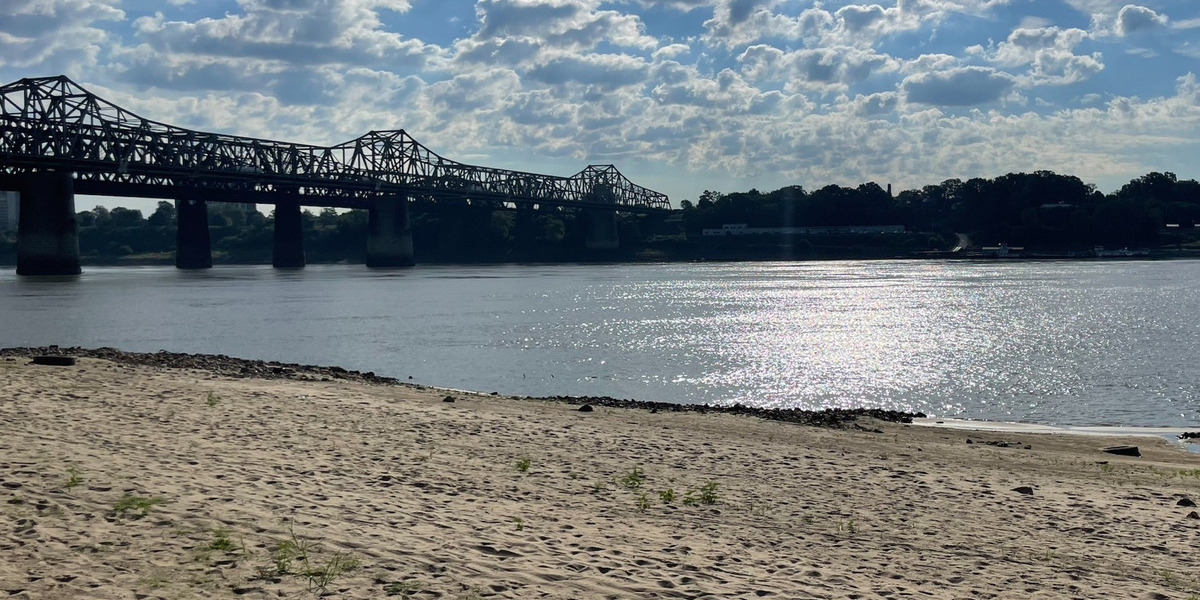
A dispute over the federal Water Resources Development Act has pitted downstream Missouri River states against their upstream neighbors and Western states over a proposal that would grant 10 governors absolute veto power over water pipeline projects. The House version of the bill requires unanimous approval from governors in the Missouri River states before any project moving water to a non-Missouri River state can be studied or constructed, according to reporting from South Dakota Searchlight.
This legislative clash centers on a growing fear that water-stressed Western states will look to the Missouri River to quench their thirst, potentially draining the river’s capacity for those who rely on it for commerce and agriculture. While the House passed the bill by a vote of 415-9, the Senate version currently lacks this controversial provision, leaving the future of the river’s water security in a state of legislative limbo.
The Veto Power Provision
The House bill, sponsored by U.S. Rep. Sam Graves (R-Missouri), defines “Missouri River states” broadly. It includes the seven states where the river physically flows—Montana, North Dakota, South Dakota, Nebraska, Iowa, Kansas, and Missouri—as well as Colorado, Minnesota, and Wyoming, which fall within the river’s 530,000-square-mile drainage basin. Under the proposed law, if any one of these 10 governors objects, a project to move water outside this zone is dead on arrival.

Shane Kinne, executive director of the Coalition to Protect the Missouri River, argues that the threat of water shortages is already a reality. He points to the last four years, during which the U.S. Army Corps of Engineers has limited water releases from upper reservoirs, a move that has directly hampered commercial barge traffic downstream. Kinne contends that Missouri River Basin states must collaborate to protect the resource from outside interests.
“If this isn’t the proposal, let’s bring some ideas to address this concern,” Kinne said.
Governors Oppose House Provision on Water Projects
The prospect of a 10-state consensus is viewed by critics as a recipe for paralysis. The governors of Montana, North Dakota, and South Dakota—where the river flows through a series of dams and reservoirs—have joined Colorado and Wyoming in a formal letter opposing the House provision. They argue that giving every governor a veto would effectively block the ability to even study the feasibility of water projects in a watershed that covers one-sixth of the continental United States.
The fight extends beyond the basin to Utah. Although not a Missouri River Basin state, Utah’s governor also signed the opposition letter. Utah is currently grappling with the disappearance of the Great Salt Lake, and the state’s Great Salt Lake Commission has identified the Missouri River as a potential source for imported water. By opposing the House bill, Utah is essentially fighting to keep the door open for potential pipelines that could provide water for the vanishing Great Salt Lake.
Unanimous Approval Could Hamstring Army Corps of Engineers
U.S. Rep. Dusty Johnson (R-South Dakota) was one of the nine House members to vote against the bill. Johnson argues that the requirement for unanimous gubernatorial approval would “hamstring” the U.S. Army Corps of Engineers in its management of reservoirs and dams.
Local water officials in South Dakota share this skepticism. Jay Gilbertson, who manages the East Dakota Water Development District, notes that while current local pipeline projects wouldn’t be affected—since they don’t move water out of the Missouri River states mentioned in the bill—the provision sets a dangerous precedent. He argues that the logic of the bill is flawed because getting 10 different state governments to agree on a single issue is nearly impossible.
“One governor says no, you just shot the whole project down,” said Darrell Raschke, a board member of the Mid-Dakota Rural Water System and the Upper Missouri Water Association. “Why would you put that in law?”
Barge Industry Faces Threats from Western Pipelines
When water levels drop, the commercial barge industry—the backbone of bulk transport for grain and fuel in the Midwest—grinds to a halt. For those in Missouri or Kansas, a pipeline to the West is seen as a threat to the water flow that supports commercial barge traffic and global market access.
Conversely, for the arid West, these pipelines represent a lifeline against permanent drought. If the Senate adopts the House provision, it would require approval from all governors in Missouri River states to study or construct projects moving water to a non-Missouri River state.