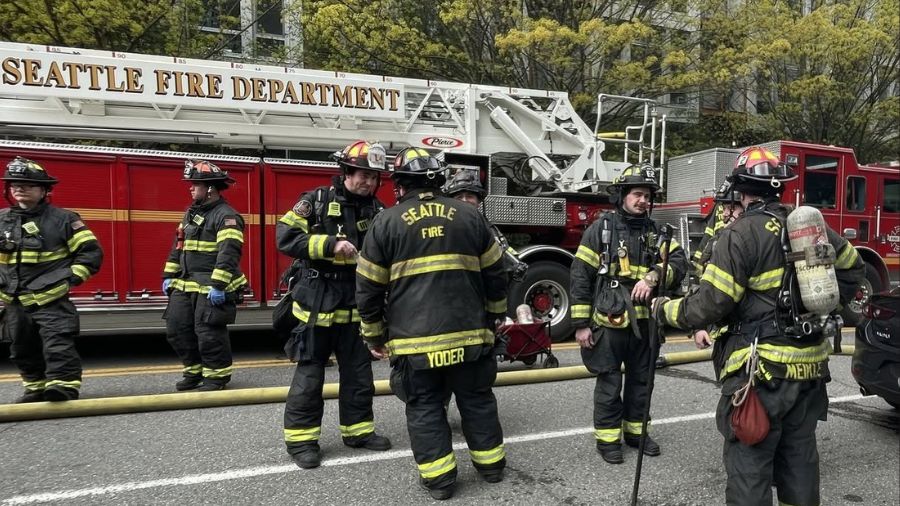
Seattle City Councilmember Maritza Rivera is fighting to restore $7 million in annual overtime funding for the Seattle Fire Department (SFD) after Mayor Katie Wilson cut the funds from her proposed 2027-28 budget. The move, detailed in a budget proposal submitted by Rivera, aims to prevent delays in emergency response times and protect critical crisis services across the city.
This isn’t just a line-item dispute over accounting. It is a clash over the fundamental math of public safety. On one side, the mayor is attempting to plug a massive $175 million structural deficit. On the other, fire officials and councilmembers argue that cutting overtime doesn’t actually save money—it just removes the people who answer the phone when you call 911.
The danger of a delayed response
The stakes become visceral when you look at what the SFD actually does. Beyond fighting fires, the department manages Health One, which handles behavioral health crises, and Health 99, which responds specifically to overdoses. These aren’t scheduled appointments; they are chaotic, life-or-death emergencies where seconds determine the outcome.
Kenny Stuart, a spokesperson for the SFD union, didn’t mince words when the budget was released in September, calling the mayor’s cuts “dangerous and ill-advised.”

“We simply cannot stand by and let people wait for help. If this budget takes effect, people will wait longer for help when they call 911 during an emergency,” Stuart said.
Fire Chief Harold Scoggins echoed these concerns during budget briefings, warning that the cuts could actively harm department operations. Councilmember Rivera noted that the city cannot afford to create any delay when residents are in crisis, expressing a desire to avoid planned service outages or reduced staffing levels.
A decade-old gamble on overtime
To understand why $7 million in overtime is so critical, you have to look at a decision the city made more than ten years ago. In a strategic move during collective bargaining with the firefighters’ union, Seattle intentionally hired fewer full-time staff and used overtime to fill the gaps. The logic was simple: it was cheaper to pay overtime than to pay the long-term benefits associated with full-time permanent hires.
Councilmember Deborah Juarez pointed out that this created a dependency. The city built a staffing model that relies on overtime to function. By cutting that funding now, the mayor is essentially trying to remove the engine while the car is still moving. Juarez noted that while the mayor believes the department can manage, the Fire Chief has explicitly stated that they cannot meet city requirements without the money.
Seattle City Councilmember Maritza Rivera is proposing to restore $7 million in annual overtime funding for the Seattle Fire Department (SFD) that Mayor Katie Wilson cut from her proposed 2027-28 budget.https://t.co/JBwWIK3QPy
Councilmember Bob Kettle emphasized the urgency during a Wednesday budget hearing, describing the situation as “dire” because emergency response is measured in seconds. He noted that while this specific restoration “has to happen,” it also exposes a larger, systemic problem with how Seattle handles overtime in the long term.
The mayor’s push for fiscal discipline
Mayor Katie Wilson isn’t ignoring the risks, but she is weighing them against a crumbling balance sheet. Her office defended the cuts to KIRO Newsradio, framing the decision as a necessary part of managing a $175 million inherited deficit while still protecting essential services and expanding food and shelter access.
The administration’s argument is that the cut is relatively small—roughly 2% of the total fire department budget. According to a spokesperson for the mayor, this gap can be bridged through “advance staff planning” to cover vacancies and sick leave, rather than relying on expensive overtime payouts.
The mayor’s office did leave a door open, stating that Wilson would welcome the opportunity to restore the funding if city revenues improve in the future.

Who carries the risk
When a city cuts “overtime,” it sounds like a corporate belt-tightening measure. But in the context of a fire department, the “cost” isn’t paid by the city—it’s paid by the residents. If staffing levels drop because overtime is unavailable to cover shifts, the result is often a “brownout” or a service outage where specific stations or units are taken offline.
The burden falls most heavily on neighborhoods with slower response times and those relying on the specialized Health One and Health 99 units. For a person experiencing a mental health crisis or an overdose, a three-minute delay isn’t a budgetary adjustment; it’s a potential fatality.
The city’s current trajectory can be summarized by the competing priorities at play:
| Perspective | Primary Goal | Proposed Solution |
|---|---|---|
| Mayor Wilson | Fiscal Stability | 2% overtime cut to address $175M deficit |
| Councilmember Rivera | Operational Readiness | Restore $7M to maintain 911 response speeds |
| SFD Union | Public Safety | Full funding to prevent “dangerous” wait times |
The Select Budget Committee has already begun discussing Rivera’s amendment, which is co-sponsored by Councilmembers Bob Kettle and Rob Saka. The final decision will depend on whether the council views the $7 million as a luxury or a lifeline.
The public has one final opportunity to influence the outcome before the budget is finalized. A public hearing is scheduled for Nov. 5, where residents can weigh in on whether the city’s fiscal discipline is worth the risk of a slower ambulance ride.
Seattle is currently operating on a staffing model designed a decade ago to save on benefits—a gamble that now leaves the city’s emergency response vulnerable to a single budget stroke.



