The Department of Justice has issued grand jury subpoenas to election workers in Los Angeles, escalating a high-stakes confrontation with California officials over the identification of noncitizens on voter rolls. The move follows a series of federal warnings that local officials could face “significant federal scrutiny and legal exposure” if they do not cooperate with DOJ demands to isolate ballots from individuals the federal government flags as likely noncitizens.
This isn’t just a bureaucratic disagreement; it’s a collision between federal authority and state election administration. According to NPR, the Los Angeles County Registrar-Recorder’s office confirmed on Thursday that employees received these subpoenas last week. This development follows reporting from The New York Times, which noted that at least two employees were ordered to appear in court on November 4.
A federal warning of criminal liability
The subpoenas are the latest volley in a campaign by the Trump administration to purge noncitizens from the electorate. In recent weeks, the DOJ sent letters to California election officials with a stark ultimatum: set aside ballots for people flagged as “likely” noncitizens or risk being labeled as accomplices to a crime. The letters warned that those who “knowingly tabulate ballots cast by individuals identified by federal agencies as noncitizens” risk becoming aiders and abettors to a federal crime.
For the people actually running the polling places and processing the mail, the stakes have shifted from administrative to personal. While a Justice Department spokesperson has not responded to requests for comment, it remains unclear whether the staff members summoned by the grand jury are targets of a criminal investigation or are simply being called as witnesses to the office’s internal processes.
BREAKING: The NYT reports that the DOJ has launched a criminal investigation in Los Angeles County, issuing subpoenas to multiple election officials.One subpoena demands all communications between election officials and Secretary of State Shirley Weber related to the DOJ’s… pic.twitter.com/xLtUf1wNop
The court rejects the DOJ’s list
The timing of these subpoenas is particularly pointed. They arrived just one day after U.S. District Judge David O. Carter blocked the Justice Department’s attempt to force California officials to stop processing ballots for roughly 20,000 people federal officials claimed were likely noncitizens.
Judge Carter didn’t mince words. He found no legal basis for the DOJ’s demand and expressed skepticism regarding the reliability of the federal list. Beyond the legal technicalities, Carter warned that such an effort could disenfranchise eligible voters and trigger widespread election chaos. His frustration peaked during a Tuesday hearing, where he told DOJ officials that any threats toward state and county employees must cease immediately.
“The court reiterates what it said yesterday: these threats must stop.”
Despite the judge’s order, the Justice Department is not backing down and is currently appealing the ruling to the 9th Circuit Court of Appeals.
Local officials dig in
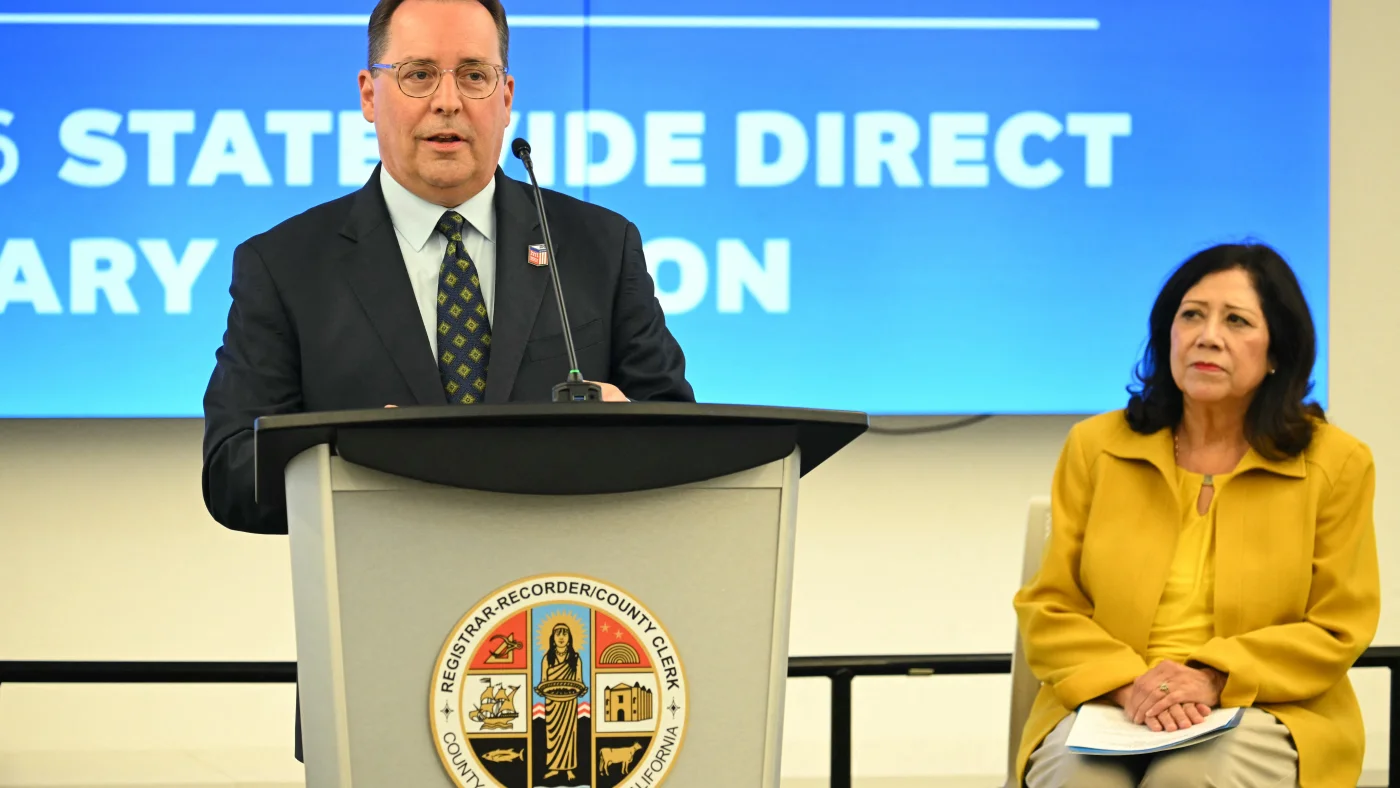
Los Angeles County Registrar-Recorder Dean Logan has framed the federal approach as an attack on the integrity of the election process. In a statement released Thursday, Logan praised Judge Carter’s admonishment of the DOJ, stating that the federal agency has taken a “confrontational, adversarial approach” while local officials continue to act in accordance with state and federal law.
The tension highlights a fundamental disagreement over who controls the voter rolls. The DOJ views the removal of noncitizens as a matter of national law and election security. Conversely, local officials like Logan argue that federal interference—especially when based on lists the courts find unreliable—threatens the safety of election workers and the fundamental right of citizens to vote.
Logan has vowed to take whatever steps are necessary to protect his staff and ensure that Los Angeles County voters can exercise their franchise without interference. As the November 4 court date approaches, the situation serves as a volatile case study in the friction between federal oversight and the decentralized nature of American elections.