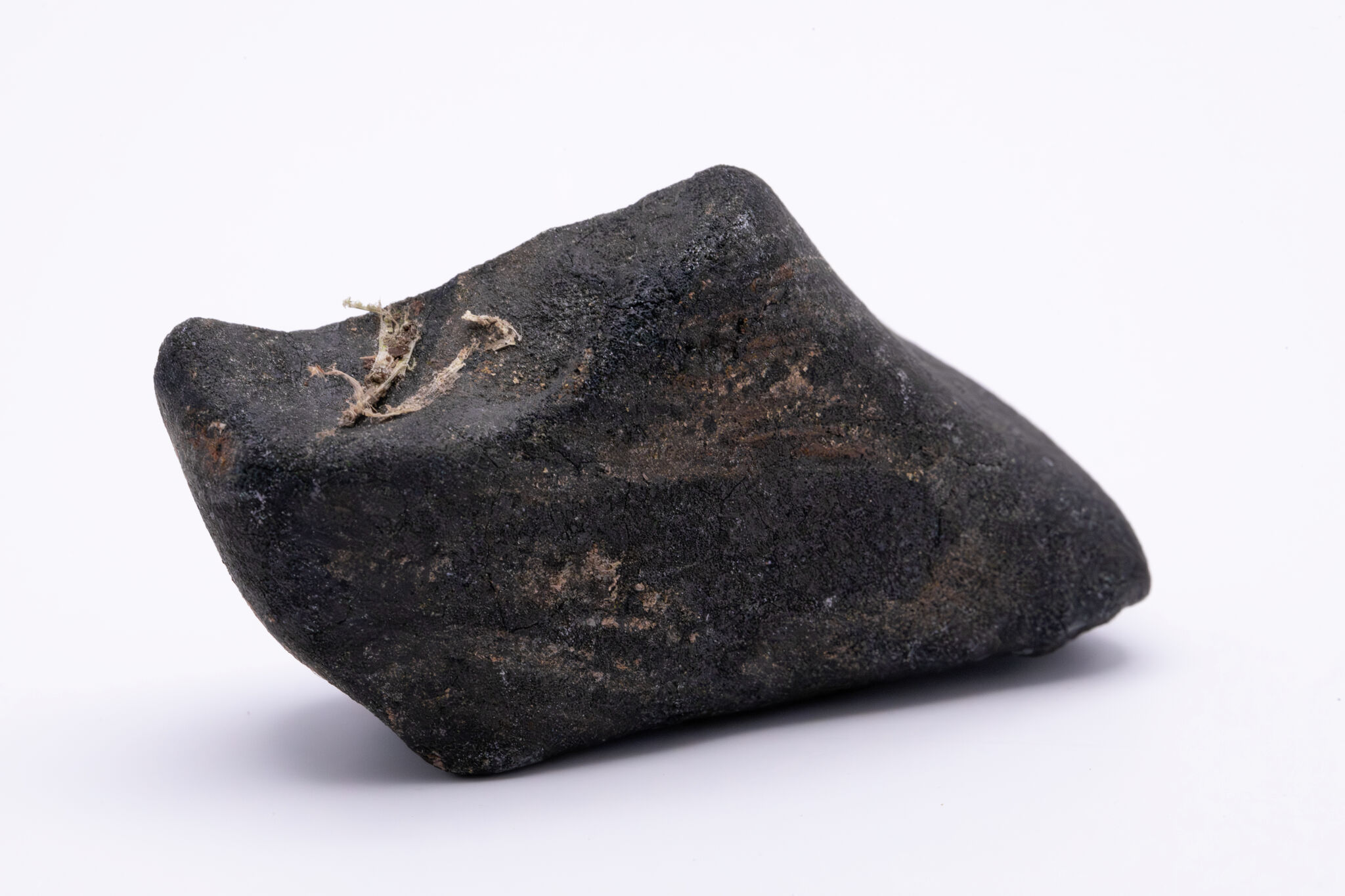
From a Spring Roof to Museum Display: The Journey of the Houston Meteorite
When a one-ton space rock tore through the Texas sky at nearly 35,000 miles per hour on March 21, it packed an explosive punch equivalent to 26 tons of TNT. The resulting sonic booms rattled homes across Southeast Texas before the rock shattered roughly 29 miles above the ground. For Spring resident Sherrie James, the cosmic event came shockingly close to home. Sitting inside her house that afternoon, she heard the impact as a fragment punched straight through her roof and landed in an upstairs bedroom near her daughter’s bed.
It’s just exciting to think of where it’s been and how far it’s traveled,
James reflected on the encounter. That little thing has traveled by planets and stars, there’s no telling how far it’s come. So, it’s very exciting. I just feel blessed it came to see me.
The Hunt for Space Rock Fragments Across North Houston
That rare daytime fireball triggered an extensive recovery effort led by NASA planetary scientist Marc Fries, who scoured northern Houston using weather radar data, seismometers, and eyewitness accounts. His search paid off with the discovery of a 46-gram fragment resting in a grassy strip along Cypresswood Drive, near the Barbara Bush Branch Library. In total, 19 fragments have been recovered throughout the wider Houston area since the impact.
Several of those recovered pieces found their way to Rice University laboratories, where scientists began unraveling the deep history of the stone. Laboratory analysis classified the specimen as an ordinary chondrite—a type of meteorite containing material left over from the original formation of our solar system roughly 4.5 billion years ago. While about 85 percent of meteorites fall into this category, further examination quickly proved this particular rock was far from standard.
What Laboratory Tests Revealed About the Asteroid’s Violent Past
Microscopic inspection at Rice revealed that the Houston-area rock was notably missing tiny, rounded mineral grains typically embedded in ordinary chondrites. Researchers determined that the parent asteroid had been heated to nearly 2,000 degrees Fahrenheit while still part of its parent asteroid, completely melting those delicate mineral structures. Additional physical evidence pointed to a violent collision in space before the rock ever neared Earth’s atmosphere.
“We think this meteorite was impacted in space,” Rice planetary scientist Bidong Zhang said in a June university report. “It truly is a unique specimen.”
That assessment came from Rice planetary scientist Bidong Zhang in a university report released following the analysis. Building on those findings, researchers at the university have proposed naming the space rock “Houston,” though that official designation still awaits final review and approval from the Meteoritical Society.

Where and When to See the Fall to Earth Exhibit
Starting November 6, the public will have a chance to examine the historic specimen firsthand. The Houston Museum of Natural Science is launching a new, free exhibition titled Fall to Earth, positioning the ancient rock in the museum’s Grand Entry Hall near the Museum Store.
A 4.5-billion-year-old fragment of our solar system’s original formation crashed through the roof of a Houston-area home,
Carolyn Sumners, the museum’s vice president of astronomy, noted in a public statement. That’s not something you expect to happen in your own neighborhood.