Tracing the Nomadic Life and Revolutionary Service of Indian Joe in Newbury
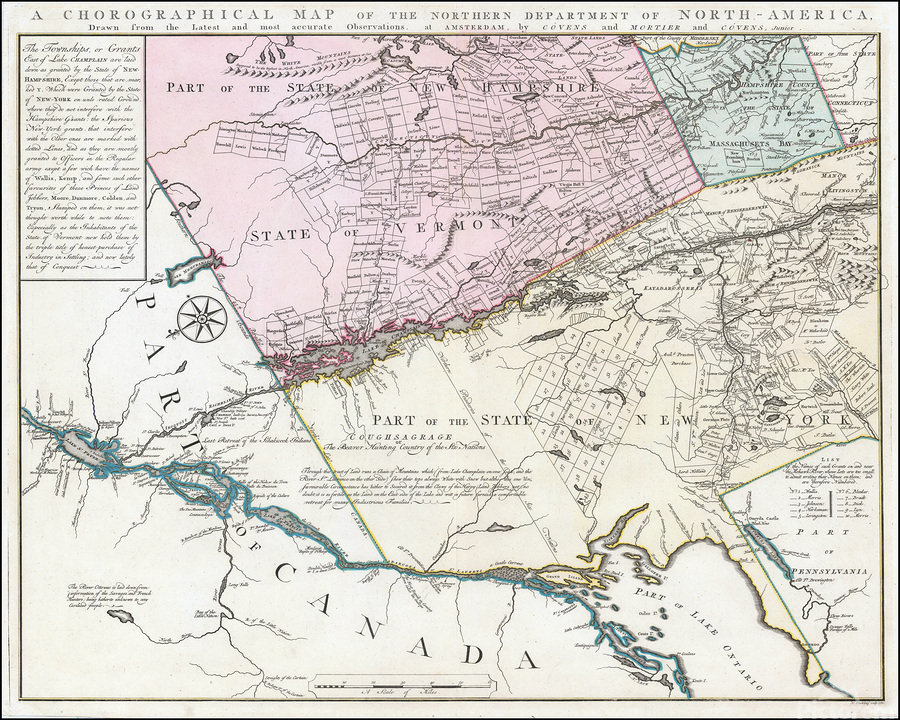
Long before Vermont’s borders settled into the tidy townships we know today, the Connecticut River Valley served as a fluid borderland for families displaced by imperial conflict. Among them was a man history remembers primarily through military muster rolls and local legend as “Indian Joe.” Following a raid, Joe and Molly fled south into Vermont, living a nomadic life that touched Derby, Cabot, Morristown, and Peacham before they finally settled in Newbury along the Connecticut River across from Haverhill, New Hampshire.
That geographic shift placed Joe squarely at the intersection of Revolutionary War logistics and indigenous survival strategies. By 1765, reports indicated that Native populations were active around Guildhall in upper Coös, a presence that persisted intensely after 1778. General Jacob Bayley quickly recognized the strategic value of this local familiarity. Serving as a scout, Joe brought an intimate knowledge of the rugged terrain stretching between Coös and Canada to the colonial effort.
Mapping the Bayley-Hazen Military Road
General Bayley’s primary assignment involved mapping and constructing the Bayley-Hazen Military Road, an ambitious infrastructure project designed to connect the Connecticut River Valley directly with St. John’s, Quebec, near Montréal. George Washington intended for continental armies to utilize this overland route during a planned invasion of Canada. Construction began under Bayley in 1775 and 1776 before halting temporarily.
Work resumed in 1779 under General Moses Hazen and Colonel Timothy Bedel, who pushed construction further into northern Vermont and toward Canada. The grand strategic vision ultimately collapsed. The Continental Army never mounted its intended northern invasion, and the road remained unfinished. In a bitter historical irony, the incomplete route was utilized at least once by British forces to raid a Vermont settlement, demonstrating the double-edged sword of wilderness infrastructure during the rebellion.
The 1781 Muster Roll of Captain John Vincent’s Indian Rangers
Beyond scouting, Joe’s formal military integration is documented through surviving primary records. He served in Captain John Vincent’s Company, 1777-1778 and 1780-1781. The earliest primary document tied directly to him is the “Muster Roll of Captain John Vincent’s Company of Indian Rangers in the Service of the United States of America,” dated April 30, 1781.
This document lists thirteen Abenaki men from the St. Francis tribe serving under Vincent in Newbury. With eight of the thirteen men bearing the name Joseph or Susap, historians confirm Joe’s identity through geographic context and the specific listing of “Joseph Molly.” A historical marker in Mendon, Rutland County, Vermont, commemorates Captain John Vincent—a member of the Caughnawaga tribe, guide to Benedict Arnold and Richard Montgomery during the 1776 Quebec siege, and a participant at the Battle of Saratoga.
The 1781 muster roll details the specific composition of this ranger unit:
| Name | Rank | Term | Remarks |
|---|---|---|---|
| John Vincent | Captain | 1 year | Commissioned 1st May 1780 |
| John Sabattist | Ensign | 1 year | Died June 30, 1781 |
| Swasin | Sergeant | 1 year | [hard to read] |
| Louis | Sergeant | 1 year | [hard to read] |
| Joseph | Private | 1 year | – |
| Joseph Sabattist | Private | 1 year | – |
| Baziel Sabattist | Private | 1 year | – |
| Apom Sabattist | Private | 1 year | [nearly illegible] |
| Peal Susup Sr. | Private | 1 year | Died December 10 |
| Tamenick | Private | 1 year | Died December 10 |
| Joseph Molly | Private | 1 year | – |
| Peal Susap Jr. | Private | 1 year | – |
| Joseph Mohawk | Private | 1 year | – |
| Joseph Squant | Private | 1 year | Deserted March 1781 |
| Joseph | Private | 1 year | – |
| John Battist | Private | 1 year | – |
| Charles | Private | 1 year | [nearly illegible] |
Forming Alliances Along the Connecticut River
Archival correspondence from the era illuminates the fragile ecosystem of these indigenous communities. In December 1776, Jacob Bayley informed the New Hampshire House of Representatives that supplying St. Francis Indians with trade goods remained vital. He noted that sending envoys to their hunting grounds encouraged families to bring beaver to trade at Upper Cowas, indicating that groups lived and hunted north of Newbury.
Historian Gordon M. Day observed that Frederic P. Wells estimated roughly twenty Abenaki families lived in the area by 1780. In September 1776, General Schuyler ordered Bedel to bring displaced Indian families roaming the Coös territory down to the Connecticut River settlements and supply them with necessities. By 1788, Bedel reported hosting about ten families employed in colonial service, matching the local presence of Captain John, his sons, and Joe and Molly. General Bayley similarly observed in 1781 that while larger numbers gathered seasonally without settling permanently, they caused no damage beyond rambling through the woods.
Sergeant Swasin, recorded in Vincent’s muster roll, likely brought warriors from southern Maine to join the Continental Army, maintaining deep ties to the St. Francis community. These intertwined records preserved in historical compendiums like Wells’s History of Newbury, Vermont continue to anchor Native patriots within official DAR databases, leaving the exact boundaries of their post-war integration and final resting markers to ongoing historical inquiry.