Vermont School Consolidation Stumbles Over Maps, Timelines, and Public Access
Vermont’s push to consolidate its sprawling network of school districts under Act 170 is hitting severe turbulence just weeks after its initial statutory deadlines. While state officials envisioned a streamlined path to address soaring education costs and shrinking student populations, local school board members report widespread confusion, legal roadblocks over public meeting laws, and a growing distrust between small island communities and larger mainland districts.
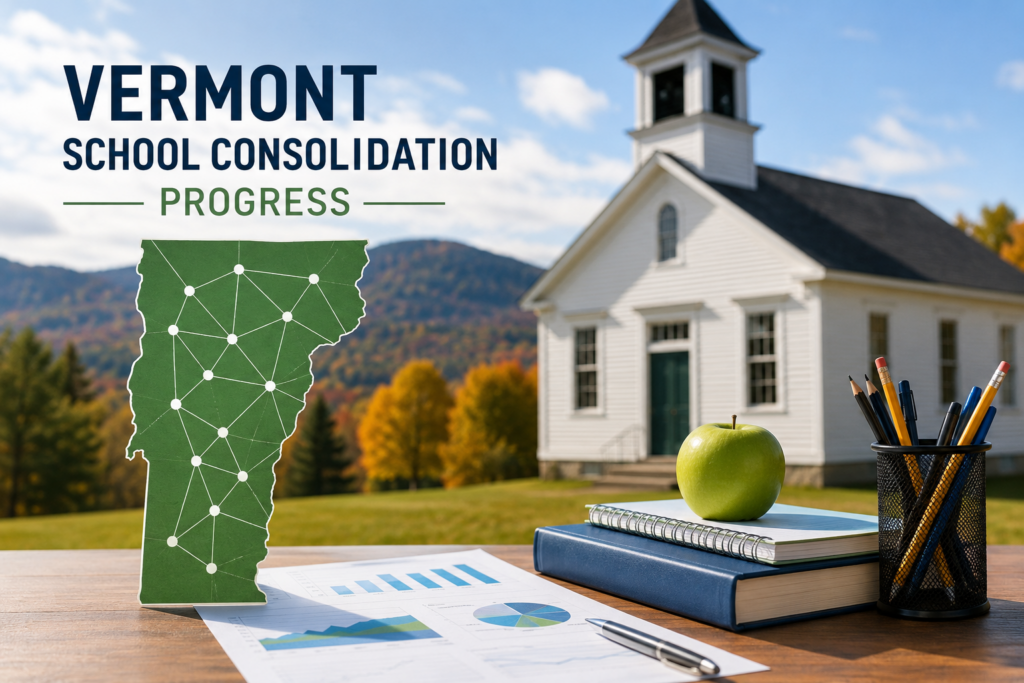
Act 170 established 18 regional merger study committees tasked with holding their first meetings before October 15, aiming for state sign-offs on local consolidation recommendations by the end of 2027 and public town meeting votes in 2028. Yet, as vermontpublic.org reported, the rollout has left local leaders grappling with conflicting priorities, missing data, and structural uncertainty.
Richard Monterosso, a school board member, went into the process with an open mind. That optimism has quickly soured. I am disappointed. I think it’s a disservice to public education,
Monterosso said, pointing to a lack of coordination and transparency.
Vermont Learning Collaborative Redraws School District Maps
The administrative headaches began long before the October meetings. According to updates from DRM, the original legislative map of 20 school districts was redrawn on September 18 by the Vermont Learning Collaborative after 13 districts requested reassignments. Jurisdictions like Harwood successfully shifted groupings to align with Mount Mansfield and Champlain Valley, while the Milton Town School District took the unusual step of launching a public survey to gauge local preference before assignments were locked down on September 25.
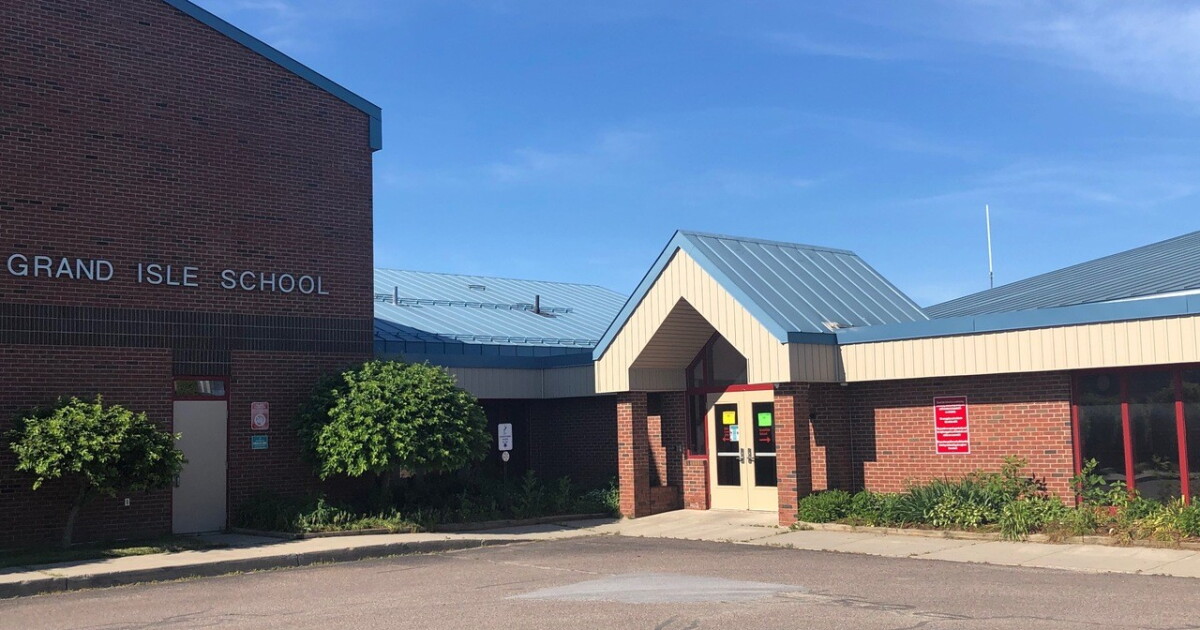
For smaller districts, the mergers carry an existential fear of political marginalization. In the Grand Isle Supervisory Union, which has already shuttered two small schools in Isle La Motte and North Hero over the past six years, board members worry about being swallowed by larger neighbors.
In the end, if we are merged with either Milton, or with Colchester, the island’s interests will always be in the minority, and majority mainland districts could vote to close schools,
Monterosso said. We would lose a real, meaningful voice in any decision about education on the islands.
This dynamic is repeating across the state. In Woodstock, leaders at Mountain Views Supervisory Union detailed similar anxieties during an October 12 community forum. Superintendent Sherry Sousa pointed out that the state has yet to provide a clear framework for evaluating whether proposed mergers will be viable, contrasting the current process unfavorably with the objectives defined under past reforms like Act 46. Compounding the stress, Mountain Views anticipates roughly $1.5 million in annual budget reductions driven by changing state spending requirements against its $32 million operating budget.
Merger Committees Pause Calendars over Open Meeting Laws
Procedural hurdles have proven just as disruptive as political friction. Because the newly minted merger committees operate as independent entities spanning multiple supervisory unions, local lawyers have raised alarms over open meeting laws. Questions persist over whether agendas and minutes can legally be posted on individual supervisory union websites, prompting several committees to hit pause on their calendars entirely.
Lead facilitator David Younce acknowledged these friction points, noting that discussions are underway to resolve statutory ambiguities surrounding proportional representation and “good faith” participation standards. Without clear statewide standards, committees are struggling to determine whether voting power should be weighted by enrollment or split evenly among districts. Younce has floated the possibility of returning to the Legislature next year to request an extension, which could push the 2028 town meeting vote further down the road.
At the same time, local superintendents argue that the Agency of Education is failing to supply timely and accurate financial reports. Brooke Olsen-Farrell, president of the Vermont Superintendent Association and superintendent of the Slate Valley Unified School District, noted that committees are being asked to make sweeping decisions about aging infrastructure and tax rates in the dark. Right now we’re at a place where there are far more questions than answers,
Olsen-Farrell said.
Education Secretary Zoie Saunders pushed back against those criticisms, arguing that the merger process was always going to spark friction. Saunders maintained that adequate data is available for districts to begin the hard conversations.
We’re at a point we can either cut more and more services for kids, or look at how we change,
Saunders said.
As committees like Group 7 in Southeast Vermont and the Caledonia Cooperative handle procedural hurdles—such as adopting Robert's Rules of Order and sorting out proportional voting—the tight statutory window continues to narrow, leaving communities caught between rising property taxes and an uncertain consolidation roadmap.