Federal Retrial Begins in Downtown Los Angeles Over the Devastating Palisades Fire
Jury selection got underway on Monday in U.S. District Court in downtown Los Angeles for the retrial of Jonathan Rinderknecht, the man federal prosecutors accuse of deliberately touching off the catastrophic wildfire that flattened the seaside enclave of Pacific Palisades last year. Rinderknecht, a 30-year-old former Uber driver holding dual U.S. and French citizenship, faces a scaled-down slate of charges following a three-week trial in late June that ended in a hung jury, City News Service reported.
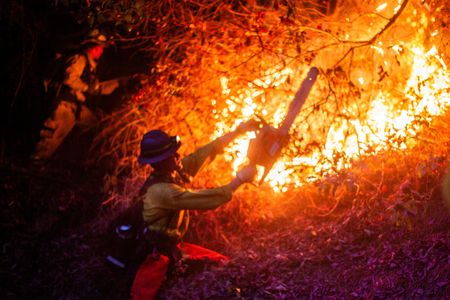
The proceedings stem from a disaster that reshaped Southern California's terrain and inflicted unprecedented property destruction. Prosecutors have framed Rinderknecht as a disgruntled loner harboring deep-seated anger toward society and the wealthy, asserting that he channeled his frustrations into arson. Court documents allege that he maliciously ignited a small brush fire on January 1, 2025. Though first responders quickly knocked down the initial flames, the embers reportedly smoldered underground within dense root systems before reigniting days later. Whipped by fierce seasonal winds, that rekindled blaze erupted into an unstoppable conflagration.
Contlicting Narratives and the Path to a Mistrial
The legal battle centers on sharply divergent accounts of how the disaster began and who bears responsibility. During the initial trial, defense attorneys maintained that Rinderknecht was entirely innocent, arguing that the hilltop New Year’s Day blaze was sparked by holiday fireworks rather than human malice. The defense contended that the massive Palisades inferno—which ultimately claimed 12 lives and destroyed thousands of structures a week later—was an entirely separate fire set by someone else entirely.
Those competing narratives left jurors deadlocked 10-2 in favor of acquittal last June, preventing a unanimous verdict on any of the three original federal counts. Judge Anne Hwang declared a mistrial shortly thereafter. In response, prosecutors secured a new grand jury indictment that dropped one original charge and modified the two remaining federal arson counts. Rinderknecht now faces up to 40 years in prison if convicted under the revised indictment, a slight reduction from the 45-year maximum he faced previously. He has remained in custody since his arrest in Florida in October 2025.
Fires Destroy Thousands of Structures and Cause Massive Economic Losses
The human and economic toll of the early January disaster remains staggering. Nearly 7,000 homes and structures were reduced to ash, with property losses mounting to an estimated $150 billion. Some of the destroyed assets belonged to organizations that receive federal financial assistance or engage in interstate commerce. The Palisades fire also burned concurrently with the Eaton Canyon wildfire, which erupted roughly 30 miles to the east and ravaged Altadena, killing 19 people. While investigators concluded that electrical transmission tower sparks ignited the Eaton fire, Rinderknecht remains the sole person criminally charged in connection with either calamity. Together, the twin disasters rank as the deadliest wildfire calamity ever in Los Angeles County, eclipsing the 29 lives lost during the 1933 Griffith Park fire.
Defense attorney Steve Haney argued during the initial proceedings that the government lacked both physical evidence linking his client to arson and records proving any intent to commit the crime. Haney also suggested in court filings that Rinderknecht was being scapegoated for broader failures within the Los Angeles Fire Department. In a court declaration filed in March, Rinderknecht maintained his innocence, explaining that he had climbed a hill to watch New Year’s fireworks when he spotted the initial outbreak, which was then known as the Lachman fire. He stated that he immediately dialed 911, stayed at the scene until fire crews arrived, and offered to assist them.
Additional reporting noted that prosecutors have alleged Rinderknecht asked the AI application ChatGPT on his phone whether someone could be held at fault for lighting a fire while placing his emergency call. Rinderknecht pleaded not guilty and did not testify in his own defense during the first trial.