Drive past the Aligned Data Centers facility in north Phoenix, and you will likely miss it entirely. It is a stout, windowless gray-and-blue building sitting quietly alongside the freeway. Downtown, a QTS Data Centers location blends into the urban scenery between parking garages and hotels, giving no outward sign of the heavy computational lifting happening inside.
Yet, KJZZ reported that while these nondescript digital storehouses consume a relatively modest amount of water within their own four walls, they are driving a massive surge in energy demand that could strain Arizona’s power and water grids in ways planners are struggling to measure.
How Data Centers Cool Their Servers
Inside these facilities, endless rows of servers generate intense heat while processing data. Many sites run chilled water through internal pathways to absorb that heat, though technology varies. Some facilities utilize closed-loop systems designed to require zero water for operational cooling, avoiding a continuous draw from municipal pipes.
Social media claims often suggest that every individual AI prompt consumes a bottle of water, but experts caution those figures are little more than back-of-the-envelope guesses.

Kathryn Sorensen, the Kyl Center’s director of research, pointed out that data centers often use comparable amounts of water to other large commercial users like golf courses and beverage bottlers, which face far less public scrutiny. Because most data centers operate inside municipal boundaries, local water utilities monitor them closely to protect residential supplies.
In Phoenix, home to the largest share of Central Arizona’s data center campuses, a “large water user ordinance” enacted in 2024 requires any facility using 250,000 gallons or more per day to submit an efficiency application. The city’s water director holds the sole discretion to block projects threatening the broader supply. At least nine Arizona water utilities had passed similar oversight rules by 2025.
The Hidden Power Generation Burden
The true water footprint of a data center rarely sits on its own property. Instead, it rests out in the desert where utilities generate electricity. Data centers demand extraordinary amounts of power—running a single average facility requires energy roughly equivalent to 400 Costco warehouses, according to an official from Arizona Public Service.
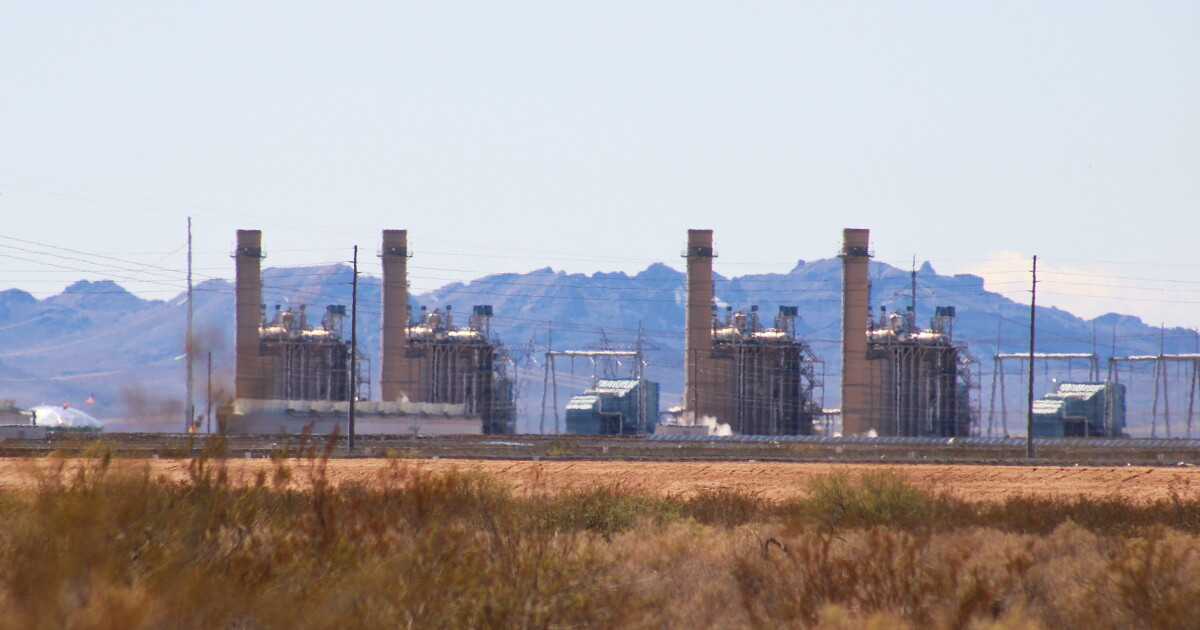
To meet that surging load, utilities are expanding fossil fuel generation. APS is currently expanding the Redhawk Power Plant west of Phoenix to add 397 megawatts to the grid. Meanwhile, the Sierra Club counts 19 new gas plants planned or under construction across the state.
Natural gas remains Arizona’s primary energy source, accounting for 45.6% of the state’s electricity in 2024, according to the U.S. Energy Information Administration. Because thermal power plants boil water to create steam and spin turbines before cooling it down, generating electricity requires immense volumes of water.

“Our research shows that data centers, if implemented in unsustainable ways, could bring about a lot of negative impacts,” said Kirsten James, senior program director for water at Ceres. “So we really need to do this the right way and be thoughtful.”
A study by Ceres estimated that annual water use tied to data center electricity needs could jump by up to 400% if all planned facilities are built, pushing consumption to 14.5 billion gallons per year—enough to supply a city the size of Scottsdale for over two years.
The Opacity of Utility Water Use
Despite these rising figures, getting a clear picture of how much water power plants consume remains remarkably difficult. Keriann Conroy, a research associate at the Energy and Policy Institute, pointed out that the Arizona Corporation Commission does not require utilities to report water use at their generating facilities.
That lack of reporting leaves the public relying on ballpark figures in a state where 90% of polled residents view water security as a top priority. With 172 data centers operating or in development across Arizona according to Data Center Map, analysts warn that rapid growth could outpace transparency, creating financial risks for companies and resource pressures for communities alike.



