The New Architecture of Discovery at Larner
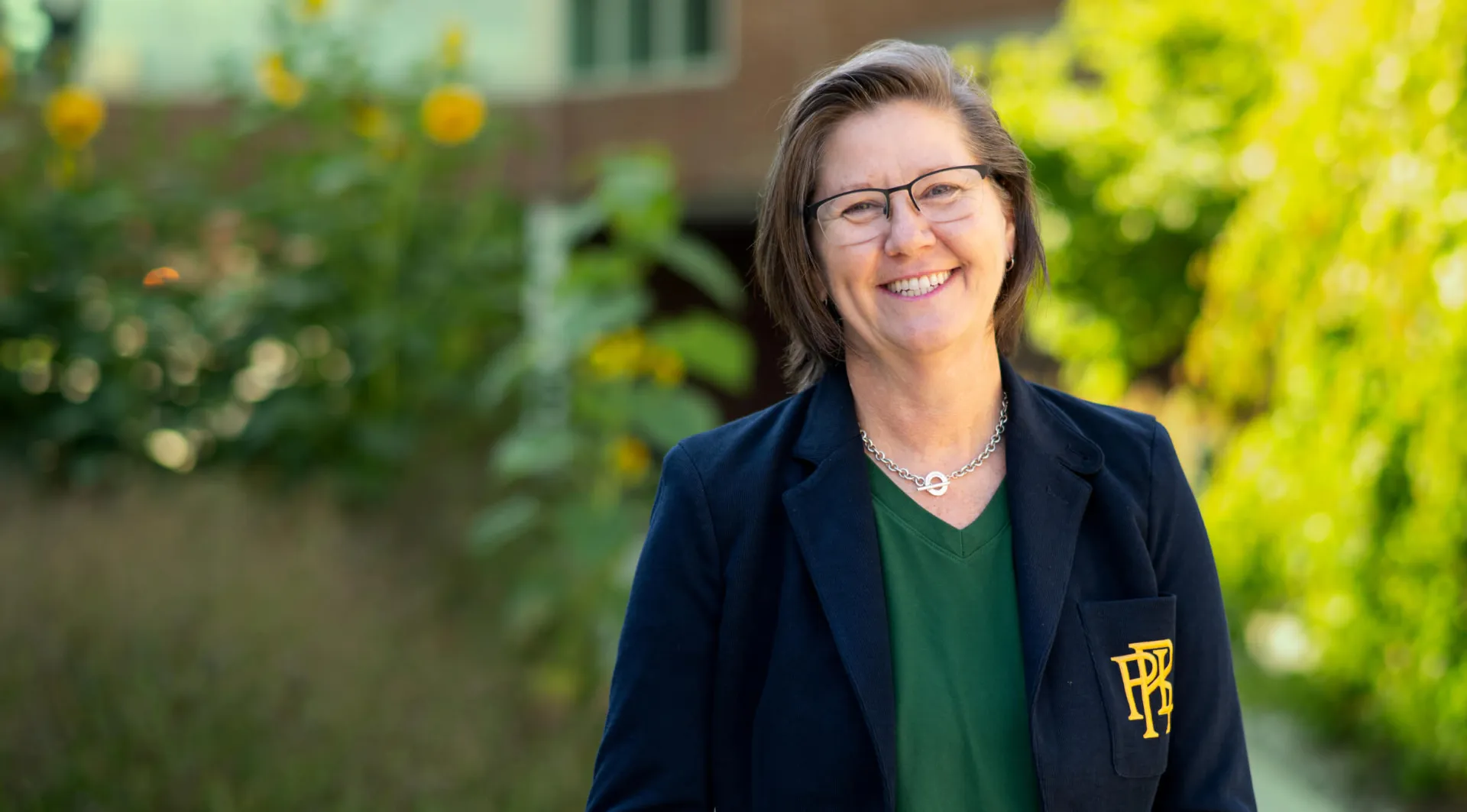
Upon joining the Larner College of Medicine nearly four years ago as senior associate dean for research, Kate Tracy, Ph.D., found that no individual domain of scientific achievement was what impressed her most. Instead, it was the extraordinary potential that existed at the intersections. Tracy identified that the most significant scientific questions of our time rarely respect the traditional boundaries of biology, physics, or data science.
The University of Vermont (UVM) is currently evaluating a premise: that an interconnected, cooperative institution based in Vermont has the capacity to spearhead national initiatives addressing some of the most complex medical challenges. As Tracy explains, the goal is to weave together basic science, clinical care, and community engagement into a cohesive research enterprise. It is a strategy that moves beyond simply housing talented investigators under one roof; it is about building an environment where collaboration can flourish.
From Lab Bench to Patient Bedside
The work of Dave Warshaw, Ph.D.—a distinguished cardiovascular researcher, University Distinguished Professor, and chair of the Department of Molecular Physiology and Biophysics at Larner—demonstrates the tangible impact of this vision. Warshaw was part of a multidisciplinary team whose foundational research on cardiac myosin helped pave the way for the blockbuster medication Camzyos, the first-in-class treatment for obstructive hypertrophic cardiomyopathy (oHCM). His career serves as an example of how basic scientific inquiry can result in the development of life-enhancing therapies, medical devices, and care strategies.
To support this goal, Tracy collaborated with Associate Dean for Faculty Rebecca Wilcox, M.D., to establish the Office for Research and Engagement (ORE) last year, creating a central resource for the growth of faculty and trainees. Co-led by Drs. Co-led by Renee Stapleton and Michael Toth, this hub acts as a centralized hub for faculty and trainee development. By lowering these barriers to entry, the college allows researchers to focus on the science.
Gary an Secures Record ARPA-H Contract for Digital Twins
Two awards announced within a week of each other this fall show the progress of that work. Gary An, M.D., a trauma surgeon and researcher at Larner, secured a contract worth up to $38 million from the Advanced Research Projects Agency for Health (ARPA-H)—the largest research award in UVM’s history. His initiative, Reprogramming Severe Critical Illness Using Extensible Digital Twins (ReSCUED), will utilize AI to generate virtual, real-time replicas of a patient’s immune system, enabling medical professionals to evaluate potential interventions before applying them to individuals suffering from severe sepsis, burns, or trauma. This capability could significantly shorten intensive care stays and improve outcomes for critically ill patients.
A few days prior, the National Science Foundation provided $19 million to Davi Bock, Ph.D., associate professor of neurological sciences, to head the newly established National Connectomics and Ultrastructure Volume Observatory at UVM. By using high-throughput 3D electron microscopy, this observatory aims to expand access to advanced imaging technologies across the country, providing a new toolkit for researchers studying Alzheimer’s disease and other complex conditions. Furthermore, these initiatives are anticipated to boost Vermont’s biotechnology and AI industries while creating high-quality research employment opportunities within the state.
Tracy Emphasizes Ethical Implications of AI and Cellular Mapping
Despite the excitement surrounding AI and cellular mapping, Tracy remains grounded in the ethical implications of these tools. As artificial intelligence becomes an increasingly integrated component of research and health care, the urgency to address privacy, sustainability, and responsible use grows. “Just because we can do something doesn’t mean we should,” Tracy notes. Academic and research centers are obligated to synthesize knowledge from medicine, science, the humanities, and public policy to guarantee that such potent technologies are deployed responsibly.
This commitment to the “real world” is further supported by the BioLabs Innovation Center at UVM, which opened in 2025. By providing a physical space for life-science startups to utilize university facilities, the center helps ensure innovation sparked in Vermont can grow in Vermont. It is a deliberate effort to keep the economic and health-related benefits of discovery within the state.
“The future of medicine will be shaped not by any single laboratory or discovery, but by the convergence of disciplines,” Tracy says. As the institution continues to build these bridges, the focus remains on the ultimate metric of success: the measurable improvement of health for patients in Vermont and beyond.