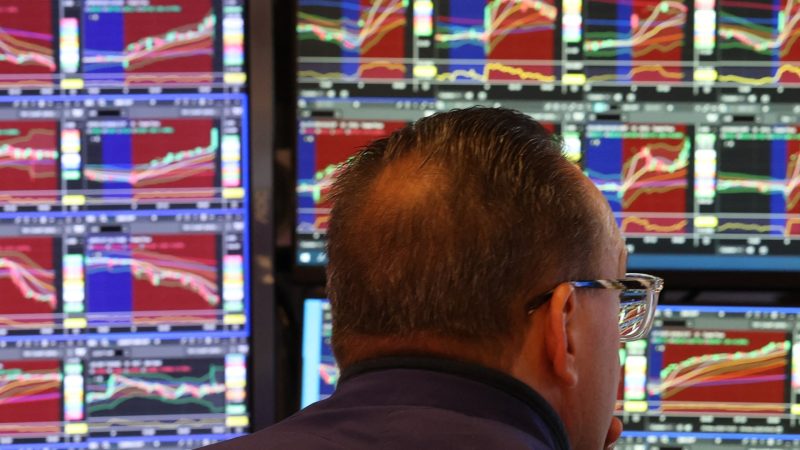
The U.S. equity markets faced a brutal reality check on November 5, 2026, as a projected Democratic sweep of both houses of Congress disrupted the technology sector. Investors, long accustomed to a frictionless expansion of artificial intelligence infrastructure, are now pricing in a period of significant regulatory uncertainty. As reported by ABC News, the S&P 500 slumped 4% while the tech-heavy Nasdaq Composite Index plummeted 5.175%, marking its most difficult session since the April 2025 “Liberation Day” market rout.
- Nvidia (NVDA) led the retreat among major chipmakers, shedding 9.02% to close at $182.08, as investors re-evaluated the velocity of AI-driven capital expenditure.
- Nasdaq Composite entered correction territory following a single-day drop exceeding 5%, driven by broad-based selling across hyperscale cloud providers and semiconductor firms.
- AUD/USD retreated approximately 1% to 0.6940, reflecting the global contagion effect as capital fled risk-on assets in response to the U.S. election outcome.
Political Shifts Threaten Data Center Construction Pipelines in Texas and Virginia
The core of the market’s agitation lies in the intersection of electoral success and infrastructure policy. According to analysis from Samara Hammoud, an international economist at the Commonwealth Bank of Australia (CBA), the shift in political power threatens to disrupt the massive data center pipeline currently under construction. Texas, a critical hub for planned capacity, is now at the center of the debate.

The situation is equally complex in Virginia, where legislative proposals for a three-year statewide moratorium on new facilities have gained renewed traction. While the broader AI buildout remains a long-term structural trend, the immediate prospect of regulatory friction—or “fiscal tightening” in the form of stricter environmental compliance—is forcing a repricing of tech valuations.
The Main Street Bridge: 401k Exposure
For the average American, this volatility is not merely a headline in the financial press; it hits directly at the performance of retirement accounts. Because the S&P 500 and Nasdaq are the primary engines for most 401k portfolios, the rapid margin compression seen in companies like Microsoft (down 3.92%) and Meta Platforms (down 3.9%) translates into immediate, tangible losses for household wealth. When tech giants see their market capitalization shrink by billions in a single session, the liquidity effect ripples outward, potentially impacting consumer confidence and discretionary spending as the holiday season approaches.
Institutional Investors Monitor Yield Curves Amid Regulatory Concerns
Smart money is currently attempting to discern whether this is a structural shift or a temporary “election-night hangover.” Institutional investors are closely monitoring the yield curve and Treasury movements, which caught a bid as the Democratic sweep became apparent. While the market generally prefers a split government—which traditionally prevents transformative policy shifts—the current outcome suggests a more aggressive regulatory posture toward Big Tech.
A senior market strategist at a tier-one institutional asset management firm noted that the market is finally waking up to the reality that AI infrastructure is not immune to local political pushback, observing a classic rotation out of growth-at-any-cost tech names into defensive sectors like utilities and consumer staples as the capital markets weigh the cost of compliance against future revenue multiples.
Despite the current sell-off, some analysts remain cautious about forecasting a total trend reversal. As CBA’s Hammoud pointed out, while moratoriums will inevitably slow projects, they are unlikely to halt the broader artificial intelligence buildout entirely. The demand for compute power remains insatiable, even if the deployment of the physical hardware faces a more arduous regulatory path.
The Path Forward for Global Markets
The Australian market, while less tech-heavy than its U.S. counterpart, is not immune to these shocks. The ASX 200 futures indicated a lower opening on Friday, reflecting the global sentiment as traders digest the U.S. election results. With the Reserve Bank of Australia maintaining a cash rate at an 18-year high of 4.85%, as noted in Yahoo Finance Australia, the local economy is already operating under tight monetary conditions. Further volatility in U.S. tech stocks, coupled with the potential for ongoing environmental and zoning litigation in the U.S., suggests that the path to recovery for the semiconductor sector will be contingent upon clarity from the new legislative leadership in Washington.
Investors should continue to watch the SEC filings of hyperscale providers for any revisions to their capital expenditure guidance for the coming fiscal year. Any significant downward revision in these figures will serve as the next definitive signal that the “AI gold rush” is facing a more permanent structural ceiling.
Disclaimer: The information provided in this article is for educational and market analysis purposes only and does not constitute financial, investment, or legal advice. Always consult with a certified financial professional before making investment decisions.