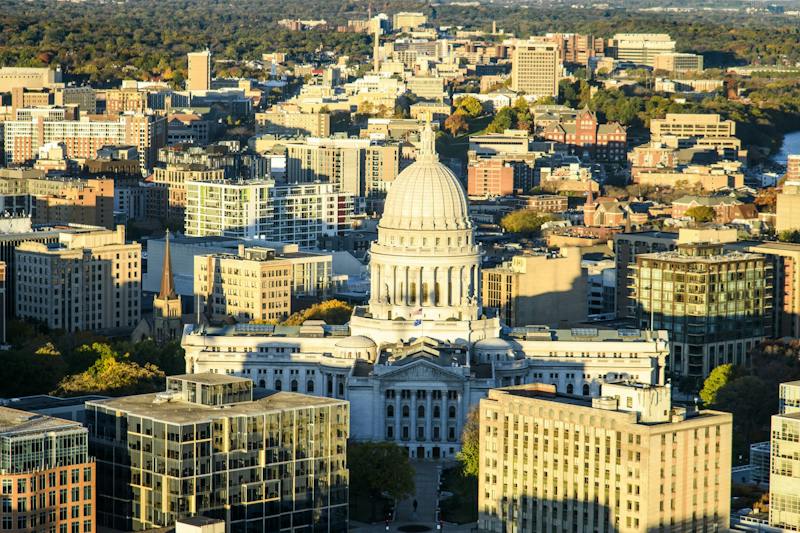
Attracting Gen Z Workers While Managing Affordability Pressures in Madison
People are burnt out. Madison is more in nature and has a more digestible lifestyle [which is] less overwhelming, as 26-year-old Tara Viswanath recently observed after moving from Washington D.C. for work. That search for balance is reshaping the demographics of Wisconsin's capital, drawing younger crowds even as the cost of living remains a concern.
Ranked as one of the best mid-sized U.S. cities for Generation Z in 2024 and 2025, Madison features a population of 280,000 where Gen Z accounts for 15.2% of residents, The Daily Cardinal reported. This demographic footprint is heavily reinforced by the University of Wisconsin-Madison, where 64.4% of students belong to Generation Z. Meanwhile, older residents make up a smaller share than found elsewhere in the state, with adults aged 65 or older comprising 14.7% of Dane County’s population compared to an average of 20% in other Wisconsin counties.
Research and Networking Attract Ambitious Young Professionals
Career development remains a primary pull for young professionals arriving in the city. Yonathan Taye, a PhD candidate and teaching assistant at UW-Madison, pointed to academic and research conferences as key factors in attracting ambitious talent.
There are often conferences here which are opportunities for me to present my research or network with people for professional development. I got hands-on teaching experience relatively quickly as well.
Taye also cited the extensive archives at the Wisconsin Historical Society and easy access to Chicago’s research institutions as vital assets for his work. Beyond academia, civic leaders point to a broader economic alignment. District 8 Alder Ellen Zhang noted that state politics, higher education, and biotech research centered in Madison create natural pipelines for young workers relocating from surrounding areas.
Federal investments further bolster this employment ecosystem. The Wisconsin Biohealth Tech Hub secured $50 million for workforce development and biotech research in 2025, with UW-Madison as one of 15 consortium members aimed at expanding high-tech employment across the region.
Park Access and Carbon Goals Shape Urban Living
For newcomers transitioning from larger East Coast metropolitan areas, the city’s physical scale offers a distinct shift in pace. Hamilton Williams, a UW-Madison graduate living in the area, highlighted the presence of hidden parks and wooded areas that remain unusual for a city of this size.
Madison ranks second nationally for park access, boasting 10.3 parks per 10,000 residents, and operates under a municipal goal to reach zero carbon emissions in city services by 2030. Viswanath praised this commitment, noting that infrastructure supporting pedestrians and cyclists makes commuting straightforward for non-car owners. Data from transit evaluations places Madison fifth among mid-sized U.S. cities for green commuting, with 16.4% of locals walking, biking, or utilizing public transportation.
The Affordability Trade-Off
Despite professional and lifestyle benefits, rising housing costs present a persistent challenge for younger residents. While Alder Zhang credits the influx of Gen Z with driving economic investment and cultural enrichment, community members acknowledge the financial strain.
“Housing is really expensive,” Williams said, noting that tiny studio apartments frequently exceed a thousand dollars per month, though he added that comparable housing in Chicago would cost twice as much. Job market conditions appear steady, with Viswanath describing local employment opportunities as roughly on par with national trends.
For Taye, the balance of professional access, natural surroundings, and manageable pacing outweighs these financial hurdles, making long-term residence an appealing prospect as Madison continues to draw a younger workforce.



