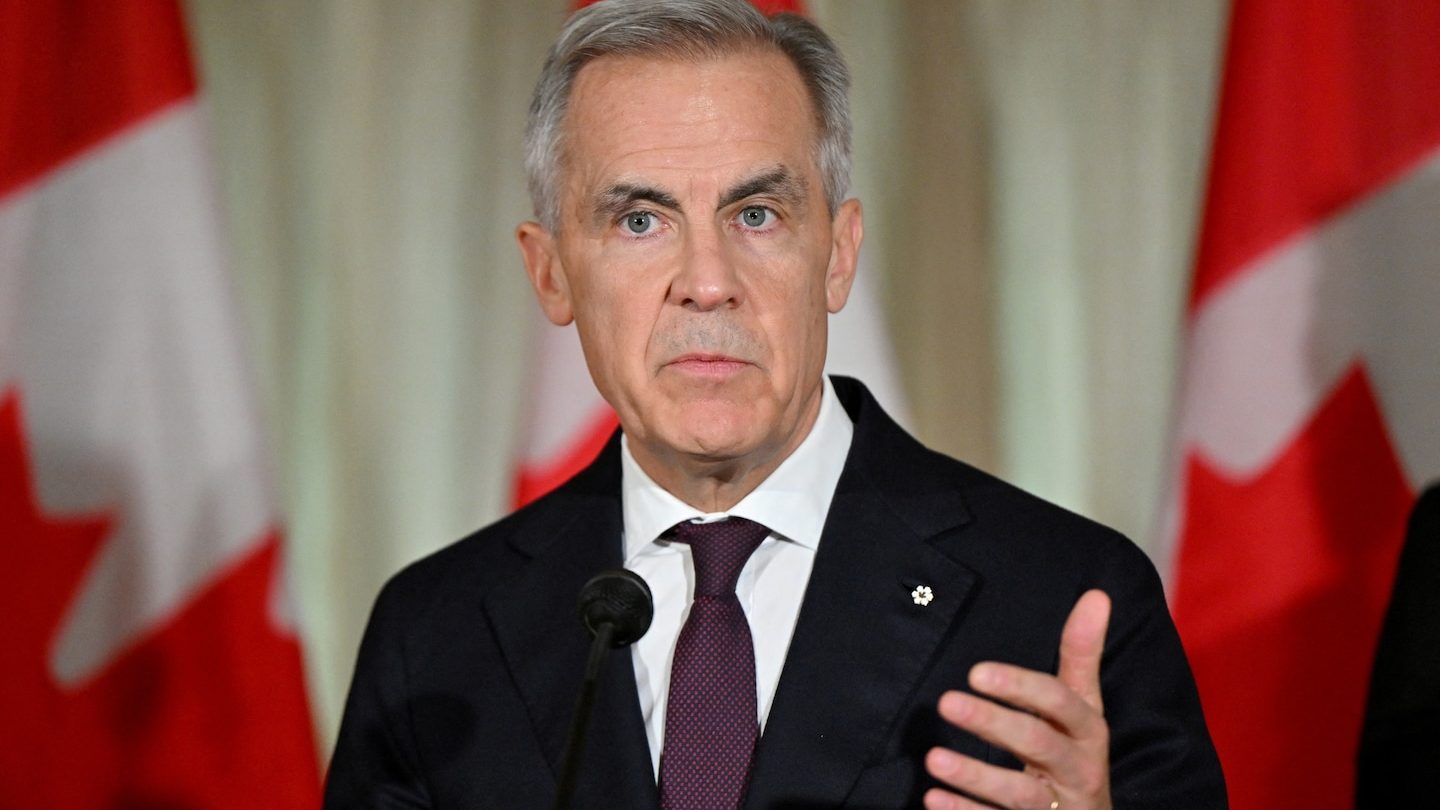
Canadian Prime Minister Mark Carney said trade talks with the United States were making progress but remained short of a final bilateral agreement.
Speaking to reporters in Manila ahead of an Association of Southeast Asian Nations summit, Carney confirmed he held a lengthy conversation with President Donald Trump, U.S. Trade Representative Jamieson Greer, and White House Chief of Staff Stephen Miller shortly before leaving for Asia.
Carney drew a firm boundary regarding the future of vehicle manufacturing, declaring that Ottawa would not accept any pact that undermines its domestic auto sector. The industry has faced severe pressure since Washington imposed 50 per cent tariffs on about $20 billion in Canadian goods following the suspension of trade negotiations in August.
This government will not settle for a deal with the United States that is not consistent with a viable Canadian auto sector.
Prime Minister Mark Carney
Carney added that reaching a stable automotive trade agreement quickly is “absolutely in the interest of course of Canadian workers, Canadian auto sector, but very much the U.S. as well”.
“We need relief, and we need relief quickly,” said Brian Kingston, president and chief executive of the Canadian Vehicle Manufacturers' Association.

Canada’s broader auto manufacturing sector remains divided on the negotiation strategy. Industry participants supported Ottawa’s decision to walk away from an August U.S. proposal that offered a 15 per cent headline tariff rate.
Meanwhile, the Canadian government has released a national budget titled Budget 2026: Masters of our destiny to reduce economic reliance on the American market. Treasury Secretary Scott Bessent told CNBC on Friday that he was optimistic that the United States could reach a trade agreement with Canada, though he did not provide specific details or a timeline.
While bilateral discussions with Washington continue, Canada has moved to deepen economic ties in Asia. Carney announced that Ottawa had substantially concluded free-trade negotiations with the Association of Southeast Asian Nations and completed separate negotiations with the Philippines.
The ASEAN agreement covers a market of nearly 700 million people with an economy worth nearly C$6 trillion. Once implemented, Ottawa estimates the pact could add nearly C$2 billion ($1.4 billion) to Canada’s economy and create almost 14,000 jobs.
“Two agreements in one year: that is the speed and ambition this moment demands,” Canadian Prime Minister Mark Carney said in a statement.
Canadian officials said that approximately one-third of the country’s export revenue now derives from destinations outside of the United States, reaching a 40-year high. Trade negotiators and leaders have emphasized that building commercial relationships across other markets remains a core element of national economic strategy.

Following his arrival in Phnom Penh, Carney posed for official photographs alongside Philippine President Ferdinand Marcos Jr. in Manila.
Discussions regarding trade predictability continue to factor into broader commercial reviews, including rules-of-origin evaluations under the United States-Mexico-Canada Agreement. “You want to get a [headline tariff] number as low as you can, and then work the process,” former GM North America president Steve Carlisle said.
As diplomatic schedules proceed, Carney is also slated to attend the Francophonie summit in Cambodia and the Asia-Pacific Economic Cooperation summit in China, where meetings with international counterparts are anticipated.