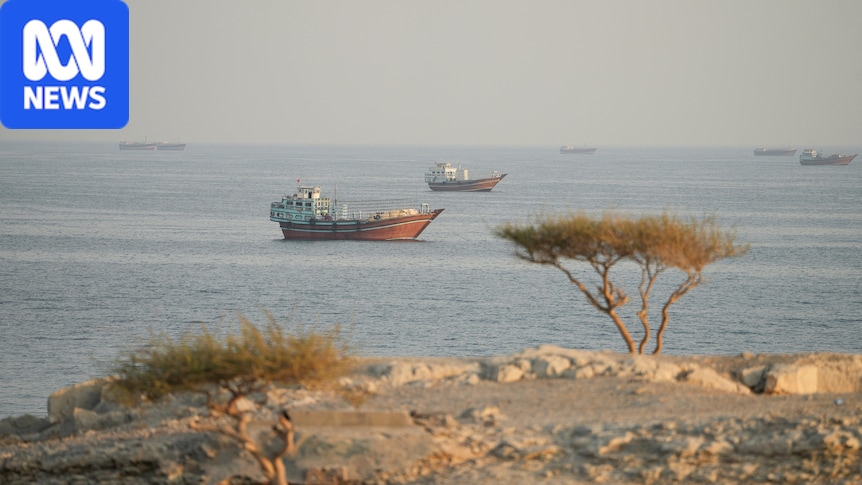
Two oil tankers struck naval mines while attempting to transit the Strait of Hormuz on Sunday according to statements released by Iran’s Islamic Revolutionary Guard Corps.
Tankers Strike Naval Mines on Unauthorized Hormuz Routes
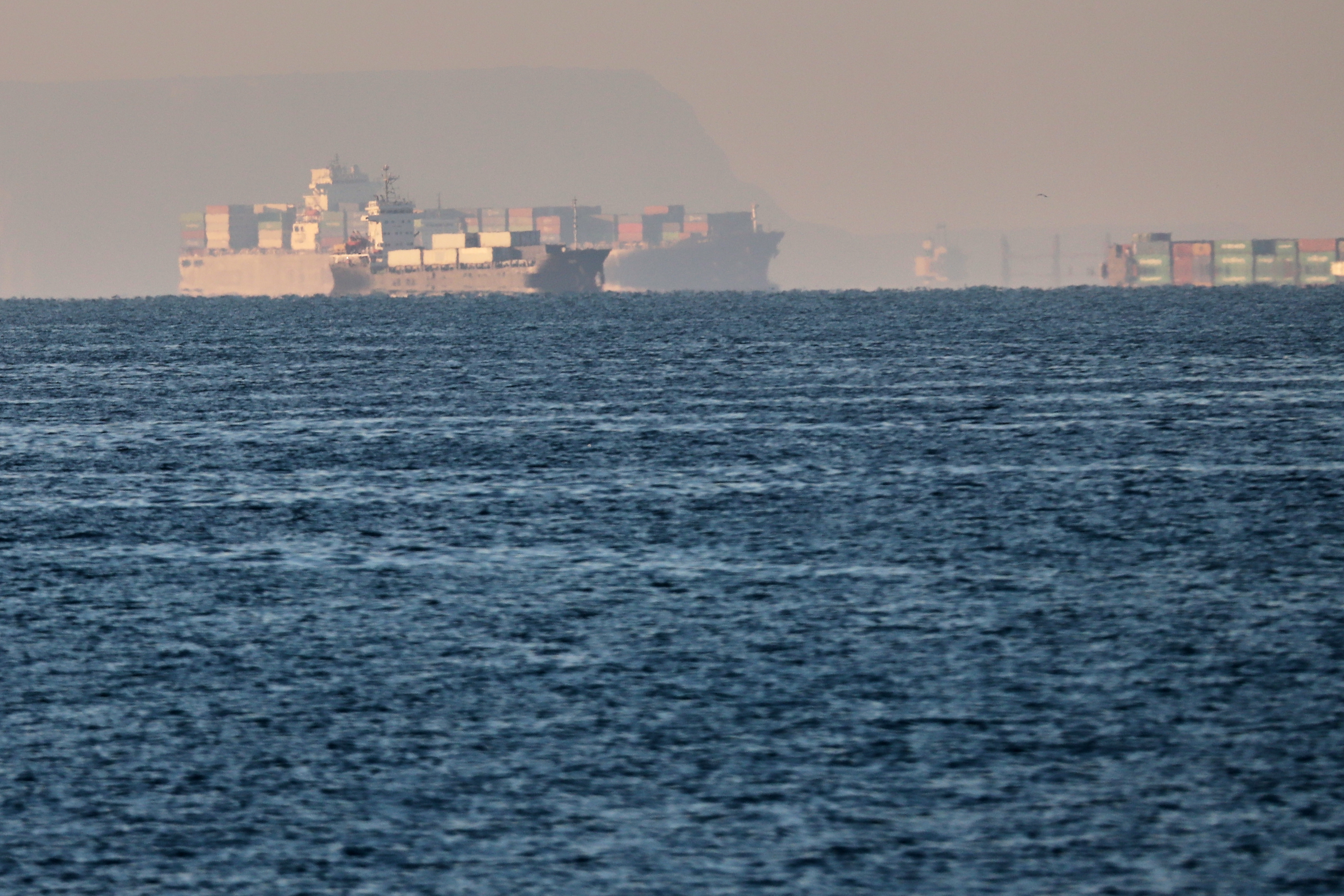
The vessels were navigating through a southern corridor of the strategic trade route with their tracking and identification systems deactivated when the explosions occurred, the IRGC Navy stated through official channels. One of the affected ships was identified as a supertanker carrying more than two million barrels of crude oil.
The Islamic Revolutionary Guard Corps reported that the supertanker subsequently sank in the southern waters of the Persian Gulf. Following the blasts, two other tankers traveling behind the stricken vessels complied with traffic control warnings and turned back toward Persian Gulf waters.
The incident follows a separate announcement from Iran’s conventional navy regarding a different tanker that struck a mine east of the Strait of Hormuz while operating without positioning systems in a prohibited zone.
On November 13, the Islamic Revolutionary Guard Corps Navy reported that a liquefied petroleum gas carrier hit a naval mine, resulting in an explosion within the eastern sector of the Strait of Hormuz. Iranian state media reported that the vessel was utilizing an unauthorized and dangerous route despite repeated warnings from Iranian authorities, and all 22 crew members were safely evacuated while firefighting operations remained underway.
In an exclusive interview with Al Jazeera, Mohammad Bagher Ghalibaf, Iran’s top negotiator and Parliament Speaker, said that Strait of Hormuz navigation would never return to pre-war conditions.
Ghalibaf asserted that free waters do not exist there and that the 1982 United Nations Convention on the Law of the Sea does not apply to the strait, arguing instead that regulations are governed by the laws of the two littoral states bordering it.
Enforcement of Maritime Permits and Blockade Pressures
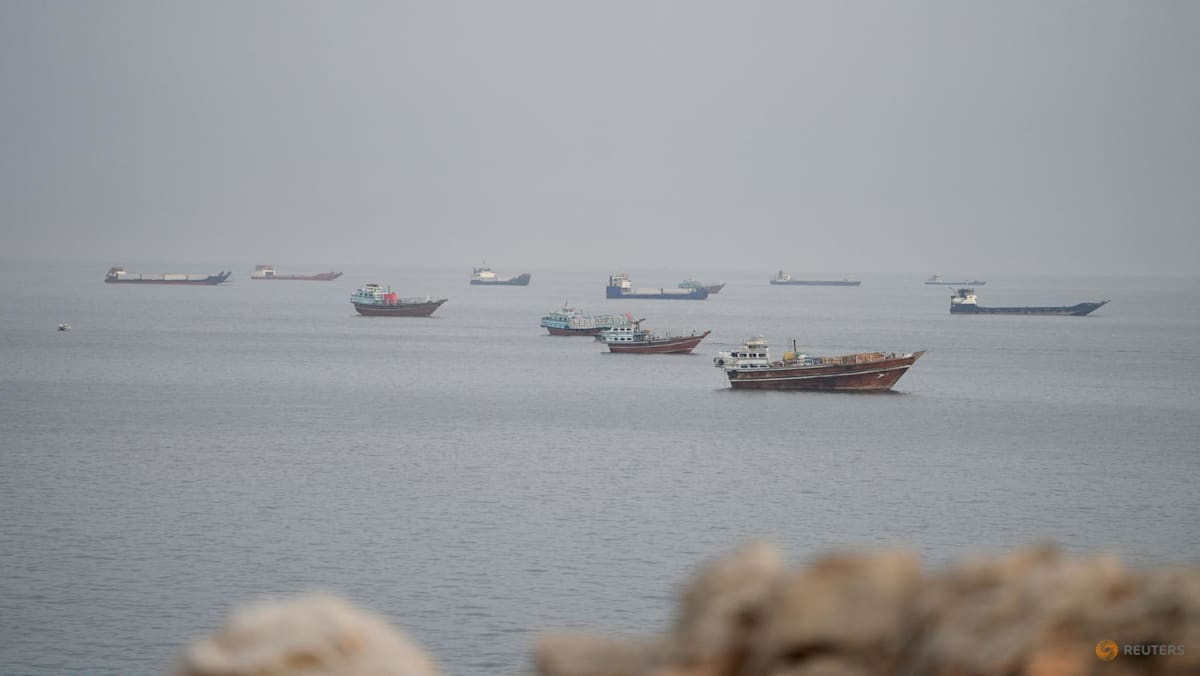
Tehran has restricted traffic through the waterway since the outbreak of war with the United States in February, requiring all commercial vessels to obtain prior authorization and use designated northern corridors. Iranian military officials maintain that unauthorized passages will face decisive action.
In response to Iran’s transit controls, the United States has enforced a naval blockade on Iranian ports. U.S. Central Command forces have been supporting ships transiting the region, and military aircraft recently disabled a cargo vessel that attempted to depart after visiting an Iranian port.
At the start of the war in February, 20 percent of the world’s oil supply was shipped through the strait. The International Maritime Organization, serving as the United Nations agency tasked with maritime safety, disclosed that October witnessed 37 recorded incidents, marking the peak monthly volume of attacks in the region since the conflict began.
Reuters reported that at least 10 ships were hit in the first 10 days of November. By November 11, the International Maritime Organization confirmed at least 134 incidents in the strait that resulted in the deaths of at least 25 people, noting that many incidents did not result in oil spills or pollution.
Secretary-General Arsenio Dominguez called on flag states, port states, and coastal states to take appropriate action against violations of international maritime conventions, while also urging shipowners and operators to avoid commercial activities that expose crews to unacceptable risks. Additionally, the Joint Maritime Information Center warned mariners to remain vigilant for attempted mining within and adjacent to the Traffic Separation Scheme, alongside persistent navigation interference and pressure on vessels’ routing.
Environmental Damage Visible From Space
Frequent attacks on shipping through the waterway have generated extensive oil slicks. Satellite imagery has captured vast dark slicks visible from space across the Gulf and the Arabian Sea.
Greenpeace has tracked more than 500 oil spills since the conflict began in February, with cumulative mapped footprints spanning approximately 20,000 square kilometers, which Nina Noelle, a Greenpeace expert on environmental disaster relief, noted is almost the size of Wales. Marine experts warn that warm summer temperatures and shallow waters compound the ecological toll on regional coral reefs, fish populations, and nesting sea turtles.
“Since the Gulf is shallow, and summer is the least windy period of the year, atmospheric heat is rapidly translated into ocean heat. That heat kills corals, algae, fishes. There is no cold, deep water that could mix and buffer this heat,” marine biologist Bernhard Riegl of Nova Southeastern University in Florida said.late and mitigate these high temperatures, corals, algae, and fish perish.
Everybody knows that oil in water is not good. The potential for additional damage is significant. There is no such thing as a ‘clean war’. Not for the unlucky humans that are drawn into it, nor for the unlucky environment in which the conflict takes place.
Bernhard Riegl, marine biologist at Nova Southeastern University in Florida
Environmental groups continue analyzing satellite photos, though they caution that ground-level investigations remain extremely difficult and are necessary to determine the full scope of the damage. Researchers note that the aftermath of the Iran-Iraq war of the 1980s and the first Gulf war provided evidence of the lasting impact of large-scale oil pollution on Gulf ecosystems.
Tar deposits found on Qatari beaches were linked to the Gulf war by a 2020 study, while a 2022 study revealed that sediment on Saudi Arabia’s Abu Ali Island remained tainted by crude from the 1983-85 Nowruz leaks during the Iran-Iraq conflict, which together discharged significant volumes of oil into the marine environment.
Burrowing organisms like ghost crabs will continue to bring contaminated material to the surface, leading experts to conclude that large-scale oil pollution remains detectable for decades as a generational problem.
Diplomacy Continues Amid Maritime Security Threats
Amid ongoing maritime hostilities, diplomatic efforts remain active. Iranian officials are reviewing Qatari mediation proposals addressing differences over Tehran’s nuclear program, even as security analysts monitor potential shifts in regional defense posture.
The Joint Maritime Information Center maintains a severe threat assessment for the Strait of Hormuz, where commercial traffic continues well below historical averages of 138 daily transits recorded in 2025.
Earlier coverage: Iran Claims Three Oil Tankers Struck Mines in Strait of Hormuz