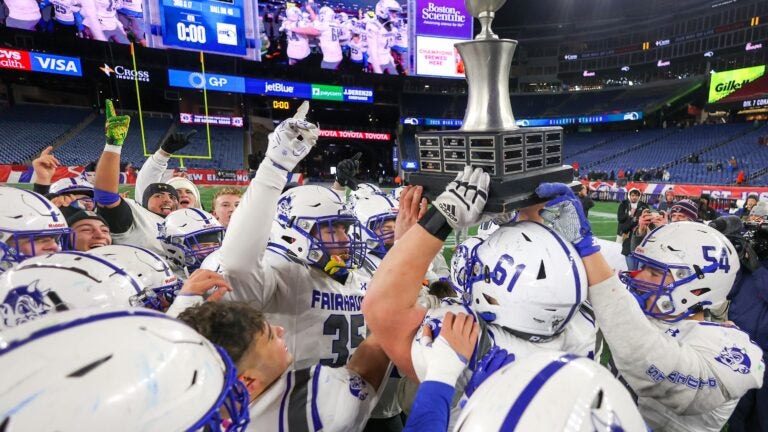
Scheduling Logistics End Nearly Two Decades of MIAA Super Bowls at Gillette Stadium
The era of high school football championship games at Gillette Stadium is officially over. The Massachusetts Interscholastic Athletic Association announced that the home of the New England Patriots is no longer an option to host its marquee title games, leaving administrators scrambling just four weeks before kickoff.
For nearly two decades, the sprawling NFL venue in Foxborough served as the ultimate stage for the state’s high school athletes. That tradition started in 2007 when Patriots owner Robert Kraft welcomed the events onto the newly installed turf. But the partnership collapsed late last week when stadium officials informed the MIAA that the venue could not accommodate this year’s slate.
The logistical bottleneck stems from a crowded December calendar. According to the Boston Globe, potential home playoff games for the New England Revolution on December 2 and December 5 create turf management conflicts, compounded by a Patriots home game against the Buffalo Bills on December 6. A Gillette Stadium spokesperson stated that scheduling constraints and associated logistics made hosting impossible this year, though the venue looks forward to welcoming the event back in the future.
The MIAA expressed frustration over the timing of the announcement. “The future we are dealing with is now,” an association spokesperson told the Globe. “We were left in the lurch and will be doing everything we can in the next four weeks to provide our student athletes with a memorable championship experience that they deserve.”
Financial Realities and Attendance Figures at Gillette Stadium
While playing on a professional gridiron offered undeniable excitement for teenagers, the economic reality of hosting high school games in a 64,000-seat NFL stadium told a different story. Tournament revenues have declined in recent years while administrative costs have climbed, the Boston Globe detailed. Under the financial arrangement, the MIAA received $7 out of every $20 ticket sold at the gate, though service fees further trimmed those direct revenues.
Attendance numbers often struggled to fill the cavernous bowl. Poor weather during the previous year’s tournament dragged the combined attendance for eight Super Bowls down to just 16,800 spectators. That figure marked a decline from approximately 19,000 attendees in 2024 and roughly 22,000 in prior years. Expanded television broadcasts and streaming options also contributed to lower gate numbers as fans increasingly watched from home.
St. Pierre said that while he was disappointed for players who were eager to play on a pro field, Gillette’s size made it a lacking host for high school games. “Playing in an NFL stadium is great for the kids, but it stinks in terms of feeling the crowd, feeling the energy,” said St. Pierre. “You could hear a pin drop in there. Even if you have 10,000 people, it’s like nobody showed up.”

That disconnect was not lost on participants. St. John’s Prep coach Brian St. Pierre, whose squad holds the No. 1 seed in Division 1, called the sudden shift shocking given the proximity to the tournament. Having played at Boston University’s Nickerson Field in 1997 before that facility stopped hosting football, St. Pierre suggested that regional college venues like Boston College, Harvard, or Stonehill might serve as more appropriately scaled alternatives.
Scrambling for New Host Sites Across Massachusetts
With the 2026 MIAA Football Tournament beginning this week, athletic directors are racing to evaluate alternative venues. Reilly Christie, the Malden Catholic athletic director and state football tournament director, told the Boston Globe that the association is assessing all available options across the state. Finding suitable facilities requires adequate parking, seating, functional locker rooms, field lights, and working concessions.
Other coaches echoed the urgency of the search while acknowledging the emotional weight of losing the Patriots’ home turf. Mansfield head coach Mike Redding, whose team enters the Division 3 state tournament as a top seed, emphasized that his players would compete anywhere to win a title. “I’d play in my backyard if it was the state title, but I do think it’s a special experience for the players to enjoy the home of the Patriots,” Redding said, adding his hope that local colleges step in to help.
The MIAA routinely utilizes professional and collegiate arenas for other sports championships, sending basketball to the Tsongas Center in Lowell, hockey to the TD Garden, and baseball to Polar Park in Worcester. Football now faces the challenge of finding a home before the first week of December, when winter sports schedules require the gridiron season to conclude.