Michigan Democrats Secure Legislative Trifecta in Election Night Sweep
Michigan Democrats have reclaimed a trifecta of power in Lansing, securing control of both the state House and Senate alongside the executive branch. According to FOX 2 Detroit, the results of the recent election cycle have handed the party a clear mandate to advance an agenda that previously faced significant legislative hurdles. This shift marks a notable consolidation of authority for the party, which is now poised to move forward with policy goals that Governor Gretchen Whitmer describes as a continuation of her administration’s long-term objectives.
The numbers from the Associated Press confirm the scope of this transition. In the state Senate, Democrats have secured 19 seats, outpacing the 14 seats captured by Republican candidates. The shift is even more pronounced in the state House, where projections show Democrats holding a decisive majority, moving from 51 seats to a projected 60 seats within the 110-member chamber. This structural advantage effectively minimizes the potential for the gridlock that has characterized recent legislative sessions, allowing the party to bypass the heavy resistance that often defined the previous power-sharing dynamic.
Whitmer Frames Results as a Reflection of Voter Priorities
Governor Gretchen Whitmer framed the results as a reflection of voter priorities, pointing to a platform that includes expanded access to education and public services. “Securing this historic Democratic trifecta—only our second in 40 years—sends a clear message that Michiganders want leaders who are focused on lowering costs and getting things done,” Whitmer said in a statement. Her administration has already established a record that includes the implementation of free breakfast and lunch programs for students, the expansion of pre-K and community college access, and the passage of specific firearms legislation, such as safe storage and red flag laws.
The Governor’s office views this new legislative alignment as the necessary environment to build upon the work initiated during her previous terms. By controlling both chambers, the party is expected to revisit and potentially expand upon the progress made during the 2022 session, which was the first time in four decades that Democrats held such a comprehensive hold on the state’s political levers. For residents, this likely means a more streamlined legislative process for bills regarding worker protections and healthcare access, including the defense of Medicaid provisions.
Benson Emphasizes Operational Efficiency Following Historic Trifecta
Governor-elect Jocelyn Benson, who secured her position after a race against John James, emphasized that the party’s focus is on operational efficiency rather than partisan maneuvering. “We have an historic trifecta that we’re excited about, because I’m going to Lansing not to play political games, but to get things done,” Benson stated. She noted that the party’s reach extended into areas of the state that were previously considered competitive or lean-Republican, indicating a broader geographic shift in voter sentiment.
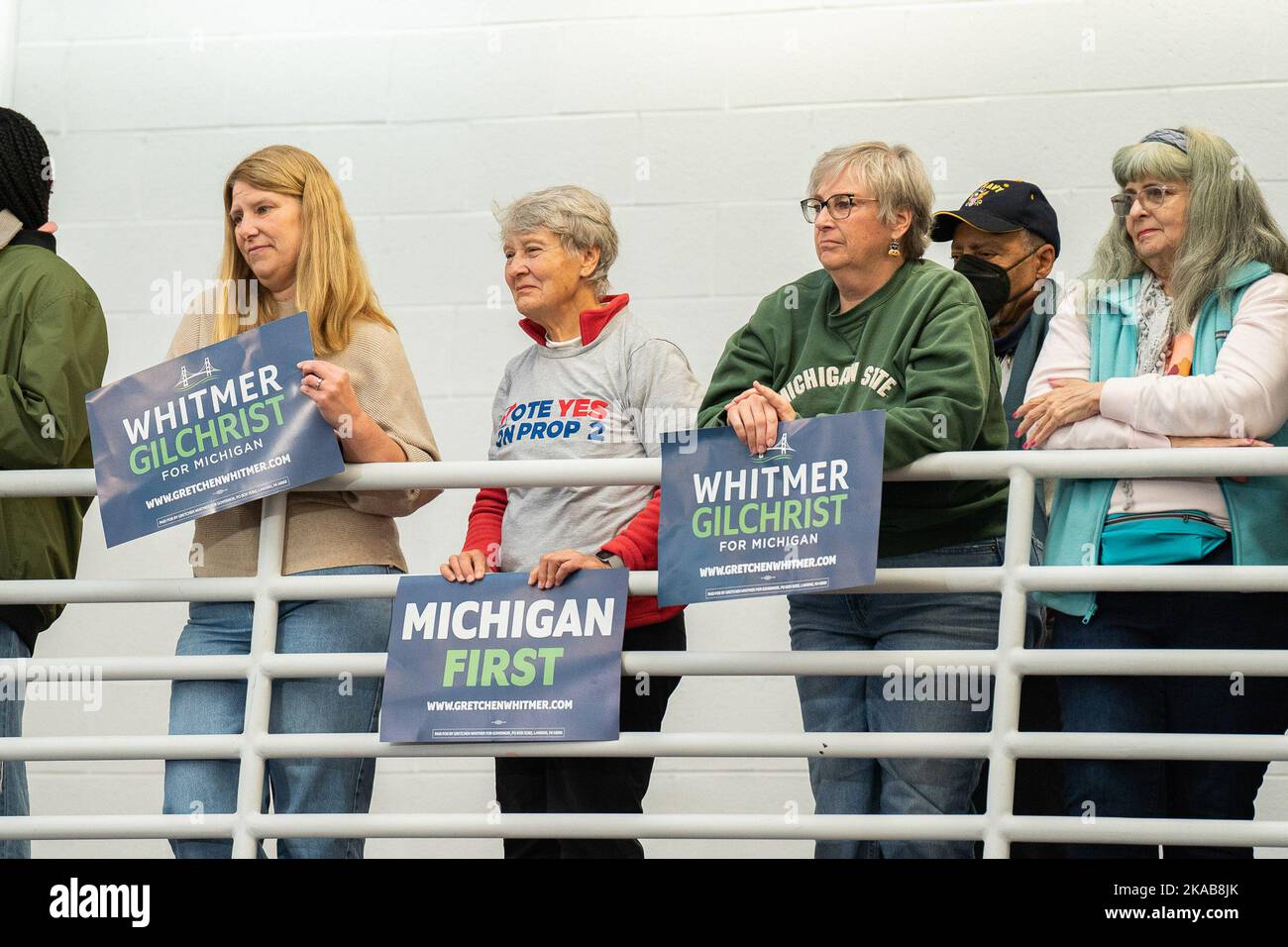
However, the consolidation of power also places the burden of policy outcomes entirely on the Democratic caucus. With no Republican majority to act as a formal check in the legislature, the internal debate within the Democratic Party regarding the speed and scope of new regulations—particularly concerning tax structures and civil rights protections like the Elliott-Larsen Civil Rights Act—will now become the primary driver of state politics. As the state moves toward the next legislative calendar, the reality for businesses and taxpayers is that the policy environment in Lansing will be shaped by a single-party vision for the first time since the 2022 session.
The practical impact of this shift will be felt in the coming months as committees are formed and the legislative agenda is formalized. With the retirement pension tax rollback and various civil rights expansions already established as party priorities, the administration is expected to move quickly to capitalize on the current momentum. Whether this results in a period of rapid reform or a more measured approach to state governance is unclear, but the baseline for Michigan’s legislative environment has fundamentally changed.