Television Campaigns Target the Infrastructure Boom
More than $380 million in television campaign spending flooded local airwaves during a midterm season where candidates large and small targeted the sprawling server warehouses powering the artificial intelligence boom, according to campaign data from AdImpact. That massive outlay signaled a sharp political turn.
The midterm elections ushered in a wave of newly elected officials pledging to clamp down on energy-hungry artificial intelligence data centers, as the Associated Press reported. While President Donald Trump remains a prominent champion of the industry, a tougher regulatory environment at the state and local levels now looms over tech giants and infrastructure developers.
Political Shifts in Key Tech Hubs
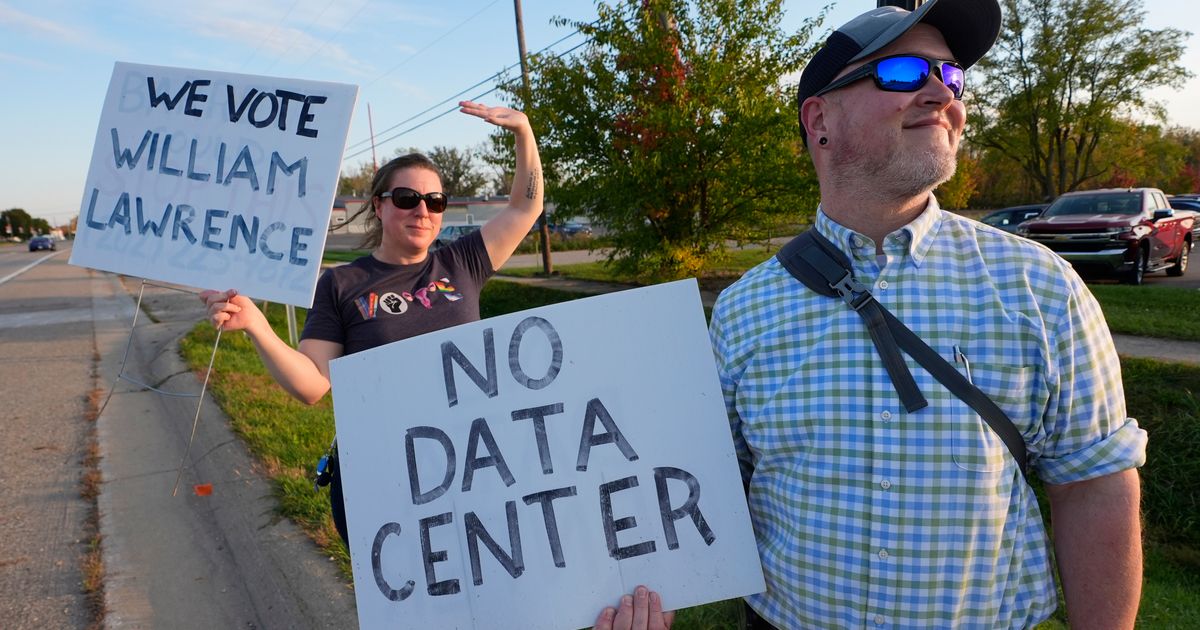
Data center regulations rarely appeared directly on midterm ballots, and the issue seldom ranked as a top priority for most voters. Instead, hard-line stances against the massive facilities became woven into the campaign platforms of candidates who successfully upended longtime Republican control across vital data center hot spots.
In Texas, Clayton Tucker secured a historic victory as the first Democrat elected state agriculture commissioner since 1986. Tucker told the Associated Press that his explicit pledge to fight data center development served as a critical driver for his win, noting that ranchers across the state repeatedly voiced fears over dwindling water supplies.
“You know, there’s an old saying around here that ‘whiskey’s for drinking and water’s for fighting,'” Tucker told the Associated Press. “And that’s exactly what happened.”
Sweeping victories by Democrats shifted the national political landscape, marked by congressional gains alongside the capture of at least five gubernatorial offices and the achievement of complete state government control in Michigan, Pennsylvania, Nevada, Minnesota, and Wisconsin. Data Center Watch—a project managed by the AI security consultancy 10a Labs—tracked winning candidates and found that the vast majority expressed support for stronger regulations or outright moratoriums.

Among governors, 32 of the 34 victorious races where the Associated Press called a winner featured candidates who expressed support for tighter rules or restrictions. Of those, 12 voiced support for bans or moratoriums.
Voters Pass Restrictions Across Forty Four Municipalities
Voters also pushed back against data center expansion at the hyper-local level. Polling and data science firm Redbud Consulting tracked 47 local referendums across 44 municipalities in 12 states, including 21 in Ohio, eight in Maine, seven in Illinois, and four in Kansas. Restrictions passed in 44 of the 45 completed ballot counts.
Local skepticism is closely mirrored by survey data indicating that roughly three out of every four American voters are against having a new data center built in their neighborhood, based on findings from The AP Voter Poll.
Analysts Warn of State Level Restrictions and Delays
Analysts at Morgan Stanley noted that decisive Democratic victories carry heightened expectations for state-level restrictions that could split the country into regions welcoming to AI infrastructure and those entirely closed to it. The financial firm Morgan Stanley singled out the election of Democrat Gina Hinojosa in Texas and Dr. Amy Acton in Ohio as notable moments that introduce significant risk of project delays.
Industry groups acknowledge the brewing challenges. Dan Diorio of the Data Center Coalition noted that developers must deal with incoming leaders committed to halting projects.
Meanwhile, major tech players are attempting preemptive outreach. OpenAI published a framework outlining new commitments to communities hosting its infrastructure, calling on policymakers to establish clear rules for responsible investment. Whether those frameworks satisfy local skepticism remains the central question facing the industry as new legislatures take office.