
Prairie Village Rejects Kansas Halo Act Buffer in Unanimous Vote
Prairie Village has become the first municipality in Johnson County to formally reject the state’s controversial Halo Act, voting 11-0 during an October 19 committee meeting against adopting the 25-foot first responder buffer law into its municipal code. The decision places the city at odds with neighboring jurisdictions that previously folded the statute into their local rulebooks.
Enacted statewide on July 1 after surviving a veto attempt by Laura Kelly, the Halo Act makes it a misdemeanor—carrying potential jail time and fines—to knowingly approach or remain within 25 feet of a first responder engaged in their duties after receiving a signal not to do so. The law applies to local and federal law enforcement agents, including personnel from Immigration and Customs Enforcement.
Why City Leaders Push Back Against Local Adoption
While cities like Overland Park, Olathe, Merriam, and Shawnee reluctantly adopted the Halo Act into their Uniform Public Offense Codes earlier this year to handle violations locally through municipal court, Prairie Village lawmakers chose a different path. Councilmember Betsy Lawrence argued during the committee session that the city already maintains an ordinance making it illegal to interfere with first responders regardless of distance.
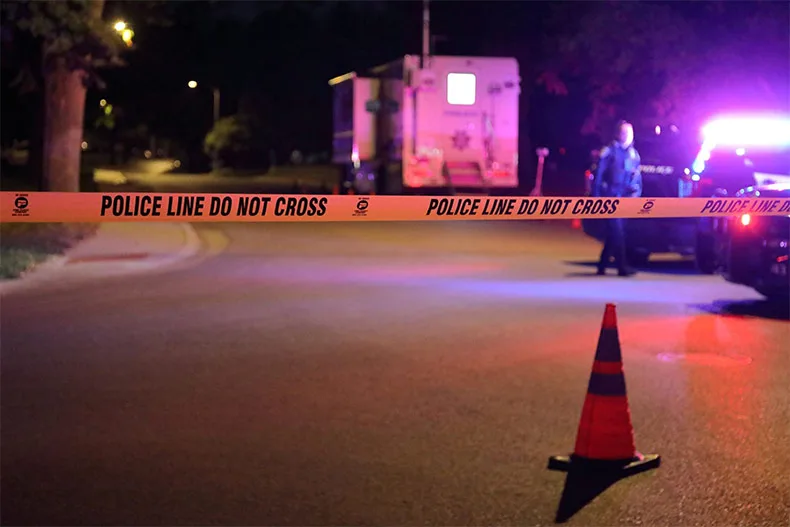
These laws face serious constitutional challenges, which, I think, is dubious for us to pass a law that we may believe is unconstitutional.
Lawrence said, adding that passing a local version needlessly exposes Prairie Village taxpayers to the risk of defending future litigation.
Logan DeMond, director of policy and research for the ACLU of Kansas, reinforced those worries in an October 19 opposition letter to the city council, warning that adopting an unnecessary and arbitrary duplicate law raises due process concerns and exposes the municipality to legal risk.
Enforcement Reality Without Municipal Code
Despite Prairie Village’s refusal to incorporate the statute into its city code, the Halo Act remains valid state law. First responders operating within the city limits—ranging from local municipal police to federal ICE agents—retain the authority to invoke the 25-foot buffer.
Without the local code provision, however, any resulting charges will bypass municipal court. Instead, cases must be referred to the district attorney’s office for review and prosecution at the state level. Police Chief Eric McCullough had previously advised that local adoption would have preserved city court management and discretion, a view initially shared by Councilmember Inga Selders before mounting constitutional challenges altered her perspective.
Other municipalities across the county remain divided on the measure. Roeland Park is scheduled to consider the Uniform Public Offense Code at its November meeting, according to City Administrator Keith Moody.



