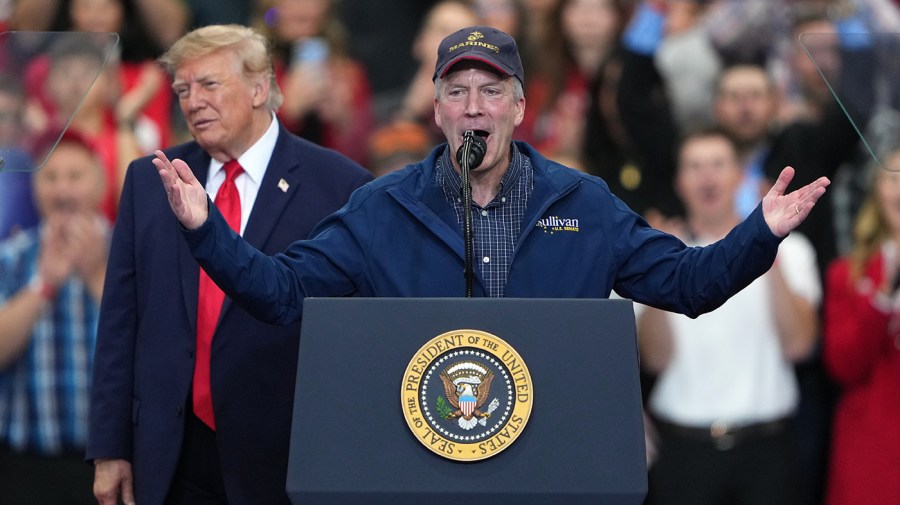
Senators are quietly preparing for a high-stakes floor fight over the results of the Alaska Senate race between incumbent Republican Sen. Dan Sullivan and Democratic challenger Mary Peltola. The potential showdown looms as a test of procedural norms in the upper chamber if President Trump urges his allies to dispute an election outcome he views as unfair.
Democratic lawmakers largely view Senate Majority Leader John Thune as a straight shooter who would resist blocking an election outcome officially certified by Alaska’s governor and lieutenant governor. Even so, party strategists aren’t ruling out pressure from the White House if Sullivan loses a tight race and attributes the defeat to voter confusion involving a near-namesake candidate on the ballot, Daniel J. Sullivan Jr.
“Everybody is gaming everything out, and everybody is preparing for everything,” a Senate Democratic aide said, detailing the behind-the-scenes posture as campaigns watch the final tallies.
The Mechanics of a Senate Floor Challenge
If Alaska election officials certify Peltola as the winner and Trump calls on his allies to contest the results, Thune faces a complex procedural dilemma. Sarah Binder, a professor of political science at George Washington University and a Senate rules expert, said that the situation could lead to a nasty floor fight over the swearing-in process.

“We can’t rule anything out at this stage just given the president’s single-minded persistence that there’s a lot of electoral fraud conducted by Democrats,” Binder said. “Would he push Republicans to object to the seating, if Alaska certified the seating of Peltola? The second question is, if he did that, would Republicans actually follow through? That gets us into the hornet’s nest of what the Senate would do to challenge a literal swearing in. There’s no single charted pathway here.”
Senate sources familiar with chamber operations note that a Trump-allied senator or a bloc of Republican lawmakers could signal an intention to object when Peltola or another contested Democratic winner steps up to take the oath of office in 2027. Such a move would force immediate negotiations between Thune and Senate Democratic Leader Chuck Schumer over how to break the stalemate.
Meanwhile, Senate Republican sources express confidence that Sullivan will hold his seat. Recent polling paints a volatile picture of the electorate. Surveys conducted by Data for Progress, InsiderAdvantage, and Alaska Survey Research showed Peltola leading the incumbent by 2 percentage points, well within the margin of error. A broader New York Times/Siena poll conducted from September 24 to October 1 captured a wider margin, showing the Democrat ahead by 7 points in a state that utilizes ranked-choice voting.
Historical Election Disputes Inform Current Ballot Fights
The looming fight draws comparisons to historical election disputes. In January 1997, Republican candidate Woody Jenkins petitioned the Senate to toss out Democrat Mary Landrieu’s victory in Louisiana after she won by more than 5,000 votes, alleging widespread vote tampering. Senate leaders ultimately resolved that dispute by seating Landrieu without prejudice while referring the allegations to the Senate Rules Committee. By October 1997, the committee voted unanimously to clear Landrieu of wrongdoing.
A similar standoff occurred in 2009 after the prolonged contest between Democrat Al Franken and Republican Sen. Norm Coleman in Minnesota, where Republican Gov. Tim Pawlenty signed the election certificate only after the state Supreme Court unanimously confirmed Franken’s narrow victory.
In Alaska, the current dispute is complicated by the presence of Daniel J. Sullivan Jr. on the ballot. The state’s Division of Elections, led by Republican Lt. Gov. Nancy Dahlstrom, initially removed the minor candidate before a state judge and the Alaska Supreme Court ruled that he belonged on the ballot. To minimize confusion, the ballot lists the incumbent as “Dan S. Sullivan” and his opponent without party affiliation as “Daniel J. Sullivan Jr.”
Steven S. Smith, a professor of political science at Arizona State University, said that the legal groundwork has already been established for a challenge.
“They’ve set up the argument already that there’s a deliberate deception on the part of the other Dan Sullivan, and even though this seems to have been adjudicated in Alaska law, they will certainly argue the issue of fairness remains,” Smith said.
Adding to the potential friction, the Trump Justice Department recently asked a federal court to block the certification of the race if Sullivan loses narrowly, arguing he would have won absent his near-namesake on the ballot. Legal experts have largely dismissed the federal lawsuit as meritless, increasing the likelihood that the primary battleground will shift directly to the Senate floor if Peltola secures a victory.



