
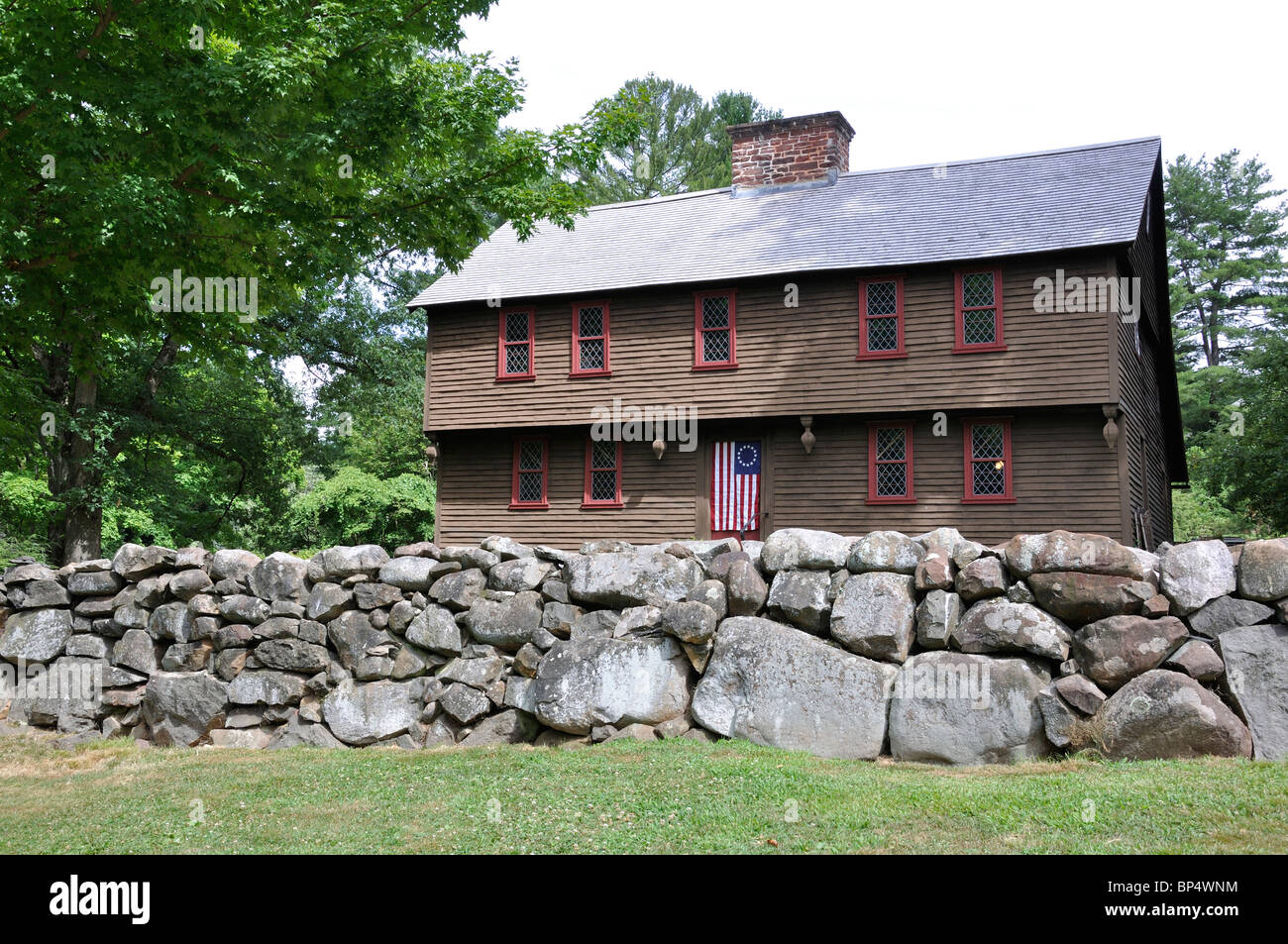
The Stanley-Whitman House in Farmington, Connecticut, serves as one of many stops on the state’s Haunted Historic Trail, offering a glimpse into the Puritan settlers’ lives and the grim realities of colonial existence. Built between 1709 and 1720, the residence functions as a museum that blends architectural history with local legends of the supernatural and the deeply religious, WFSB reported.
For visitors, the site isn’t just about ghost stories; it is a study in the fragility of life in early America. The house is furnished to recreate the environment of three centuries ago, grounding the “haunted” aspect of the trail in the tangible, often harsh, lived experience of the 18th century.
Childhood Mortality Shaped Early Puritan Households
The narrative of the Stanley-Whitman House is linked to the high rate of childhood mortality that defined the era. One of the first families to occupy the home, the Smiths, suffered the loss of two young sons, Steel and Samuel, who died within weeks of each other around 1729.
“Early childhood death was common,” said Andy Verzosa, executive director of the Stanley-Whitman House.
The juxtaposition of the settlers’ fervent praise of God and their acute fear of Satan provides a psychological window into how these families processed such frequent loss.
The Memento Mori Cemetery
The museum’s historical reach extends beyond the walls of the house to a nearby private cemetery known as Memento Mori. The name, Latin for “remember, you will die,” serves as a blunt reminder of the period’s preoccupation with mortality and the afterlife.
More from the trail…the “haunted history trail.” Gov. Lamont just unveiled the state’s new tourism initiative highlighting Connecticut’s paranormal lore.Here he is at the unveiling in Wethersfield planting a kiss on the state tourism director. pic.twitter.com/qdKsrkWlOi
Founded in the 1600s by Thomas Barnes, the cemetery holds a piece of Connecticut’s legal and social history. Barnes’ wife, Mary, is identified in reports as one of the last women in Connecticut to be hanged for witchcraft. This connection anchors the site to the wider hysteria of the colonial witch trials.
However, the site’s lore isn’t exclusively grim. Verzosa recounted a more humorous legend involving Captain Ebenezer Mix, who once spotted a tall white apparition in the cemetery late at night. After firing his guns at the figure, Mix discovered the following morning that he had actually shot his neighbor’s goose.
Preserving the Colonial Experience
While the “Haunted Historic Trail” branding draws in those seeking the paranormal, the museum’s primary objective is educational. The goal is for visitors to leave with an appreciation for how people lived in colonial Connecticut.
The museum is open to the public Wednesday through Saturday, from noon to 4 p.m.
Connecticut has yet another tourism trail, just in time for Halloween season. Officials unveiled the Connecticut Haunted History Trail at a Wednesday reception for social media influencers at the Webb Deane Stevens Museum in Wethersfield, a town with a history of witch trials.…



