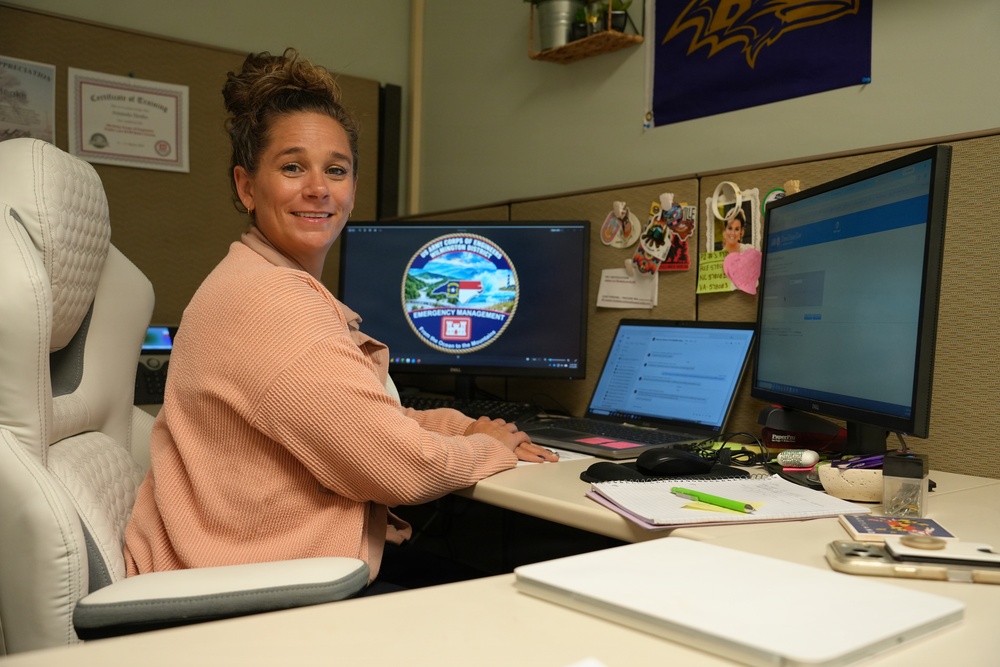
Wilmington District Employee Expands Emergency Response Capabilities
When disaster strikes the nation, the U.S. Army Corps of Engineers relies heavily on personnel who can deploy rapidly, operate in harsh conditions, and deliver critical operational support to affected regions. On November 4, 2026, DVIDS reported that Amanda Henke, an emergency management specialist with the Wilmington District, earned her qualification as a Deployable Tactical Operations System operator, joining a specialized workforce that provides mobile operational infrastructure to disaster zones.
Meeting the Demand for Mobile Operations
Deployable Tactical Operations System vehicles serve as mobile office environments designed to sustain U.S. Army Corps of Engineers missions when permanent facilities suffer damage or remain entirely inaccessible. These specialized units deploy across the United States and overseas to establish functional field workstations for response teams. According to Jeff Harilson, an emergency management specialist supporting the program, the entire enterprise maintains just 72 qualified operators, with women accounting for only three of those positions.
Henke developed her interest in the program while supporting emergency response operations during Hurricane Helene, where she witnessed firsthand how DTOS teams anchor field recovery efforts. Rather than seeking out recognition, she wanted to expand her practical contributions.
I wanted to be a part of something bigger and be able to assist and help where I was needed,
Henke said.
Applying Existing Skills to New Challenges
Already holding a commercial driver’s license from her work as a lacrosse coach at North Brunswick High School and an activity bus driver for Brunswick County Schools, Henke recognized an opportunity to translate those driving qualifications directly into her federal career.

Earning the certification demanded rigorous preparation beyond basic driving credentials. Operators must complete Civil Level I and DTOS Level II training while maintaining a Class B commercial driver’s license featuring an air brake endorsement. The training curriculum spans two to four days, instructing participants on the complex mechanical, electrical, and communications systems embedded within each mobile unit.
While driving heavy vehicles felt familiar, mastering the underlying machinery proved demanding. Henke noted that understanding the mechanics beneath the hood of a diesel vehicle required learning a completely new methodology.
I know how to change my own oil and tire, but knowing what the actual parts are under the front of a diesel vehicle is something completely different. It’s all about getting a method that works for you and following it,
Henke said.
Completed Realistic Deployment Simulations During Training Regimen
The training regimen featured realistic deployment simulations, including thorough vehicle inspections, equipment preparation, and a 200-mile round-trip driving exercise. Terrell Bosarge, a member of the USACE DTOS program, noted that Henke completed the course with exceptional attention to detail.
She did very well. She was very attentive and thorough through the training,
Bosarge said.
Maintaining a sufficient roster of qualified personnel is vital for the enterprise-wide program, which relies on primary and backup two-person teams to sustain continuous operations. These crews rotate through 30-day deployments during extended missions. Beyond her capability to transport and set up the mobile units, Henke’s background in emergency management enables her to assist with Planning and Response Team operations once the primary transport duties conclude.
Although she has yet to deploy under her new qualification, Henke continues participating in maintenance and familiarization activities to maintain operational proficiency. Looking ahead, she encourages colleagues to pursue goals outside their standard job descriptions.
I don’t think you should ever get comfortable enough to stop learning. The more tools you have the better member of a team you can be,
Henke said.