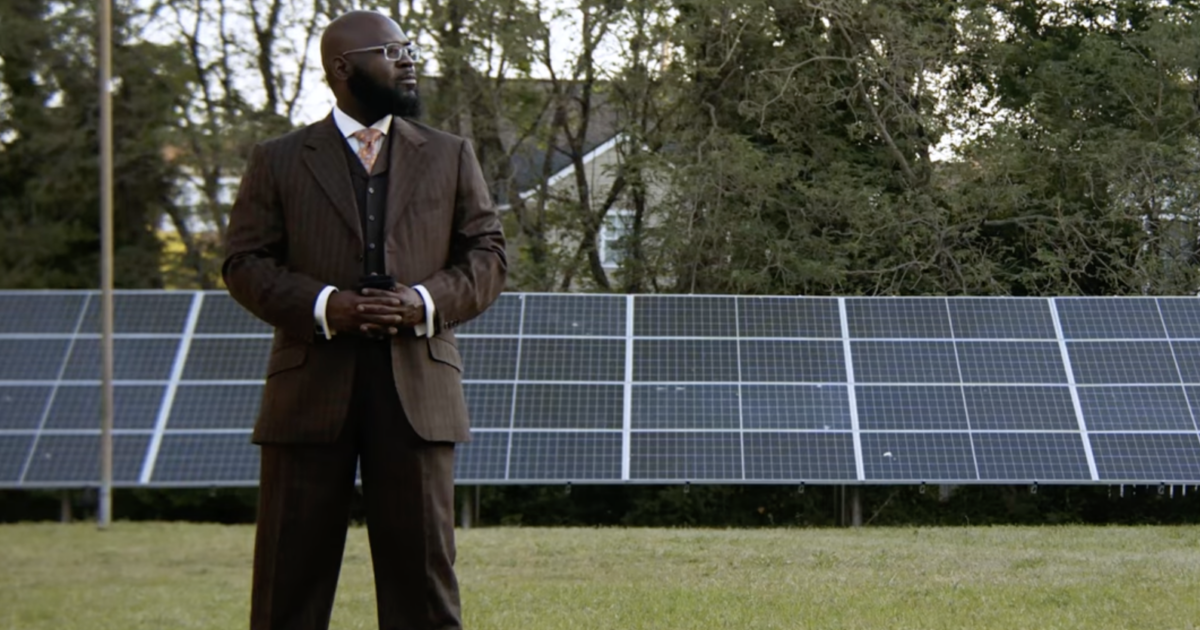
When Pastor Brandon Praileau looks at the 10.1-kilowatt array of ground-mounted solar panels sitting adjacent to Wesley Union A.M.E. Zion Church in Hunter’s Square, he sees more than clean technology. He sees a lifeline that shrank his Norfolk congregation’s monthly electric bills by one-fifth since going online in early 2021. That tangible relief explains why Praileau and other community advocates are deeply troubled that the Donald Trump administration has blocked thousands of low- and moderate-income Virginians from tapping into similar affordability initiatives, WHRO reported.
The friction centers on the federal $7 billion Solar for All program, which was abruptly terminated in July 2025 when President Trump signed H.R. 1 into law. While two federal judges in late September ordered the funds restored, the program’s ultimate fate remains tangled in legal limbo. Virginia’s specific allocation under the initiative was $156 million, intended to slash utility burdens for vulnerable households across the commonwealth.
How Virginia’s $156 Million Grant Was Haltingly Spent
Before the federal funding pipeline was choked off, Virginia’s Department of Energy had drawn down just $730,000 for preliminary planning, according to state energy officials. Rather than rushing immediately into installations, the commonwealth opted to spend a full year—beginning in July 2024—carefully designing a distribution framework before committing to a four-year execution phase.
Praileau, who joined the nonprofit Solar United Neighbors as Virginia program director and served on the state’s 15-member Solar for All advisory group, defended that measured approach. Yet that deliberate planning meant the commonwealth was never able to draw down the bulk of its award before the legislative axe fell.
“I 100% agree with how Virginia approached it,” Praileau said. “But doing the right thing meant we were never able to draw down on the money because it was stripped away.”
The commonwealth’s proposal had laid out distinct allocations for the $156 million:
- $49 million designated for small-scale solar arrays on 6,400 single-family homes, with a strict requirement to reduce electricity bills by at least 20%.
- $49 million targeted to outfit 4,480 multifamily homes and apartments with solar panels and integrated battery storage for grid outages.
- $58 million earmarked for grid connections, workforce development, and shared-solar projects designed for neighborhoods where rooftop installations are impractical.
The Federal Battle Over Statutory Authority
Congress originally created Solar for All as part of the Inflation Reduction Act passed in 2022. The program was designed to fund 60 entities—including states, tribal nations, territories, and Washington, D.C.—to help at least 900,000 needy households save upward of $350 million on utility bills collectively through 2029.
The One Big Beautiful Bill eliminated the Greenhouse Gas Reduction Fund, which included a $7 billion pot called “Solar for All”.In some cases, your tax dollars were diluted through up to FOUR pass-through entities, each taking their own cut off the top!The bottom line is… pic.twitter.com/TXS8IYhcoh
That trajectory reversed by August 7, 2025. U.S. EPA Administrator Lee Zeldin announced that the agency was halting the program, posting on social media that the EPA no longer possessed the statutory authority to administer it or keep the appropriated funds alive.
In response, the Southern Environmental Law Center alongside conservation watchdogs filed lawsuits representing Solar United Neighbors, labor coalitions, and justice groups. In late September, U.S. District Court Judge Mary McElroy in Rhode Island ruled that H.R. 1 did not convert the funding into a lump sum subject to arbitrary EPA discretion, calling the termination contrary to law. A separate lawsuit in the District of Columbia brought by U.S. District Court Judge Tanya Chutkan reached a similar conclusion.
The Human and Economic Stakes on the Ground
With the EPA holding a 60-day window to appeal those rulings, local leaders warn that administrative delays impose a heavy toll on families already stretched to their financial limits. Robin Dutta, executive director of the Chesapeake Solar and Storage Association, argued that obliterating the program highlights a federal preference for outdated energy systems over grassroots affordability.
For congregants and residents balancing multiple jobs to make ends meet, saving $75 to $100 a month on utility costs is far from trivial. Praileau notes that at his own church, where battery storage was added last year, solar savings funded a contingency fund to help members pay rent and expand outreach.
“For those who are struggling, that could be the difference between getting affordable daycare, buying groceries or paying for medicine,” Praileau said.



