
Cornell University faces an escalating crisis as faculty members prepare an October 14 no-confidence vote against the administration. The mounting backlash follows widespread outcry over the university’s handling of a 2024 student rape allegation, drawing protesters, administrative building vandalism, and state-level investigations.
Faculty Move Toward No-Confidence Vote Against Leadership
Members of Cornell’s Faculty Senate introduced a resolution calling for a vote of no confidence against the administration over its handling of the alleged gang rape on campus in 2024. Labor history professor and Faculty Senate member Paul Ortiz noted that the measure was submitted Monday evening to a university faculty committee for review ahead of the full Faculty Senate’s meeting on October 14.
Approximately 40 senators have already expressed support for the resolution, which serves as a formal rebuke intended to compel administrative changes or resignations.

The Senate is Cornell’s main legislative advisory and review body, comprising more than 75 members representing the university’s faculty. Faculty co-sponsors deliberated extensively on the resolution after being approached by numerous colleagues demanding action, along with students who expressed fear for their personal safety and frustration over perennial sexual assault problems on campus. Alumni have also contacted faculty members to share their own traumatic student stories and frustrations regarding the matter.
Activists Vandalize Day Hall During Campus Protests
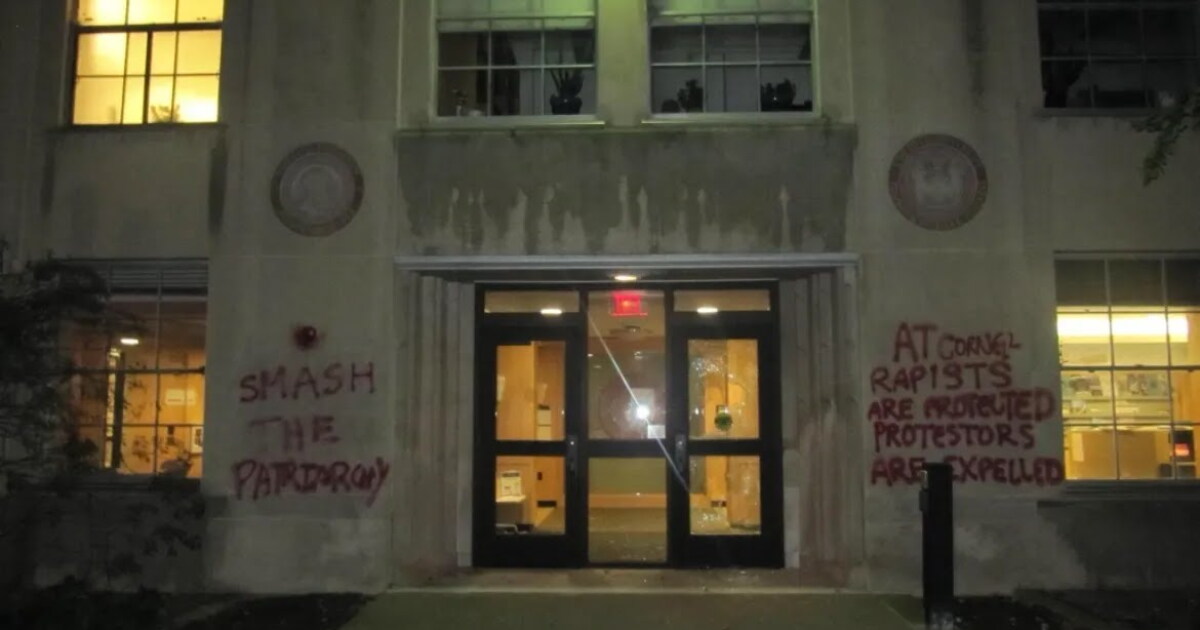
The administrative turmoil intensified early Monday morning when activists vandalized Day Hall, Cornell’s main administrative building. Vice President for University Relations Kyle Kimball confirmed the administration is investigating the property damage while acknowledging community frustrations.
Students, faculty members, and community members gathered for a campus demonstration, demanding the resignation of university officials and holding signs reading “support survivors, expel rapists” and Justice 4 every Jane Doe.
Professors joined students at the rally, where Sabrina Karim, an associate professor in Cornell’s department of government, stated that trust has been broken and called for the community to come together nonviolently to demand change and ensure basic principles are met.
During a meeting with the Graduate and Professional Student Assembly, university President Michael Kotlikoff addressed the mounting campus anger, stating We’re all angry. I understand that anger.
In a video address over the weekend, Kotlikoff described the incident as a defining moment in Cornell’s history, noting that the case highlights heartbreaking and troubling issues concerning sexual assault, dehumanization, party culture, alcohol, and drug use, while promising further review and answers.
Legal Fallout and Investigation by New York Attorney General
The controversy stems from a lawsuit filed last month by a former student, identified in court documents as Jane Doe, who alleges she was given drugs and alcohol and sexually assaulted by seven fraternity members on October 19, 2024, at the Chi Phi fraternity house. The lawsuit states that Cornell suspended the fraternity chapter and seven students on November 8, 2024—the same day the student reported the assault to campus police—before initiating a Title IX investigation.
Less than a month after the alleged assault, the woman gave a sworn statement to the Cornell University Police on November 8, 2024. However, the Tompkins County District Attorney’s office initially declined to pursue criminal charges. By contrast, interview transcripts obtained by news outlets showed the woman told investigators I can say with 100% confidence I was raped.
Following intense public pressure and criticism from elected officials, New York Governor Kathy Hochul appointed State Attorney General Letitia James as special prosecutor to lead a reopened investigation into the case. President Kotlikoff stated that he supports the governor’s decision and welcomes an independent review by an outside law firm into the university’s handling of the 2024 matter.

Independent Review Led by Sally Yates
Cornell University announced that former US Deputy Attorney General Sally Q. Yates will lead an independent review examining how the school prevents and responds to sexual misconduct.
Meanwhile, a source confirmed that one of the accused students has retained high-profile defense attorney Teny Geragos, whose firm has previously represented Harvey Weinstein and Sean “Diddy” Combs. The Chi Phi fraternity chapter remains barred from Cornell’s campus as the civil litigation and state investigations proceed.
One of the men accused of participating in the alleged assault was identified in the lawsuit as Diego Sarabia, a Bethel High School graduate. None of the men named in the suit have been charged with a crime.


