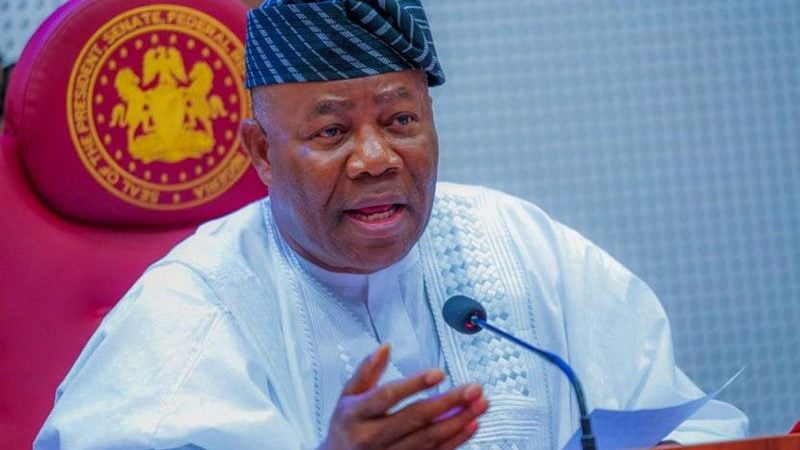
A New Mexico judge ordered Meta to pay $25 billion following a jury verdict finding the tech giant liable for deceiving users regarding data privacy and content moderation. State Attorney General Raúl Torrez hailed the historic penalty as an unambiguous message to Silicon Valley, while company officials pledged to appeal.
Judge Francis Mathew Issues Historic $25 Billion Penalty in New Mexico Court
A state court penalty delivered on Wednesday demands that Meta pay $25 billion to the state of New Mexico. Judge Francis Mathew handed down the massive financial judgment after a jury determined the social media company misled consumers for years regarding its data privacy policies on Facebook. State Attorney General Raúl Torrez called the decision one of the largest, if not the single largest state verdict against a company in American history
during a press conference following the ruling.
The litigation began over allegations that Facebook deceived users about a massive data breach involving a third-party personality quiz. That quiz harvested information from roughly 87 million profiles and transferred it to Cambridge Analytica, a political consulting firm that utilized the data to generate targeted political advertisements for the 2016 presidential campaign of Donald Trump. While 48 other states resolved their claims through a nationwide settlement for $18 billion in August, New Mexico opted to take the social media company to trial on its own, joined only by Florida as a non-signing state.
Disputed Violations and Arguments Over Stock Price Impact
During the trial, jurors evaluated whether Facebook misled users about privacy protections and content moderation across 34 separate instances. Prosecutors argued that the company’s public declarations deceived the entire population of New Mexico rather than just active platform users. Jurors ultimately agreed, finding Meta liable for more than 43 million violations of state consumer protection laws.
State attorneys had originally asked for $35 billion to $40 billion, contending that only a financial penalty capable of moving the company’s stock price would force a change in corporate behavior. Meta’s legal representation argued that a fair penalty should not exceed $3.4 billion, calling any higher figure unconstitutional and a violation of due process. Defense attorney Matt Nicholson characterized the higher demands as shocking to the conscience
during court proceedings.
Meta Chief Legal Officer C.J. Mahoney Vows an Appeal
Meta immediately signaled plans to challenge the verdict. C.J. Mahoney, Meta’s Chief Legal Officer, released a statement expressing confidence that the company will prevail on appeal.
This ruling, and the Attorney General’s approach to this enforcement, makes it all but impossible to do business in the state of New Mexico. At its core, this lawsuit seeks to impose a tax on speech to enforce new rules for what people can say online.
C.J. Mahoney, Chief Legal Officer at Meta
Defense attorneys maintained that the state failed to demonstrate that any resident actually heard or suffered harm from the disputed statements. In a partial victory for the defense, jurors concluded the state failed to prove Meta made false claims regarding the removal of pandemic misinformation and other harmful content.
New Mexico Education Funding and Next Steps in Court
Under the provisions of the New Mexico Constitution, financial penalties recovered from consumer protection violations are directed straight into state education funds. Attorney General Torrez noted the potential long-term impact on local infrastructure while acknowledging that the funds will remain frozen while the case moves through the appellate courts.
We may have paid for the construction of schools for the next 100 years.
Raúl Torrez, New Mexico Attorney General
Shares of Meta rose $13.56, or 2%, to close at $707.81 during Wednesday afternoon trading as the company also prepared to deliver its quarterly earnings report. Interest on the penalty will accrue while the appeals process unfolds, though legal analysts note that higher courts could reduce the total violation tally.