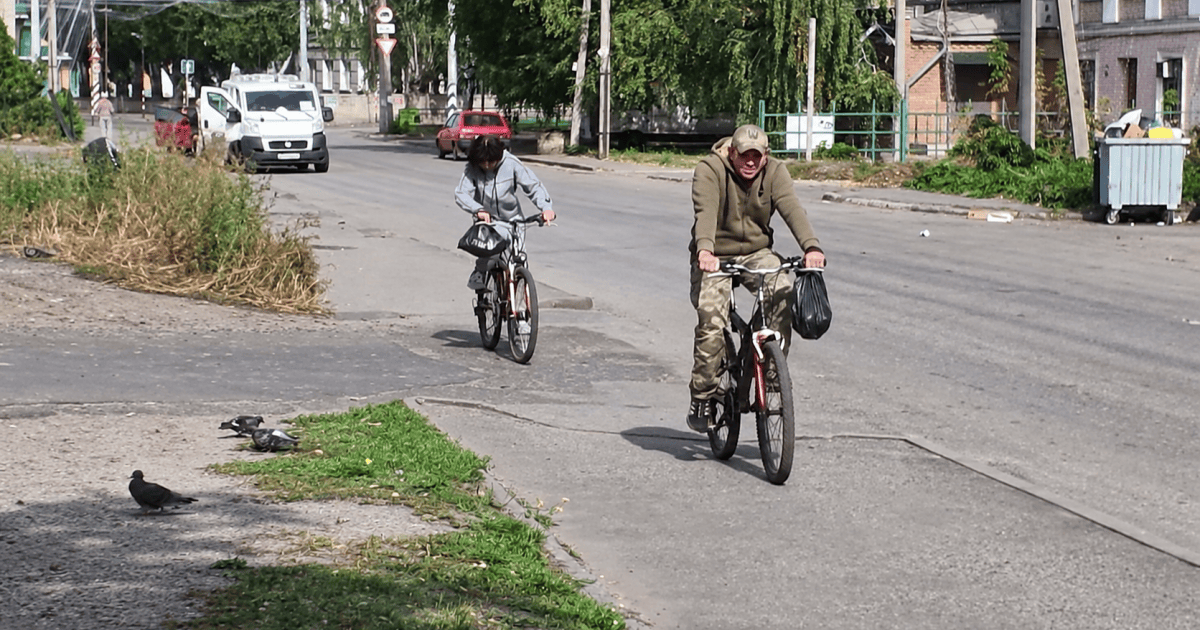
Under constant artillery fire and drone surveillance, residents are fleeing Kramatorsk as Russian forces advance to within 10 kilometers of the city. Ukrainian authorities have accelerated evacuations after a 60% population drop since February 2022, turning the key Donetsk stronghold into a largely deserted frontline zone.
Russian Forces Advance Toward Kramatorsk
Russian forces have advanced to approximately 10 kilometers from the city limits. The military and humanitarian situation in Kramatorsk has deteriorated sharply as ongoing artillery bombardments, drone activity, and guided bombs target the remaining streets.
Ukrainian authorities stepped up evacuation efforts across the region 55 months after the war began. Local officials report that the population of Kramatorsk has shrunk by roughly 60% since the war began in February 2022.
More than half of the city’s neighborhoods are now largely abandoned. Empty streets are dominated by military equipment and movements.
Reporting from the ground captures the immediate danger facing families trying to escape. Al Jazeera correspondent Assadullah Al-Sawwi accompanied a family during their hazardous journey.
In one instance, a mother held her child. She refused to leave immediately in order to secure the immediate departure of her elderly grandparents, with evacuation teams planning to return days later for the remaining family members.
Drivers crossing the active combat zone rely on continuous radio communication. They divert toward what is known as the Green Zone to evade pursuing aerial drones.
Local escorts warn that these uncrewed aircraft possess a high capacity for direct pursuit and lethal strikes. Transportation requests for evacuation have surged dramatically in recent months.
Drivers assisting with the departures note that rescue requests have multiplied threefold to fourfold over a three-month period. Escalating aerial bombings and guided bombs drive this surge.
Daily Life and Infrastructure Collapse in Kramatorsk
Civilians making their way out of the city describe an environment where basic civilian infrastructure has collapsed.
Grocery stores have remained closed for approximately two months. Pharmacies and fuel stations have remained closed for approximately two months.
This forces those who stay behind to rely exclusively on public water pumps. They search for safe routes out.
After reaching temporary assembly points, evacuees await quick transport out of the province. Uninterrupted explosions and constant aerial warnings mark this wait.
Defense Forces Hold the Donetsk Fortress Line
Kramatorsk serves as the largest remaining urban center under Ukrainian military control in the Donetsk province.
Together with Slovyansk, Kostiantynivka, and Druzhkivka, the city forms a critical defensive barrier often described as the fortress line that blocks further Russian advances into the remainder of the territory.
Moscow controls over 80% of the Donbas region, and capturing Kramatorsk would clear the path for full territorial control.
Calls for rapid evacuation continue. The window for departure is closing.
Ukrainian soldiers on the ground maintain their defensive positions. Their units reject surrender and work to restrict enemy operations primarily to aerial intimidation of civilians rather than direct territorial breakthroughs.